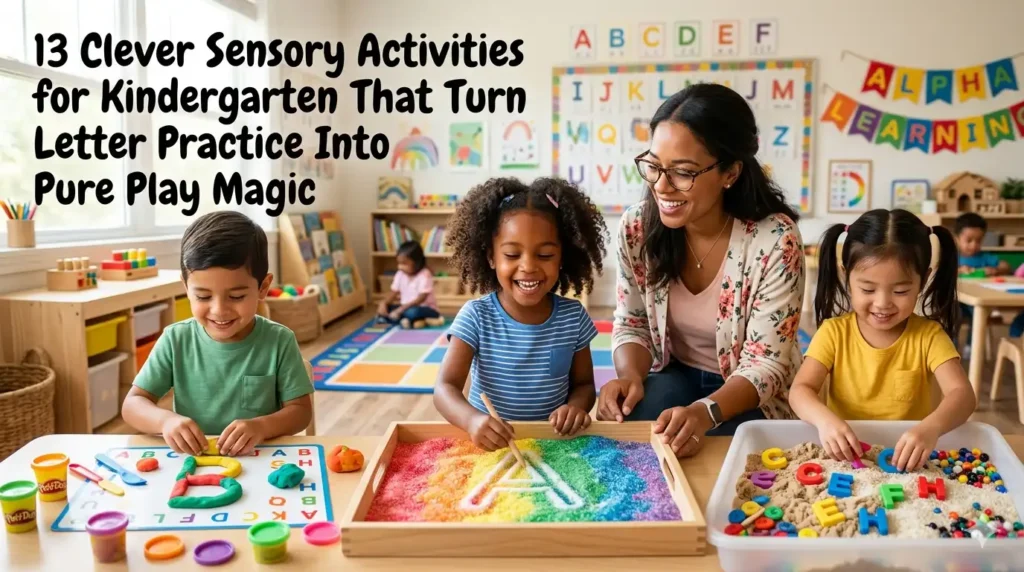
Keeping young children engaged while they learn their letters can feel like trying to catch bubbles on a windy day. One minute they’re excited, and the next they’re rolling under the table or turning crayons into drumsticks. The good news is that children learn best when learning feels like play, especially when their senses are involved.
As both a pediatrician and someone who has spent plenty of time in busy classrooms filled with curious little learners, I’ve seen how sensory activities can transform letter practice. When children touch, squish, scoop, trace, and explore letters with their hands, they build stronger connections that support early reading and writing skills while having genuine fun.
13 Clever Sensory Activities for Kindergarten
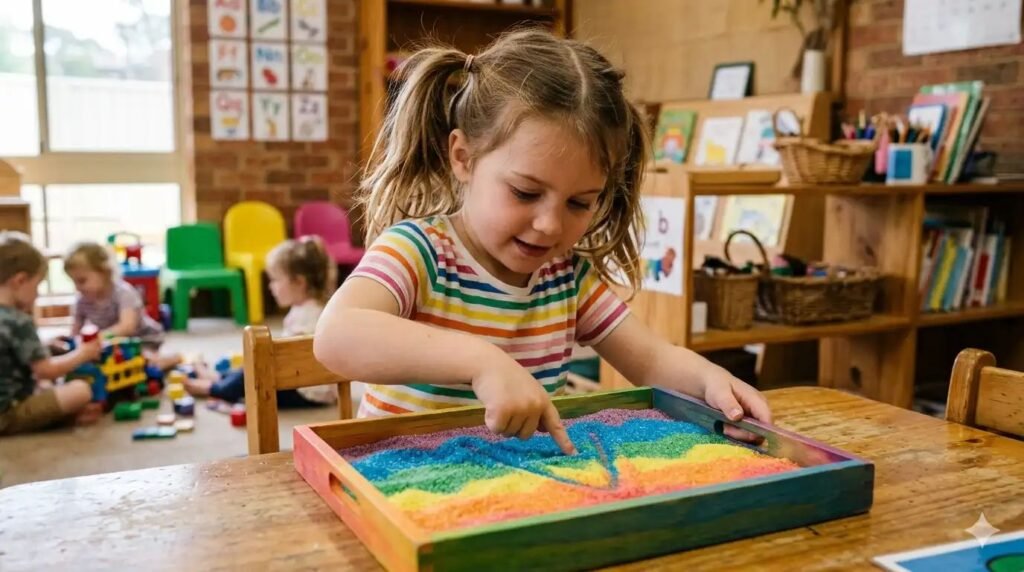
1. Rainbow Salt Tray Letter Writing
Materials Needed:
- Colored salt or plain table salt
- Shallow tray or baking dish
- Letter cards (optional)
Step-by-Step Instructions:
- Pour a thin layer of salt into the tray.
- Show your child a target letter.
- Encourage them to use one finger to draw the letter in the salt.
- Shake the tray gently to erase and try again.
- Practice uppercase and lowercase versions.
What They Are Learning:
- Letter formation
- Pre-writing skills
- Finger strength
- Visual memory
Parent Tip: Expect lots of swirls and doodles between letters. That’s completely normal and part of the exploration process.
2. Shaving Cream Letter Sensory Play
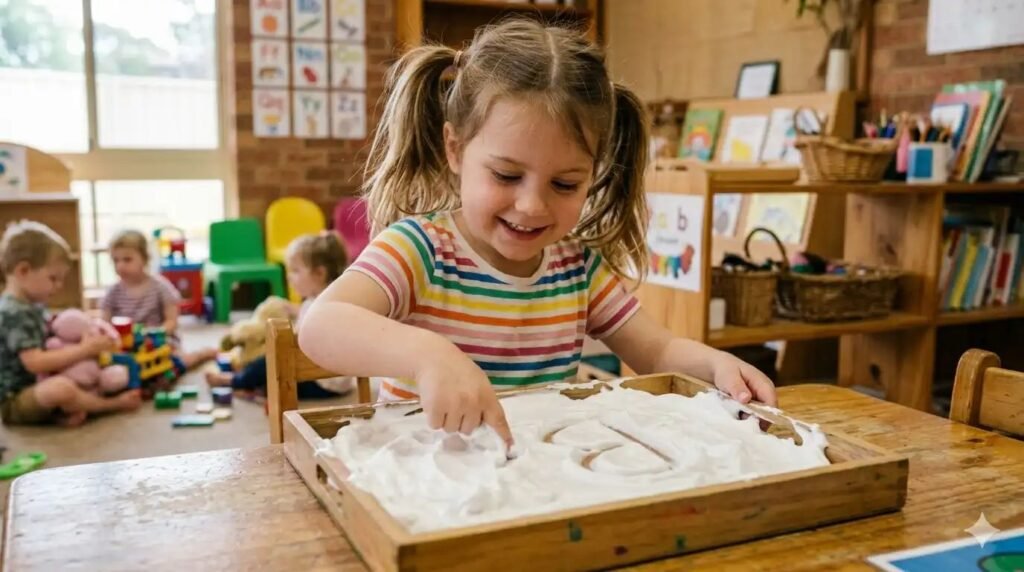
Materials Needed:
- Shaving cream
- Tray or washable table surface
- Damp cloth
Step-by-Step Instructions:
- Spread a layer of shaving cream on a tray.
- Model how to write a letter with one finger.
- Invite your child to copy it.
- Add simple letter-matching games.
- Wipe clean when finished.
What They Are Learning:
- Tactile learning
- Letter recognition
- Hand-eye coordination
- Fine motor control
Safety Note: Adult supervision is important. Remind children that shaving cream is for touching, not tasting.
3. Alphabet Play Dough Letters
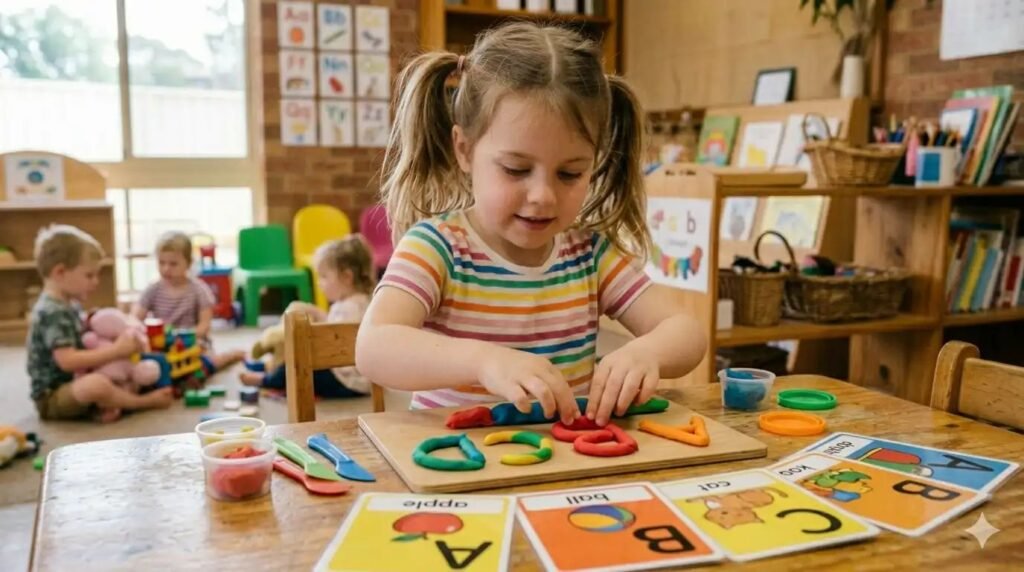
Materials Needed:
- Play dough
- Letter cards
- Rolling pin (optional)
Step-by-Step Instructions:
- Roll play dough into long “snakes.”
- Form each snake into a letter shape.
- Compare creations with letter cards.
- Say the letter sound aloud.
- Build simple words using several letters.
What They Are Learning:
- Letter recognition
- Hand strength
- Phonemic awareness
- Shape awareness
Real-Life Observation: Children often spend more time rolling than building. That’s okay—those little hands are getting stronger for future writing.
4. Sandpaper Letter Tracing
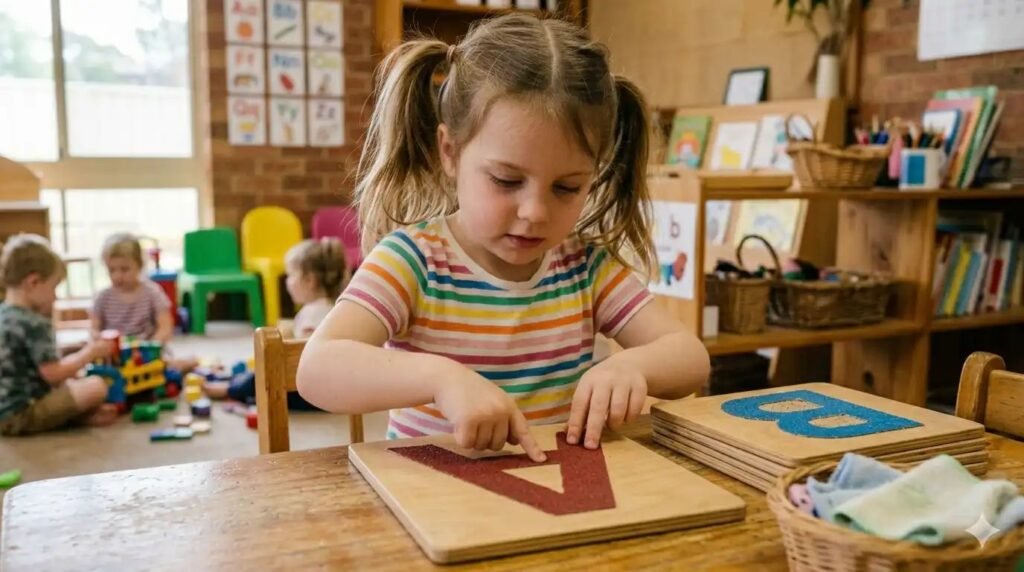
Materials Needed:
- Sandpaper
- Marker
- Scissors
Step-by-Step Instructions:
- Cut large letter shapes from sandpaper.
- Place them on a table.
- Show your child how to trace each letter slowly.
- Repeat while saying the letter name and sound.
- Challenge them to trace with eyes closed.
What They Are Learning:
- Sensory discrimination
- Letter formation
- Memory skills
- Early literacy foundations
5. Water Painting Letters
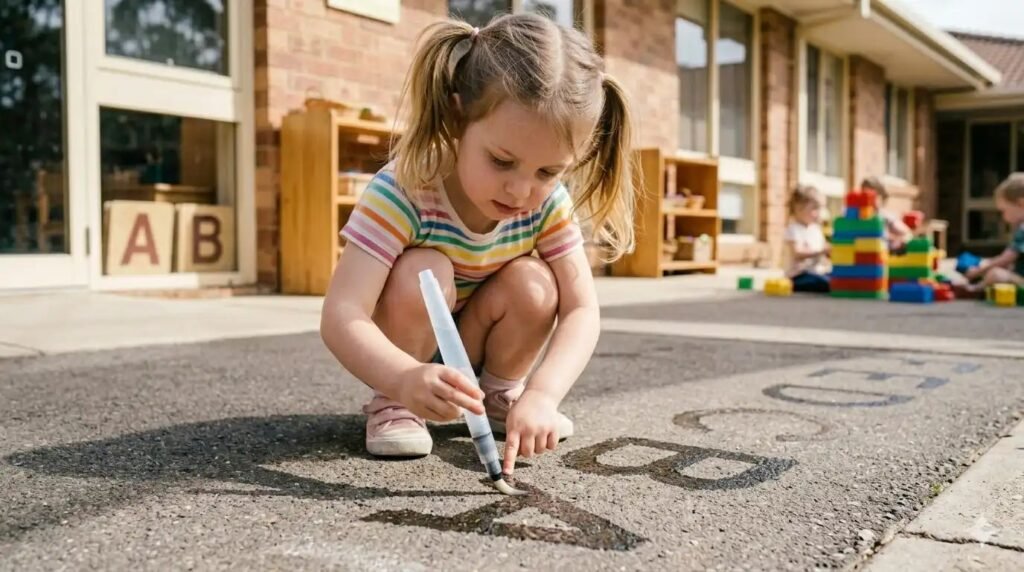
Materials Needed:
- Paintbrush
- Cup of water
- Sidewalk or chalkboard
Step-by-Step Instructions:
- Dip the paintbrush into water.
- Paint large letters on the surface.
- Watch the letters disappear as they dry.
- Write new letters before the old ones vanish.
- Turn it into a letter hunt game.
What They Are Learning:
- Large motor movements
- Letter recognition
- Concentration
- Visual tracking
6. Sensory Bin Letter Hunt
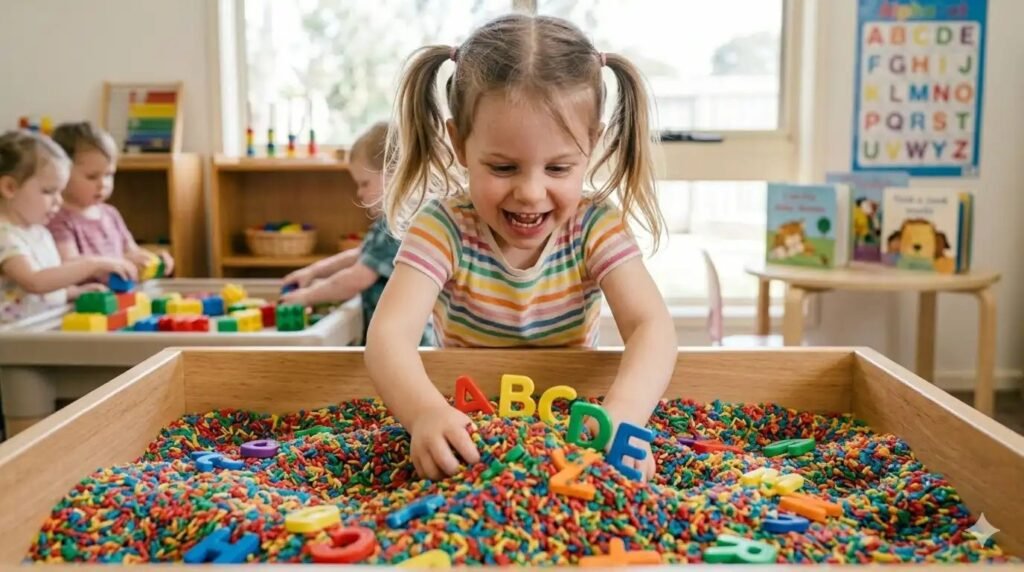
Materials Needed:
- Rice, beans, or oats
- Plastic letters
- Bin or container
Step-by-Step Instructions:
- Fill the bin with your chosen sensory material.
- Hide letters throughout the bin.
- Invite your child to dig and search.
- Name each letter as it is found.
- Sort letters into groups.
What They Are Learning:
- Letter identification
- Sensory exploration
- Sorting skills
- Vocabulary development
Safety Note: Small letters and fillers can be choking hazards. Always supervise young children closely.
7. Wikki Stix or Pipe Cleaner Letters
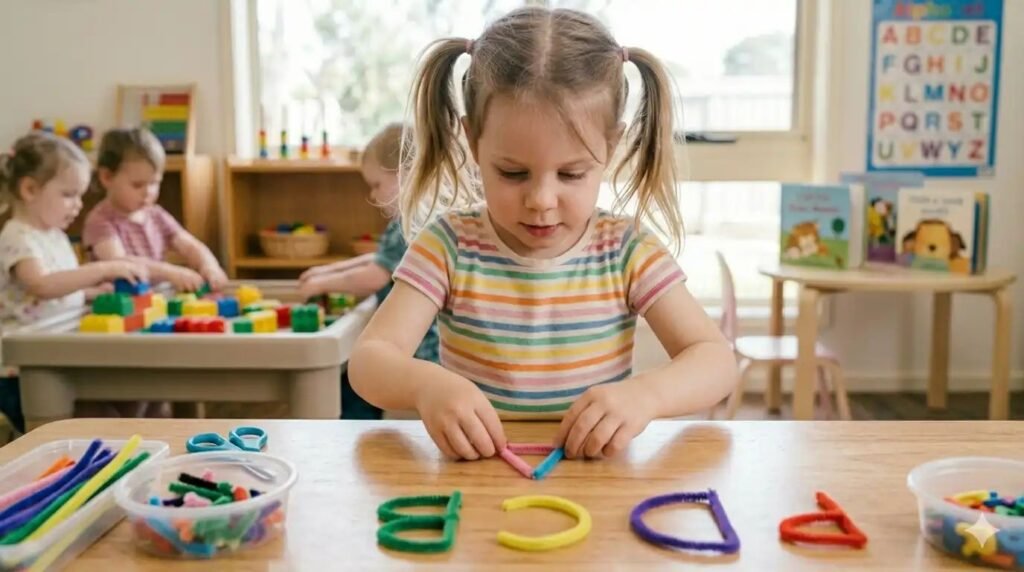
Materials Needed:
- Pipe cleaners or Wikki Stix
- Letter examples
Step-by-Step Instructions:
- Demonstrate how to bend materials into letters.
- Start with simple letters like L, T, and I.
- Progress to curved letters.
- Trace completed letters with fingers.
- Build names and simple words.
What They Are Learning:
- Fine motor skills
- Letter construction
- Problem-solving
- Spatial awareness
8. Cotton Swab Letter Building
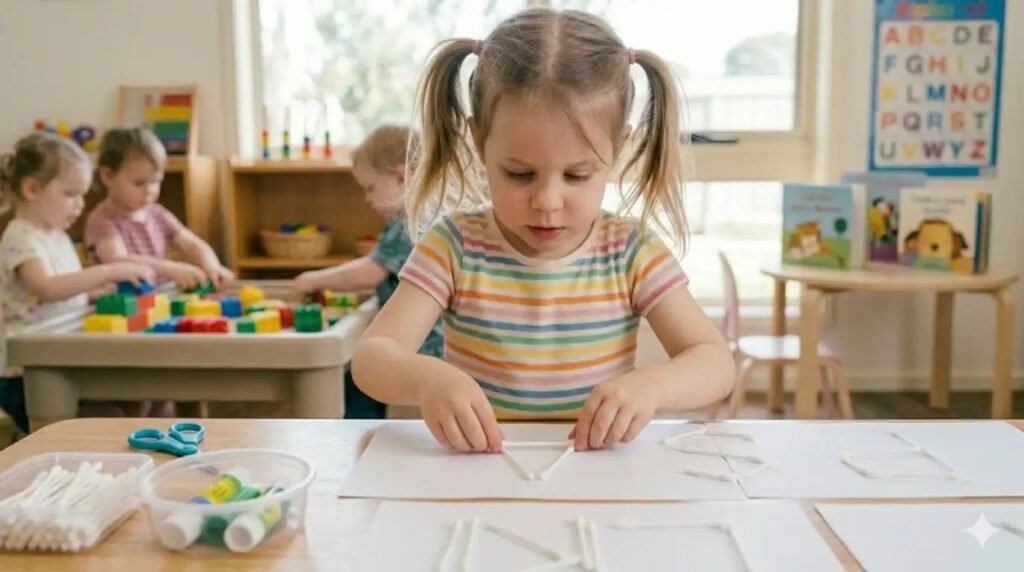
Materials Needed:
- Cotton swabs
- Paper
- Marker
Step-by-Step Instructions:
- Draw large letters on paper.
- Have your child place cotton swabs along the lines.
- Count how many swabs each letter uses.
- Compare different letter shapes.
- Create simple words.
What They Are Learning:
- Visual perception
- Fine motor control
- Letter recognition
- Early math concepts
9. Alphabet Sticker Path
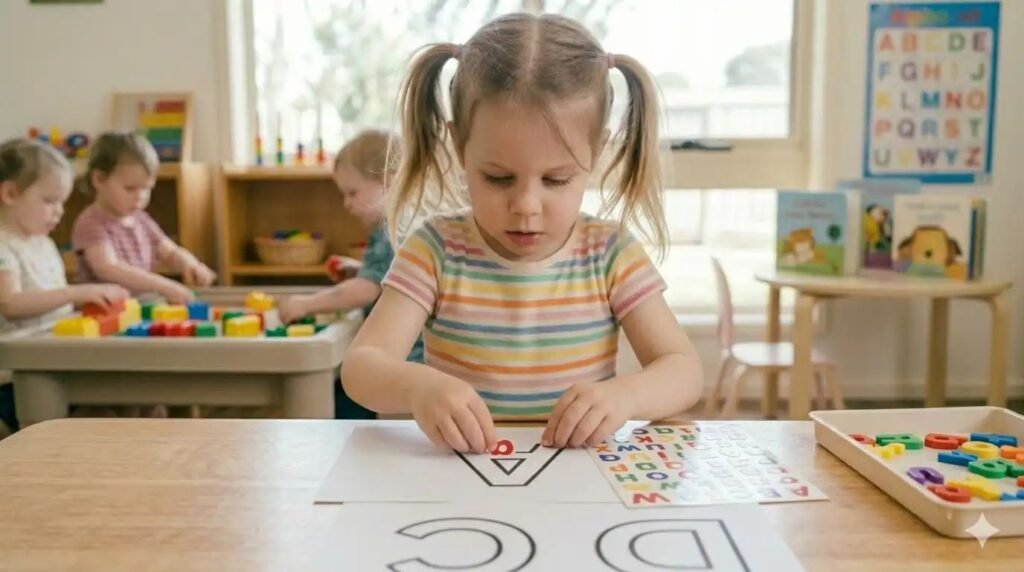
Materials Needed:
- Alphabet stickers
- Large sheet of paper
Step-by-Step Instructions:
- Write letters lightly on paper.
- Encourage children to place stickers along the lines.
- Follow the shape carefully.
- Name each letter afterward.
- Display completed work proudly.
What They Are Learning:
- Pincer grasp development
- Letter formation
- Focus and attention
- Visual-motor integration
10. Frozen Letter Rescue
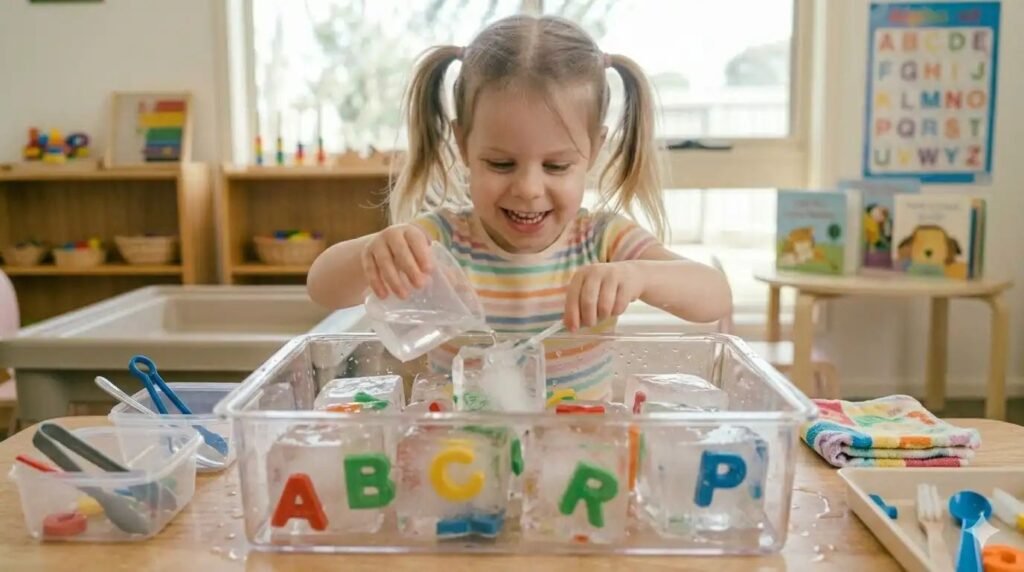
Materials Needed:
- Plastic letters
- Ice cube tray or container
- Water
Step-by-Step Instructions:
- Freeze letters inside water overnight.
- Give children warm water and small tools.
- Encourage them to melt and free the letters.
- Name each rescued letter.
- Sort letters by sound or shape.
What They Are Learning:
- Scientific exploration
- Patience
- Letter recognition
- Cause-and-effect thinking
Parent Tip: Expect wet sleeves and lots of excitement. Keep towels nearby.
11. Finger Paint Alphabet Art
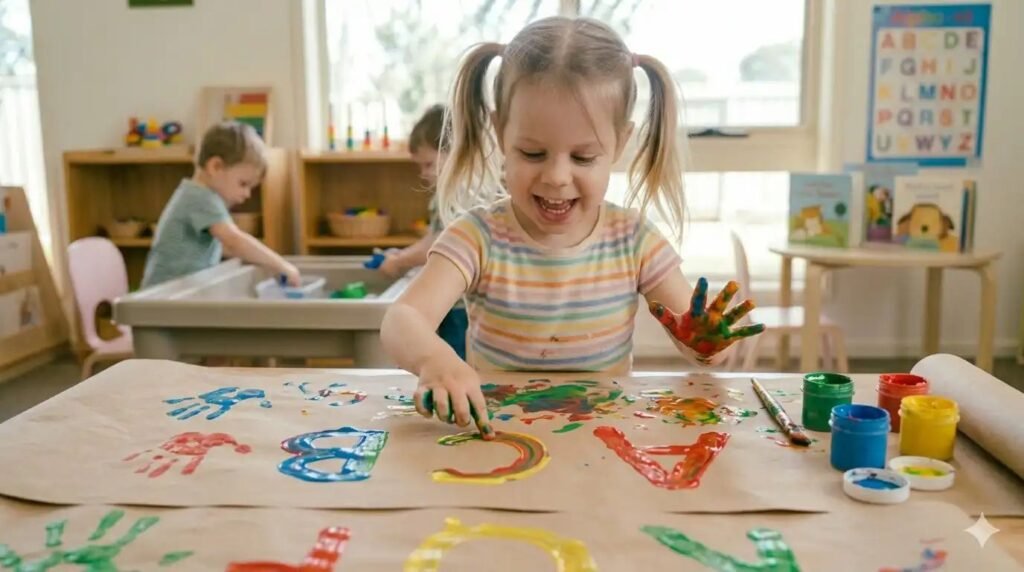
Materials Needed:
- Washable finger paint
- Large paper
- Apron or old shirt
Step-by-Step Instructions:
- Spread paper on a protected surface.
- Model large letter strokes.
- Let children paint letters using fingers.
- Practice letter sounds while painting.
- Create an alphabet gallery.
What They Are Learning:
- Sensory processing
- Creativity
- Letter formation
- Fine motor development
12. Nature Letter Building
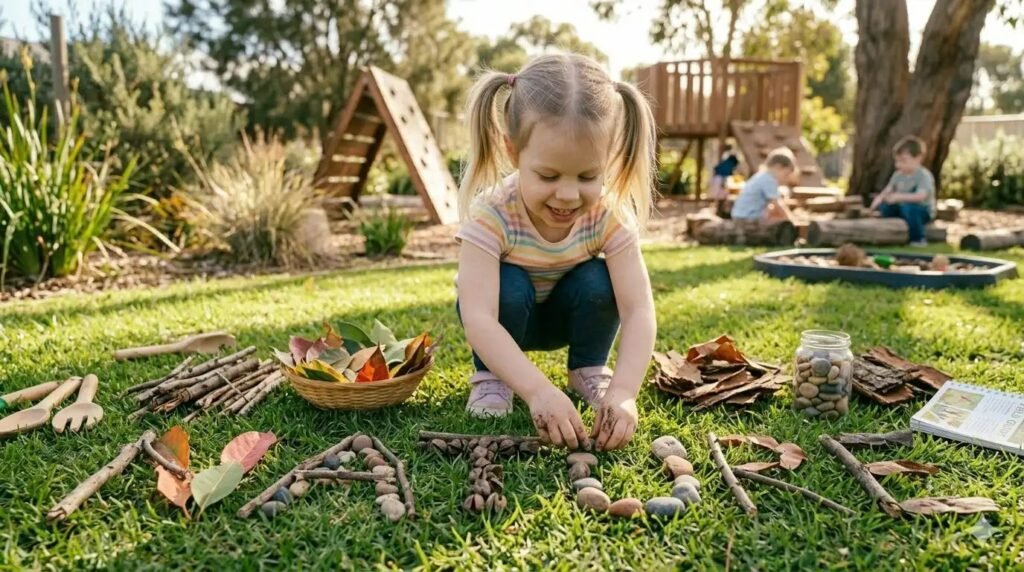
Materials Needed:
- Sticks
- Leaves
- Pebbles
- Outdoor space
Step-by-Step Instructions:
- Collect natural materials together.
- Challenge children to form letters.
- Compare different letter shapes.
- Build their names.
- Take photos of creations.
What They Are Learning:
- Environmental awareness
- Letter recognition
- Creative thinking
- Problem-solving skills
13. Bubble Wrap Letter Tracing
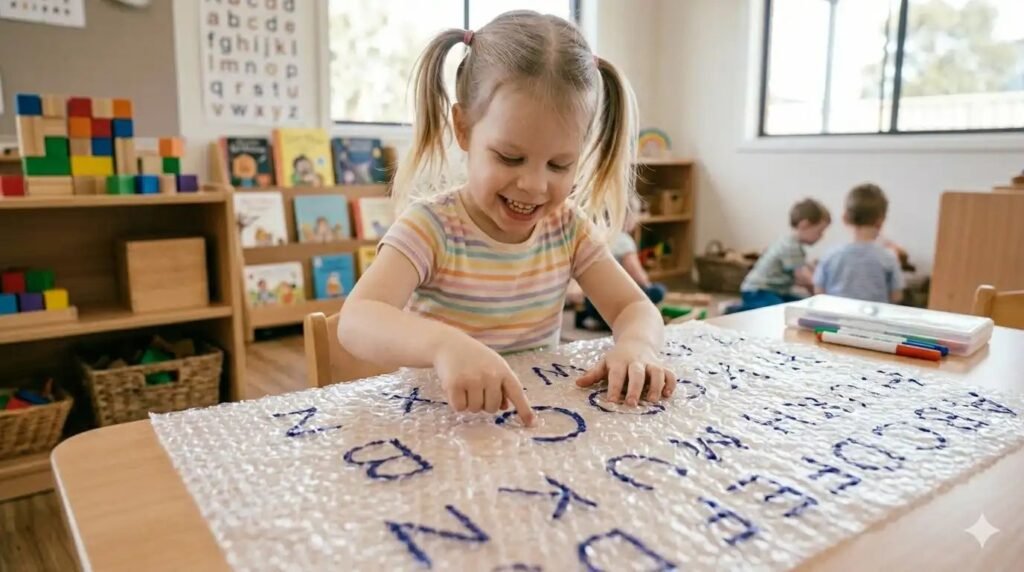
Materials Needed:
- Bubble wrap
- Marker
- Tape
Step-by-Step Instructions:
- Draw large letters on bubble wrap.
- Tape it securely to a table.
- Have children trace the letters while popping bubbles.
- Repeat letter sounds together.
- Create simple letter challenges.
What They Are Learning:
- Tactile feedback
- Letter formation
- Finger strength
- Auditory engagement
Safety Note: Discard popped bubble wrap pieces promptly and supervise young children during play.
Every child learns differently, and that’s exactly why sensory letter activities work so well. Some children need to feel letters with their fingers, while others learn through movement, textures, and hands-on exploration. Don’t worry if an activity gets a little messy or takes an unexpected turn. Those moments are often where the best learning happens. Keep it playful, keep expectations realistic, and celebrate small wins along the way. A child who happily traces one letter today is building the foundation for confident reading and writing tomorrow.
Frequently Asked Questions
What are sensory activities for kindergarten?
Sensory activities engage one or more senses—touch, sight, sound, smell, or movement—to help children learn through hands-on experiences. They are especially effective for teaching letters, numbers, and early literacy skills.
Why are sensory activities important for letter recognition?
Sensory experiences help children create stronger brain connections. When children see, touch, and form letters, they remember them more easily than through worksheets alone.
How often should kindergarteners practice letters?
Short daily practice sessions of 10–15 minutes are usually more effective than longer lessons. Consistency and play-based learning tend to produce the best results.
Are sensory letter activities safe for all children?
Most are safe with proper supervision. Always consider age-appropriate materials and watch carefully when activities include small items that could pose choking hazards.
A Few Final Thoughts
Letter learning doesn’t have to involve endless worksheets or constant reminders to sit still. In fact, many kindergarteners learn best when they can move, touch, explore, and play. Sensory activities turn letter practice into an experience children genuinely enjoy, making it easier for them to build confidence and remember what they’ve learned.
If one activity doesn’t capture your child’s interest right away, don’t give up. Every child has unique preferences and learning styles. Some may love messy play with shaving cream, while others prefer building letters with nature materials or rescuing frozen alphabet pieces. The key is to keep the experience positive, pressure-free, and fun.
Remember, early literacy is a journey, not a race. A few minutes of playful letter exploration each day can lay the groundwork for stronger reading and writing skills in the years ahead. Celebrate progress, embrace the mess when it happens, and enjoy these special learning moments together. They often become some of the sweetest memories of childhood.