Keeping a toddler busy for more than a few minutes can feel like a parenting superpower. One moment they’re happily stacking cups, and the next they’re climbing the couch, emptying drawers, or demanding snacks for the third time in an hour. If you’ve ever wished for a simple activity that buys you enough time to drink your coffee while it’s still warm, you’re not alone.
The good news is that you don’t need expensive toys or elaborate setups. Dollar store finds can become surprisingly engaging learning tools that spark creativity, build important skills, and create those precious pockets of quiet time. These activities are easy to prepare, budget-friendly, and toddler-approved.
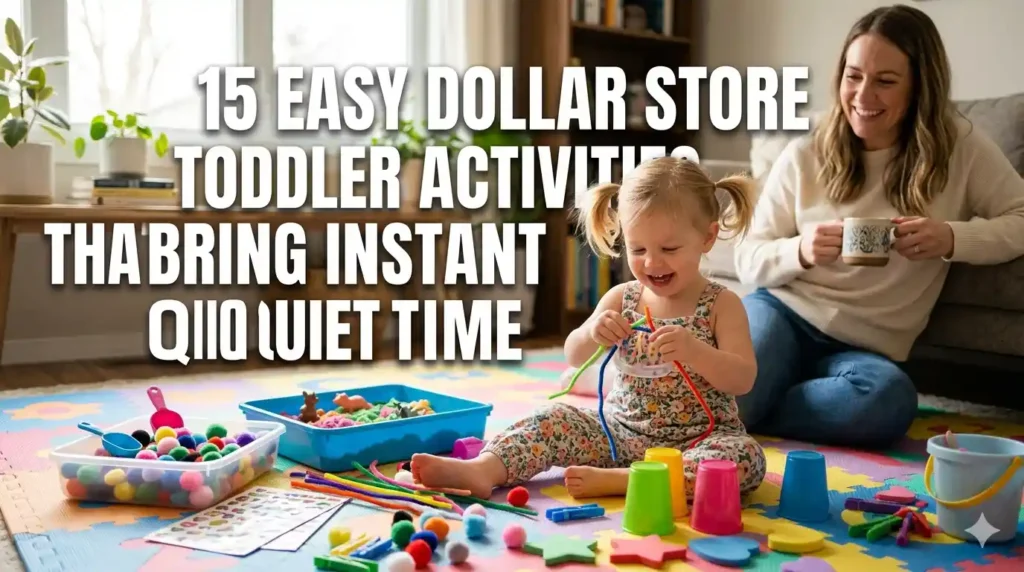
15 Easy Dollar Store Toddler Activities That Bring Instant Quiet Time
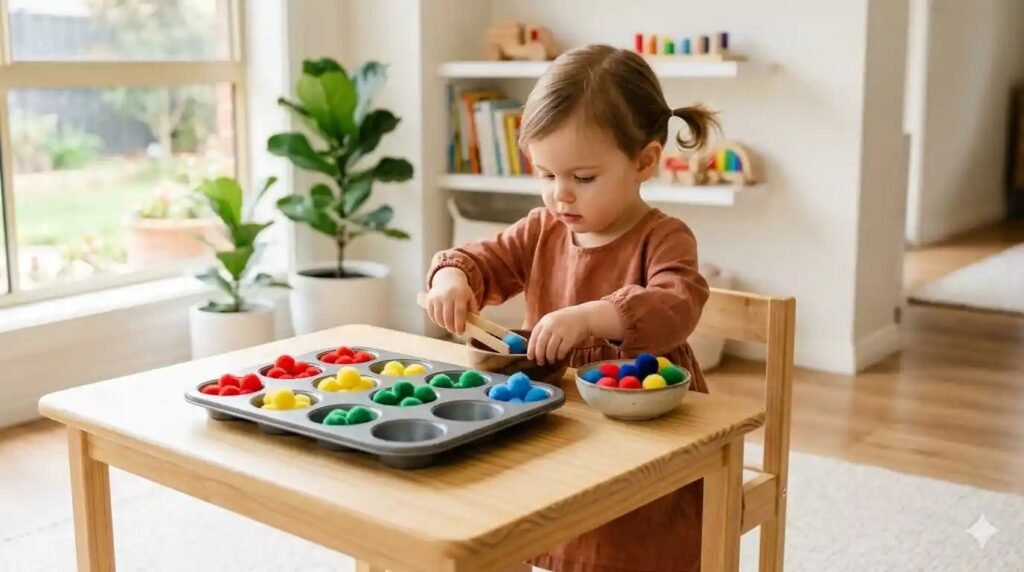
1. Pom-Pom Color Sorting Station
Materials Needed:
- Colored pom-poms
- Muffin tin or small bowls
- Plastic tongs (optional)
Step-by-Step Instructions:
- Place different colored pom-poms in a basket.
- Set out bowls or muffin tin sections.
- Encourage your toddler to sort colors into matching sections.
- For older toddlers, add tongs for an extra challenge.
- Celebrate their sorting successes along the way.
What They Are Learning:
- Color recognition
- Fine motor skills
- Hand-eye coordination
- Early categorization skills
Safety Note: Pom-poms can be choking hazards. Always supervise closely and avoid this activity for children who still mouth objects frequently.
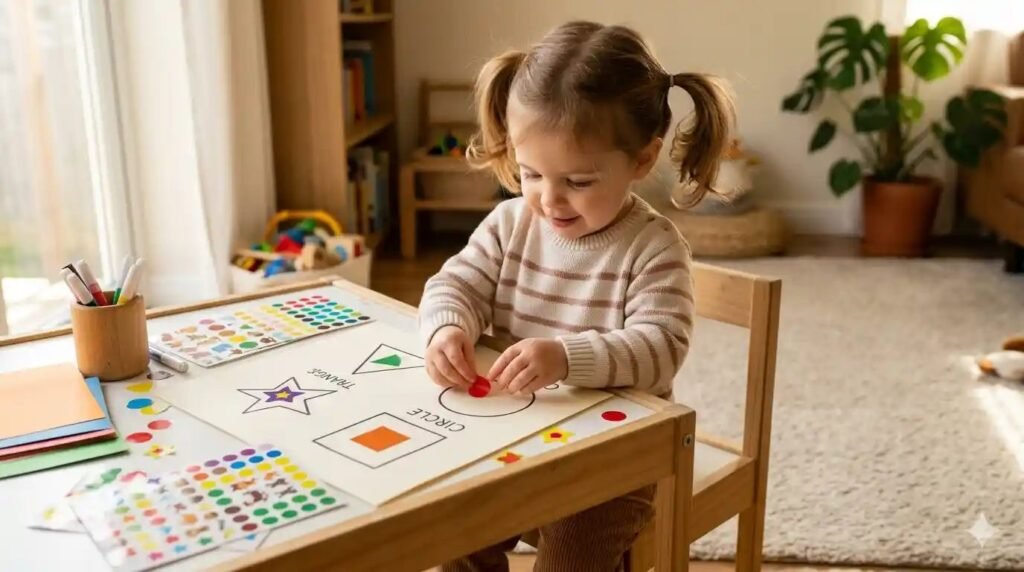
2. Sticker Peel-and-Place Fun
Materials Needed:
- Sticker sheets
- Construction paper
- Marker
Step-by-Step Instructions:
- Draw simple shapes, lines, or circles on paper.
- Give your toddler a sheet of stickers.
- Encourage them to place stickers along the lines or inside shapes.
- Let them create their own designs once they’ve mastered the basics.
What They Are Learning:
- Finger strength
- Pincer grasp development
- Creativity
- Visual-motor skills
Expect a few stickers on shirts, furniture, and maybe even your forehead. That’s all part of the fun.
3. Pipe Cleaner and Colander Threading
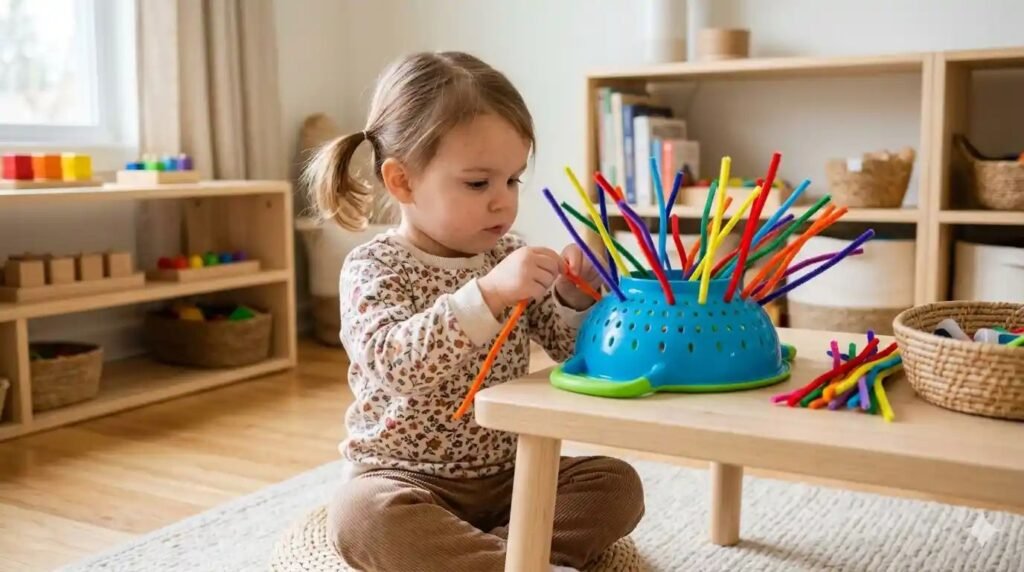
Materials Needed:
- Plastic colander
- Pipe cleaners
Step-by-Step Instructions:
- Turn the colander upside down.
- Show your toddler how to push pipe cleaners through the holes.
- Create colorful patterns together.
- Remove and repeat for endless entertainment.
What They Are Learning:
- Bilateral coordination
- Concentration
- Fine motor control
- Problem-solving
This activity often creates a surprising amount of focused quiet time.
4. Water Transfer Station
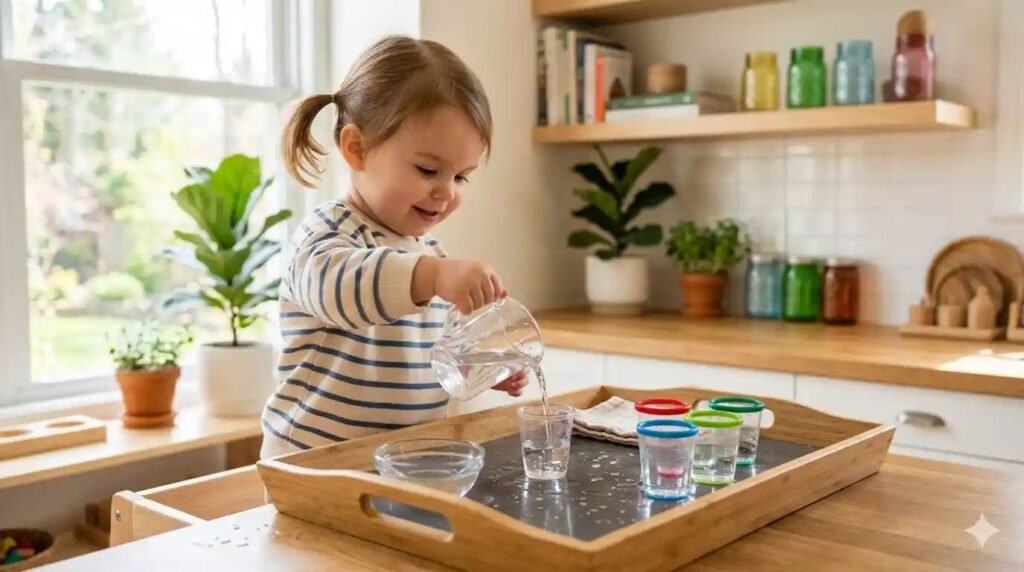
Materials Needed:
- Plastic cups
- Small pitchers
- Large tray
- Water
Step-by-Step Instructions:
- Fill one container with a small amount of water.
- Place empty containers nearby.
- Demonstrate pouring from one container to another.
- Allow your toddler to experiment independently.
What They Are Learning:
- Hand control
- Cause and effect
- Concentration
- Early science concepts
Safety Note: Stay nearby during water play and keep water levels shallow.
5. Foam Shape Matching Board
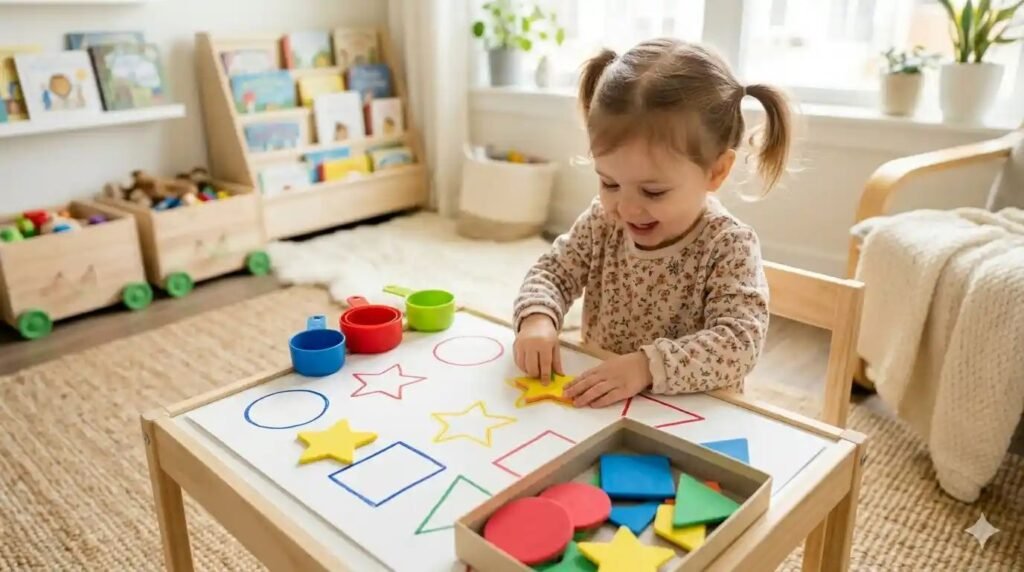
Materials Needed:
- Foam shapes
- Poster board
- Marker
Step-by-Step Instructions:
- Trace foam shapes onto poster board.
- Mix up the shapes.
- Invite your toddler to place each shape on its matching outline.
- Increase difficulty by adding more shapes.
What They Are Learning:
- Shape recognition
- Visual discrimination
- Spatial awareness
- Problem-solving
6. Sensory Rice Scoop Bin
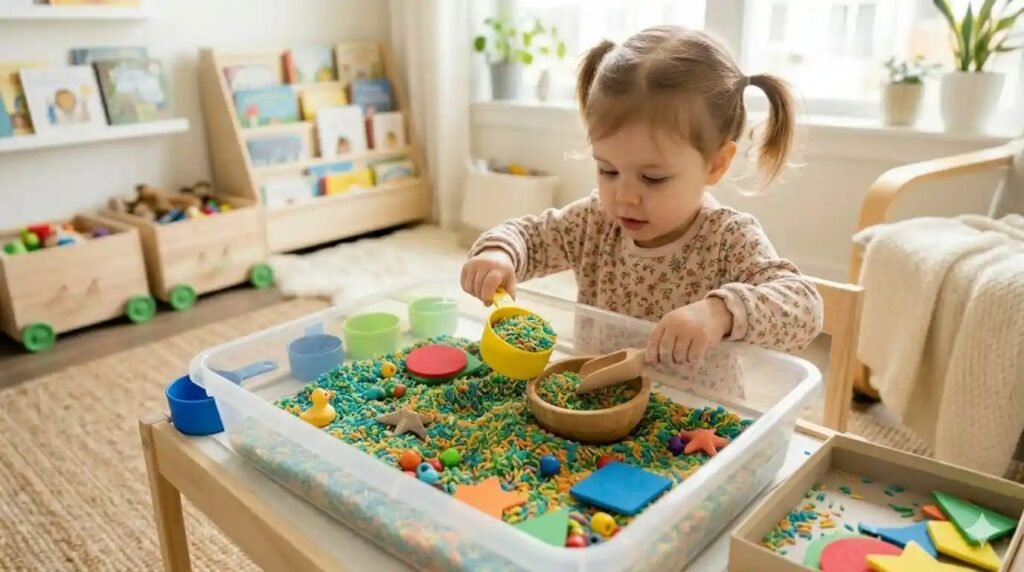
Materials Needed:
- Large plastic container
- Dry rice
- Measuring cups
- Small toys
Step-by-Step Instructions:
- Pour rice into a large container.
- Hide a few small toys inside.
- Add scoops, cups, and spoons.
- Encourage searching, pouring, and filling.
What They Are Learning:
- Sensory exploration
- Fine motor development
- Focus
- Early math concepts
Safety Note: Monitor closely to prevent rice from being placed in the mouth.
7. Cup Stacking Challenge
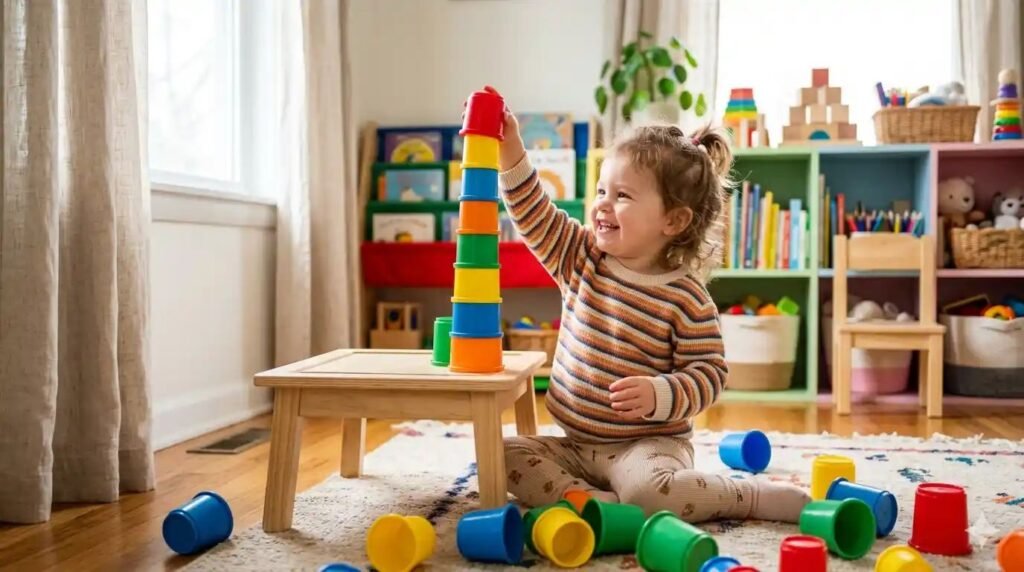
Materials Needed:
- Plastic cups
Step-by-Step Instructions:
- Show your toddler how to stack cups into towers.
- Build together at first.
- Let them experiment independently.
- Enjoy the excitement when towers tumble down.
What They Are Learning:
- Balance
- Hand-eye coordination
- Cause and effect
- Persistence
I’ve seen toddlers spend twenty minutes rebuilding the same tower over and over. That’s a parenting win.
8. Animal Rescue Tape Activity
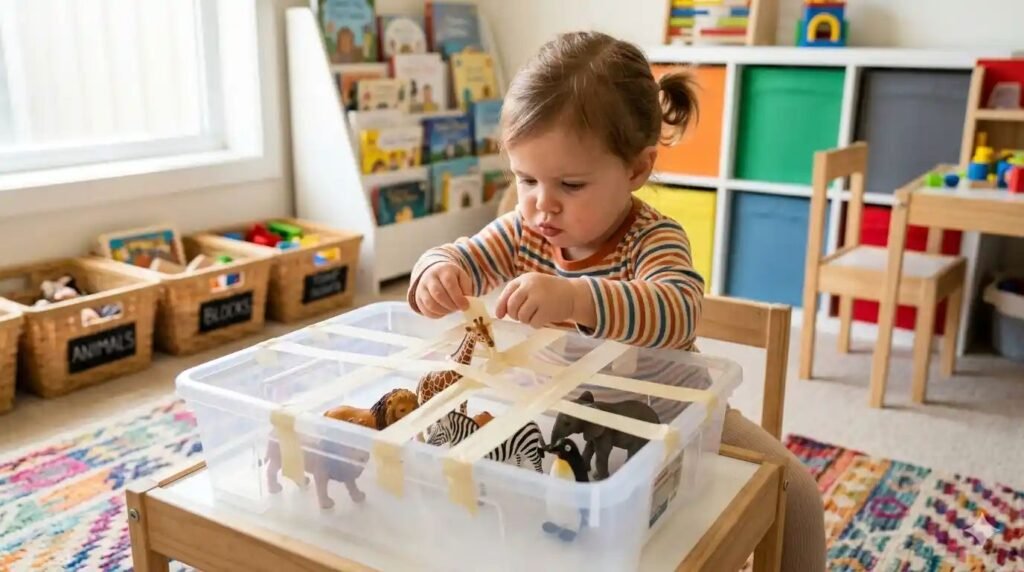
Materials Needed:
- Plastic animals
- Masking tape
- Baking tray or plastic container
Step-by-Step Instructions:
- Stretch strips of tape across the container.
- Place toy animals underneath.
- Challenge your toddler to rescue them.
- Allow them to pull, peel, and explore.
What They Are Learning:
- Fine motor strength
- Problem-solving
- Patience
- Sensory awareness
9. Giant Pom-Pom Drop
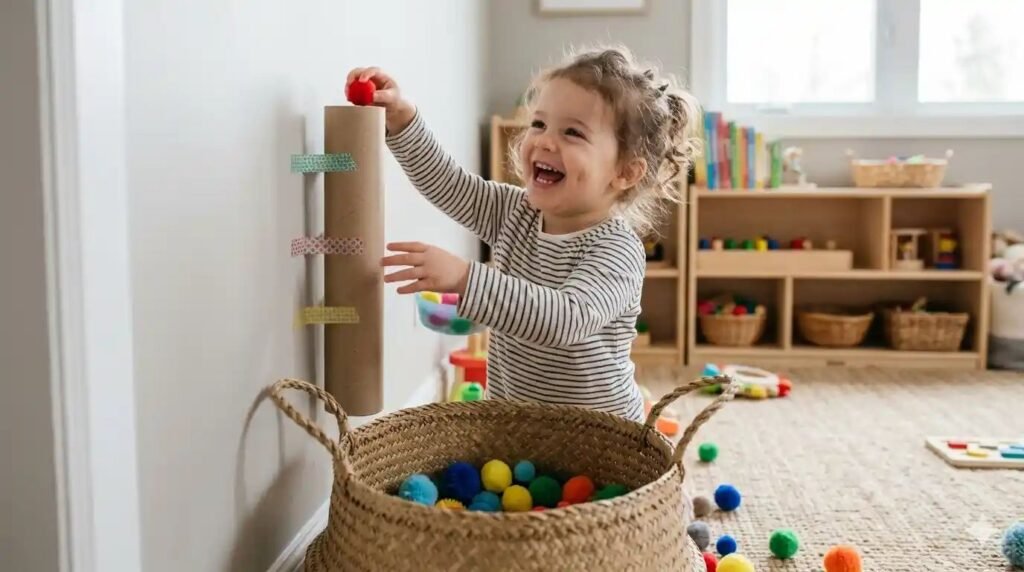
Materials Needed:
- Cardboard tube
- Large pom-poms
- Basket
Step-by-Step Instructions:
- Tape the tube vertically to a wall or chair.
- Place a basket underneath.
- Demonstrate dropping pom-poms through the tube.
- Let your toddler repeat endlessly.
What They Are Learning:
- Cause and effect
- Visual tracking
- Hand control
- Attention span
Expect some giggles every time the pom-pom pops out the bottom.
10. Dot Marker Art Time
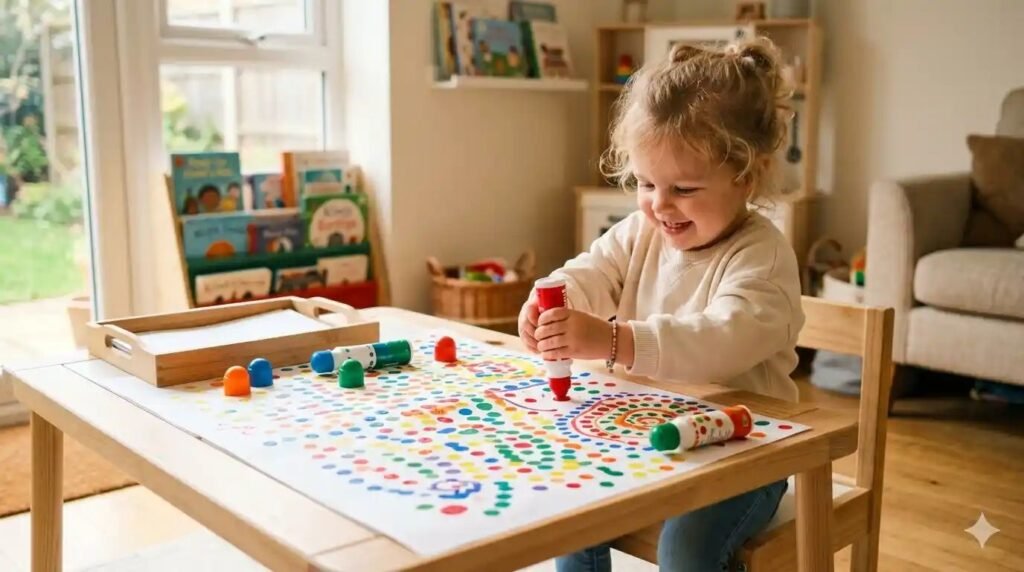
Materials Needed:
- Dot markers
- Large paper
Step-by-Step Instructions:
- Tape paper to a table.
- Demonstrate making dots and patterns.
- Encourage free exploration.
- Talk about colors and shapes while they create.
What They Are Learning:
- Creativity
- Color recognition
- Hand strength
- Self-expression
11. Clothespin Fine Motor Game
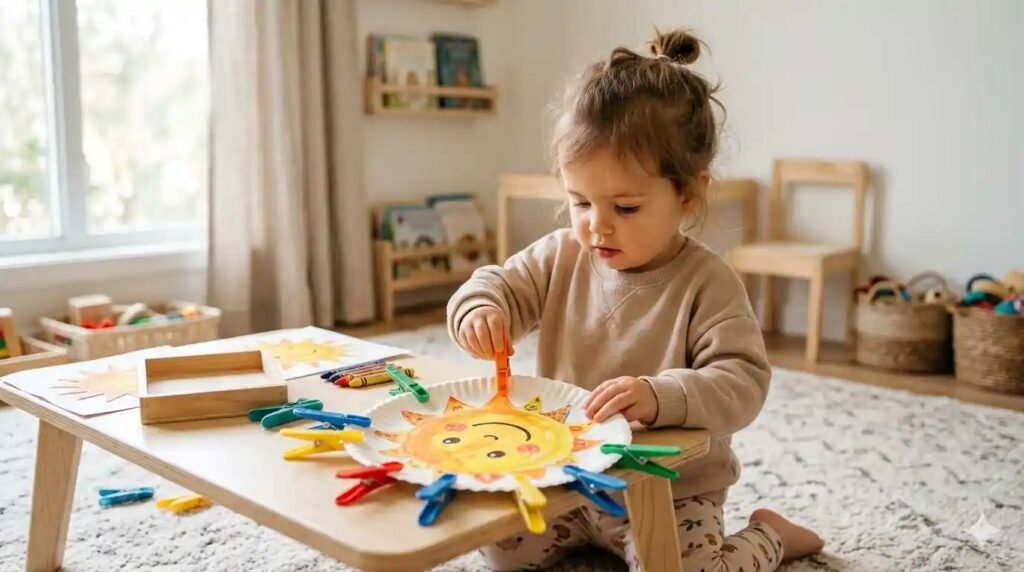
Materials Needed:
- Clothespins
- Paper plate
Step-by-Step Instructions:
- Draw a sun or hedgehog on a paper plate.
- Show your toddler how to clip clothespins around the edges.
- Count clips together.
- Remove and repeat.
What They Are Learning:
- Finger strength
- Hand coordination
- Counting skills
- Focus
12. Sponge Squeeze Station
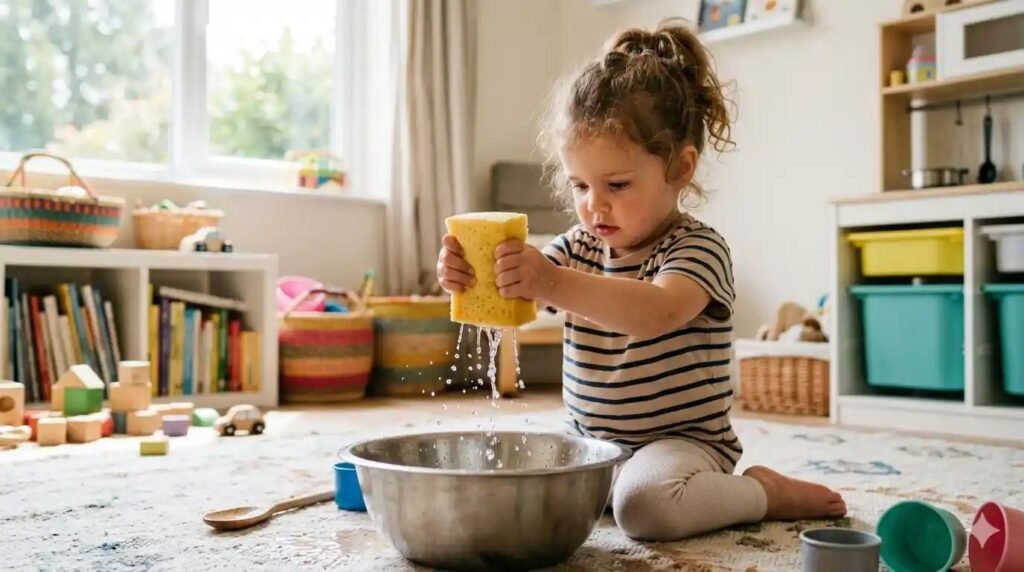
Materials Needed:
- Kitchen sponges
- Two bowls
- Water
Step-by-Step Instructions:
- Fill one bowl with water.
- Soak the sponge.
- Demonstrate squeezing water into the empty bowl.
- Let your toddler practice repeatedly.
What They Are Learning:
- Hand strength
- Coordination
- Cause and effect
- Concentration
This simple setup is often surprisingly calming.
13. Magnetic Treasure Hunt
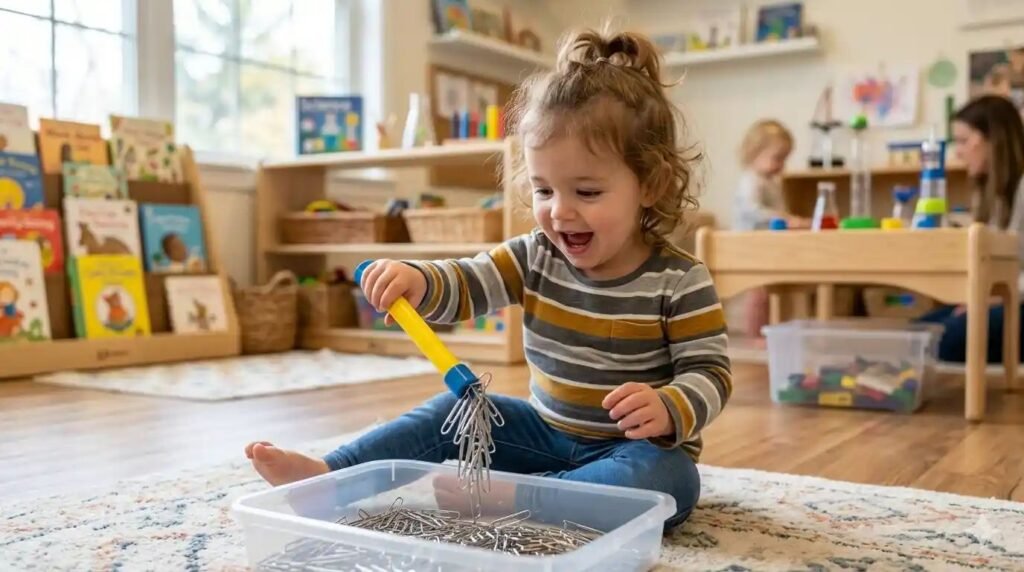
Materials Needed:
- Magnetic wand
- Paper clips
- Plastic container
Step-by-Step Instructions:
- Scatter paper clips in a shallow container.
- Give your toddler the magnetic wand.
- Encourage collecting treasures.
- Count the clips together afterward.
What They Are Learning:
- Scientific exploration
- Counting
- Hand-eye coordination
- Observation skills
14. Foam Letter Fishing
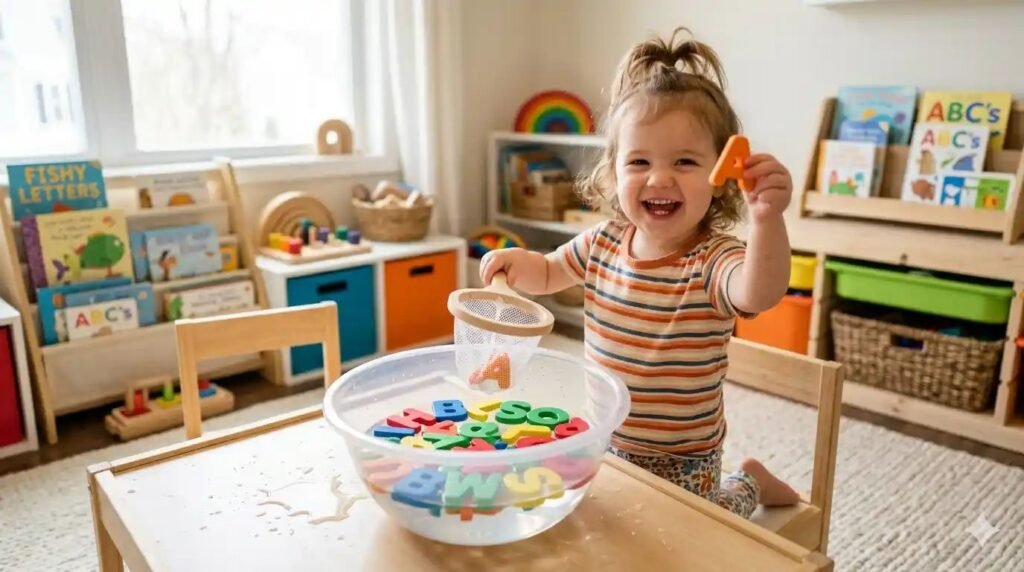
Materials Needed:
- Foam letters
- Large bowl
- Small net
Step-by-Step Instructions:
- Place foam letters in a bowl.
- Provide a small toy net.
- Invite your toddler to fish for letters.
- Name letters as they catch them.
What They Are Learning:
- Early literacy exposure
- Fine motor skills
- Focus
- Language development
15. Pom-Pom and Egg Carton Sorting
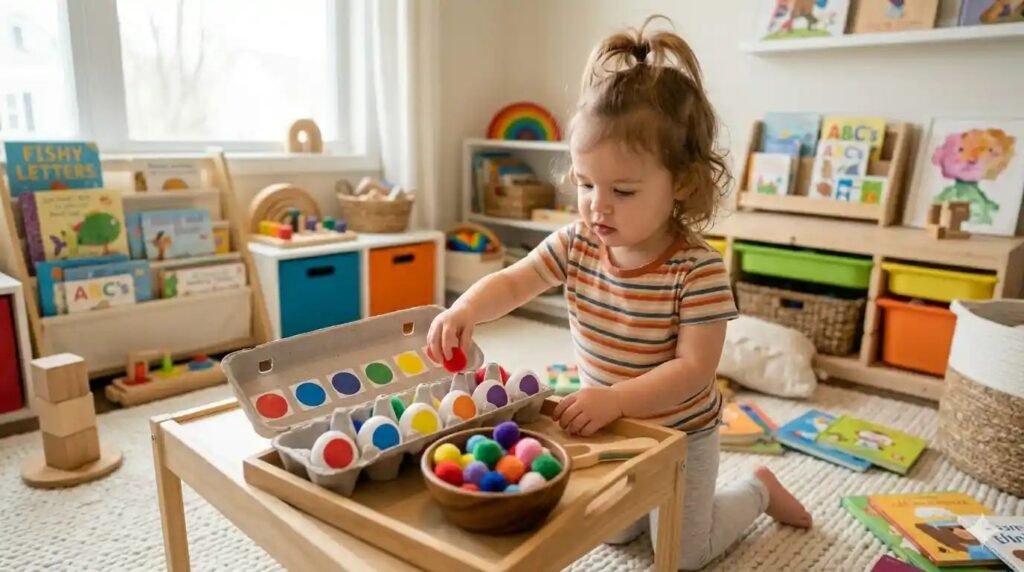
Materials Needed:
- Empty egg carton
- Colored pom-poms
- Color stickers
Step-by-Step Instructions:
- Place matching color stickers inside each egg carton section.
- Mix pom-poms in a bowl.
- Have your toddler sort each pom-pom into the correct spot.
- Count and name colors together.
What They Are Learning:
- Sorting skills
- Color recognition
- Concentration
- Fine motor development
A Little Encouragement for Parents
Quiet time doesn’t have to come from screens or expensive toys. Some of the best toddler activities are built from simple dollar store supplies and a little creativity. Remember, toddlers learn through repetition. If they want to do the same activity five days in a row, that’s often a sign that important skills are developing. Give yourself credit for creating opportunities to play, explore, and learn—even if the floor ends up covered in pom-poms afterward.
Frequently Asked Questions
What age are these dollar store toddler activities suitable for?
Most activities work well for children between 18 months and 4 years old. Always adjust materials and supervision based on your child’s developmental stage and ability.
How long should a toddler activity keep my child engaged?
Engagement varies by child, but many toddlers stay focused for 10 to 30 minutes when an activity matches their interests and developmental level.
Are sensory activities good for toddlers?
Yes. Sensory activities support brain development, fine motor skills, language growth, problem-solving, and emotional regulation. They also help toddlers explore the world through hands-on learning.
What are the best dollar store items for toddler activities?
Some of the most versatile items include pom-poms, plastic cups, stickers, pipe cleaners, foam shapes, measuring cups, clothespins, storage containers, and sensory bin fillers.
One Final Thought
The goal isn’t to keep your toddler perfectly occupied every minute of the day. It’s to provide simple opportunities for exploration, learning, and independence. Even fifteen minutes of focused play can build confidence, strengthen important developmental skills, and give you a much-needed moment to breathe. Small activities often create the biggest memories.