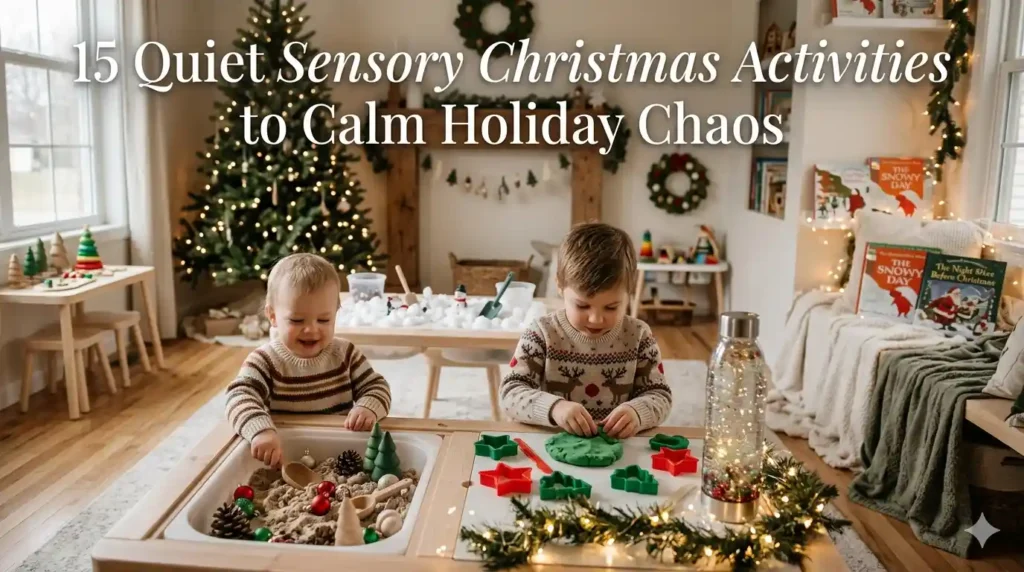
The holiday season is filled with magical moments, but it can also bring a lot of excitement, noise, and overstimulation for young children. Between family gatherings, bright decorations, and changes in routine, many children benefit from calm, sensory-focused activities that help them slow down and regulate their emotions.
As both a pediatrician and child development specialist, I’ve seen how simple sensory play can create peaceful moments during busy holiday weeks. These quiet Christmas activities encourage creativity, support healthy development, and provide valuable opportunities for connection between children and caregivers.
10 Quiet Sensory Christmas Activities to Calm Holiday Chaos
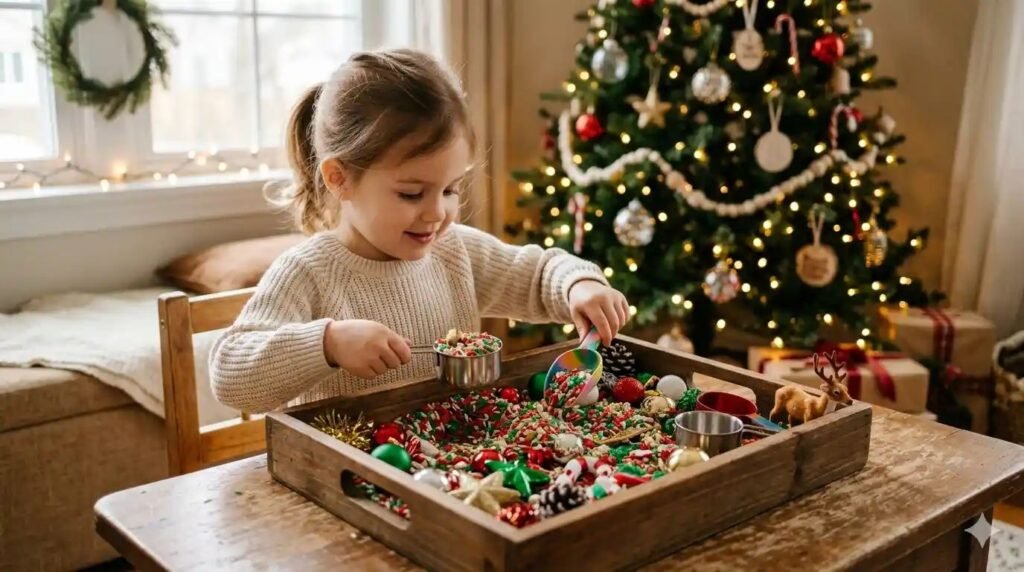
1. Christmas Sensory Bin
Materials Needed
- Plastic storage bin
- Dry rice or oats
- Mini Christmas ornaments (non-breakable)
- Measuring cups and spoons
- Small containers
Step-by-Step Instructions
- Fill a shallow bin with rice or oats.
- Hide Christmas-themed items throughout the bin.
- Place scoops, cups, and containers nearby.
- Introduce the activity by inviting your child to search for holiday treasures.
- Encourage pouring, scooping, sorting, and hiding objects.
- Extend the play by asking children to sort items by color or size.
What They Are Learning
Children develop:
- Fine motor skills
- Hand-eye coordination
- Sensory processing abilities
- Early sorting and classification skills
- Language development through descriptive play
Health & Development Benefits
Sensory bins provide calming tactile input that helps many children regulate their nervous systems during busy holiday periods. The repetitive motions of scooping, pouring, and transferring materials often create a naturally soothing effect.
As children manipulate small objects, they strengthen the hand muscles needed for future writing tasks. These simple actions build coordination while supporting cognitive skills such as categorization and problem-solving.
Sensory exploration also encourages sustained attention. In a season full of fast-paced stimulation, activities that allow children to slow down and focus can be especially valuable.
The open-ended nature of sensory bins encourages creativity while providing meaningful screen-free engagement.
Safety Tips
- Supervise closely with children under 3.
- Avoid small items that present choking risks.
- Consider allergy-friendly fillers if needed.
- Use larger objects for toddlers.
Parent-to-Parent Note
Expect some rice to end up outside the bin. A sheet underneath makes cleanup much easier.
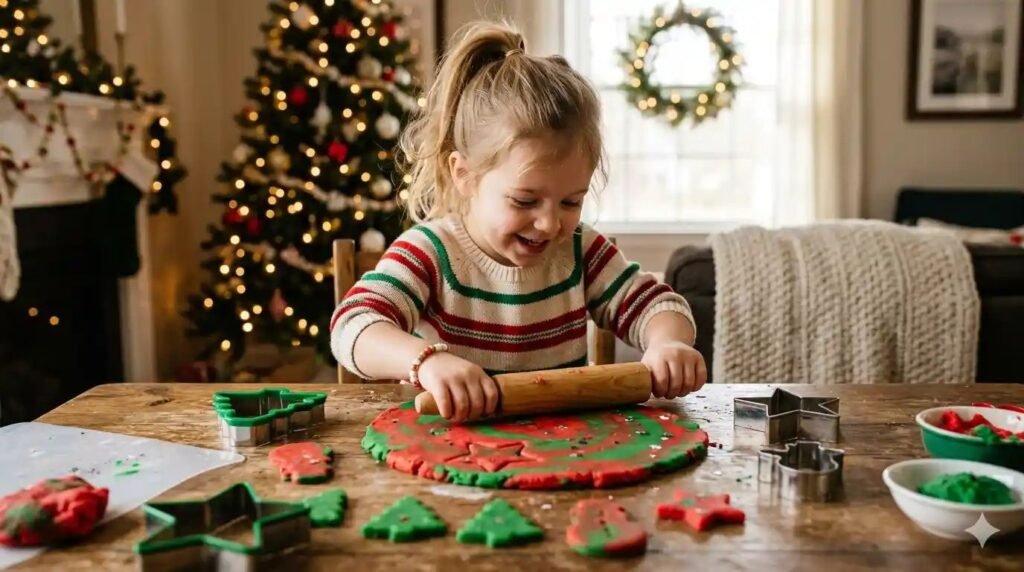
2. Soft Christmas Play Dough
Materials Needed
- Homemade or store-bought play dough
- Cookie cutters
- Rolling pin
- Plastic holiday figurines
Step-by-Step Instructions
- Set up play dough on a washable surface.
- Demonstrate rolling and pressing shapes.
- Encourage children to create Christmas trees, stars, and snowmen.
- Add figurines for imaginative storytelling.
- Introduce simple challenges such as making gifts or ornaments.
- Extend by creating a holiday scene together.
What They Are Learning
Children practice:
- Fine motor development
- Bilateral coordination
- Creative thinking
- Language skills
- Early planning and sequencing
Health & Development Benefits
Play dough provides excellent resistance for developing hand strength. Strong hands support future writing, self-feeding, dressing skills, and everyday independence.
The sensory feedback from squeezing and molding dough can be calming for children who feel overwhelmed by holiday excitement. Many children naturally settle into a focused state while manipulating soft materials.
Creative play also encourages flexible thinking and imagination. Children experiment with ideas, solve problems, and learn that there are many ways to create.
Because there is no right or wrong outcome, play dough helps build confidence and supports emotional well-being.
Safety Tips
- Supervise young children.
- Use non-toxic dough.
- Monitor children who still mouth objects.
- Check ingredient allergies.
Parent-to-Parent Note
Some children spend twenty minutes making one tiny cookie. That’s perfectly okay—the process matters more than the result.
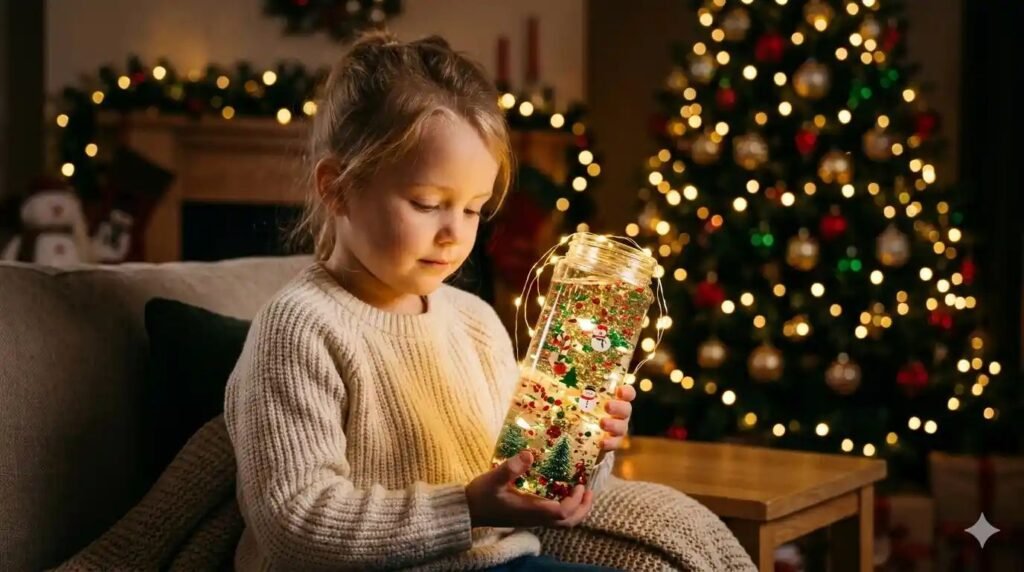
3. Christmas Light Discovery Bottle
Materials Needed
- Clear plastic bottle
- Water
- Glitter
- Sequins
- Small holiday-themed items
Step-by-Step Instructions
- Fill the bottle mostly with water.
- Add glitter and decorations.
- Seal tightly.
- Shake gently and observe.
- Encourage children to track floating objects.
- Use near holiday lights for added visual interest.
What They Are Learning
Children develop:
- Visual tracking skills
- Focus and concentration
- Observation skills
- Vocabulary development
- Sensory regulation
Health & Development Benefits
Watching glitter slowly move through water encourages visual attention and calm observation. This can be particularly helpful during transitions or after stimulating holiday events.
The predictable movement helps many children regulate their emotions and practice patience. Learning to focus on slow-moving visual input supports developing attention skills.
Children also strengthen language abilities when describing colors, movements, and objects they observe.
These bottles offer a portable calming tool that can be used throughout the holiday season.
Safety Tips
- Seal bottles securely.
- Inspect regularly for leaks.
- Use shatterproof containers.
- Supervise young children.
Parent-to-Parent Note
This activity often becomes a favorite quiet-time tool long after Christmas decorations are packed away.
4. Cotton Ball Snow Play
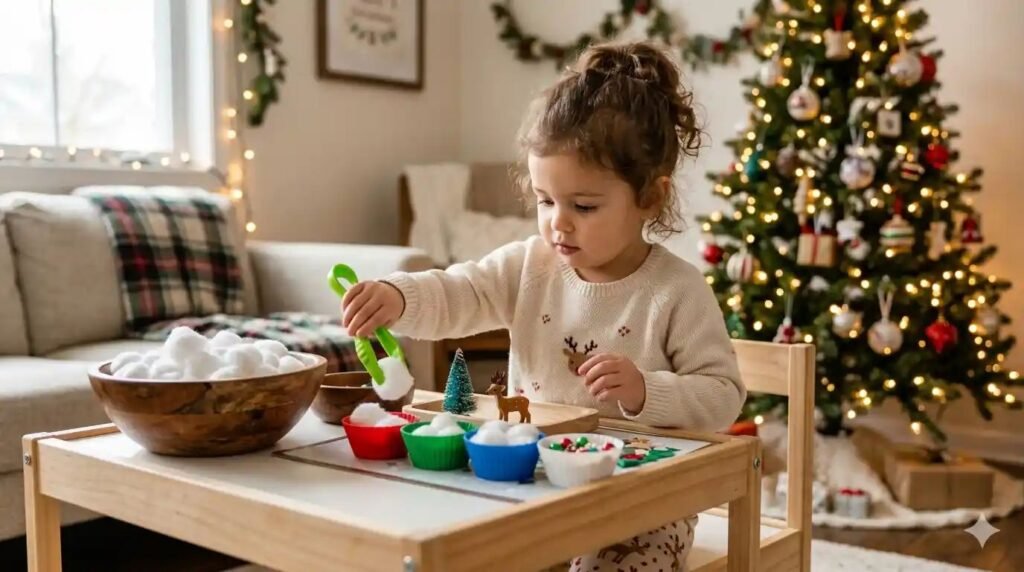
Materials Needs
- Cotton balls
- Tray
- Plastic cups
- Small tongs
Step-by-Step Instructions
- Spread cotton balls across a tray.
- Invite your child to create snow piles.
- Use tongs to transfer cotton balls.
- Build pretend snowmen.
- Sort by size if available.
- Create simple winter stories together.
What They Are Learning
Children practice:
- Fine motor control
- Grasp strength
- Imaginative play
- Sensory exploration
- Early problem-solving
Health & Development Benefits
The lightweight texture provides a unique sensory experience without overwhelming sensitive children. Using tongs promotes precision and hand strength.
Pretend play strengthens cognitive development by encouraging symbolic thinking. Children learn to represent ideas and objects creatively.
The calm pace supports focus while allowing children to explore independently.
Screen-free sensory activities also encourage longer periods of sustained engagement.
Safety Tips
- Supervise children who mouth objects.
- Remove loose fibers if damaged.
- Use age-appropriate tools.
Parent-to-Parent Note
Toddlers often enjoy simply transferring cotton balls between containers over and over.
5. Cinnamon Scented Sensory Bags
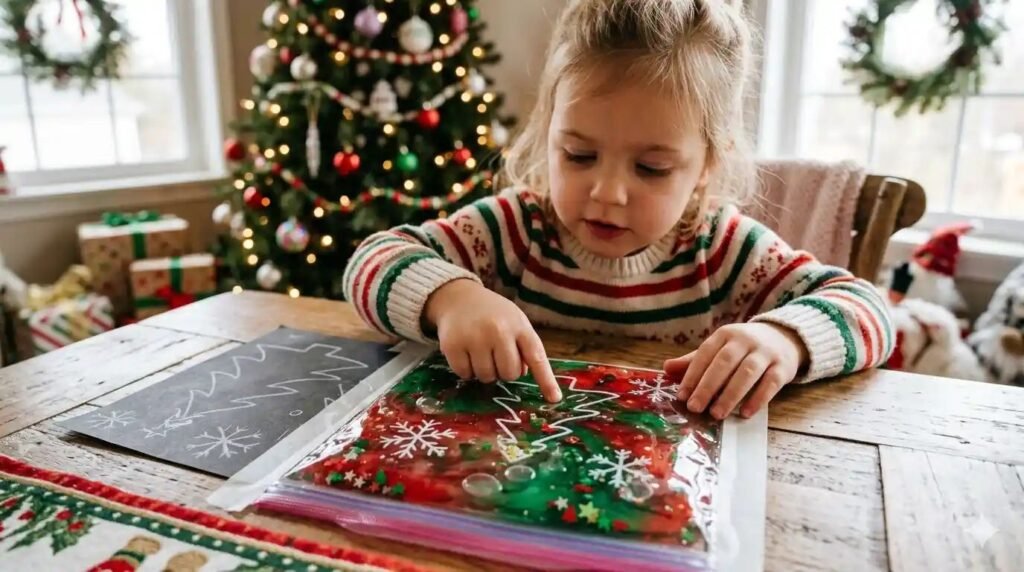
Materials Needed
- Zip-top freezer bags
- Hair gel
- Cinnamon
- Red and green food coloring
Step-by-Step Instructions
- Add gel to a freezer bag.
- Mix in cinnamon and coloring.
- Seal tightly.
- Tape to a table or window.
- Encourage tracing shapes and letters.
- Extend with holiday-themed drawings.
What They Are Learning
Children develop:
- Sensory awareness
- Pre-writing skills
- Finger strength
- Creativity
- Language development
Health & Development Benefits
Tracing through sensory bags builds finger isolation and control, skills essential for future handwriting development.
The scented element engages multiple senses simultaneously, strengthening sensory processing pathways. Children learn through repeated multisensory experiences.
Because the materials remain contained, children can explore sensory input without becoming overwhelmed by mess.
This type of focused play often encourages calm attention and emotional regulation.
Safety Tips
- Check for skin sensitivities.
- Ensure bags remain sealed.
- Adult supervision required.
Parent-to-Parent Note
Tape the bag down well. Curious little hands love testing whether it can be peeled up.
6. Holiday Water Painting
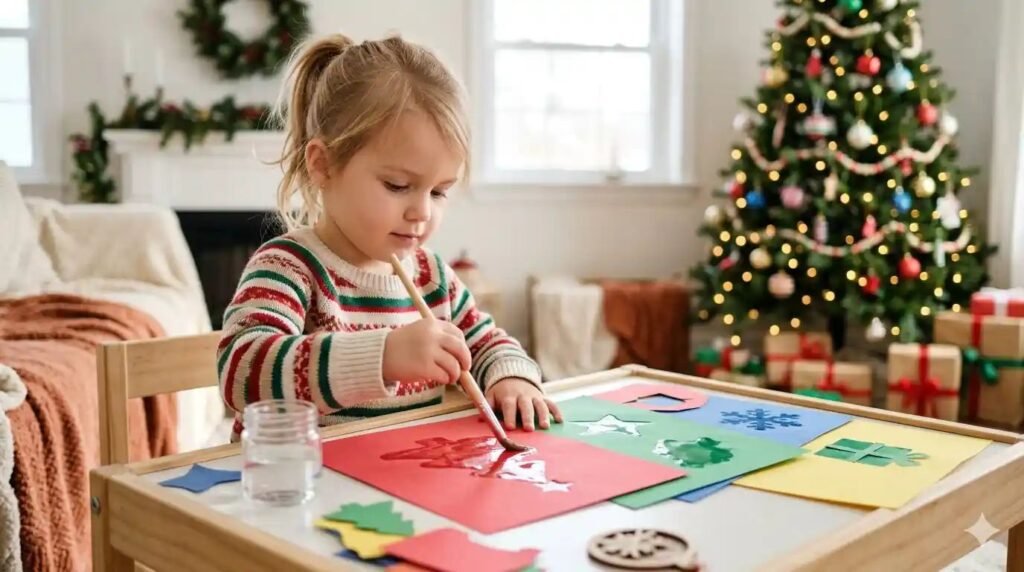
Materials Needed
- Paintbrushes
- Water
- Colored construction paper
Step-by-Step Instructions
- Provide a small cup of water.
- Offer holiday-themed paper shapes.
- Demonstrate painting with water only.
- Watch designs appear and disappear.
- Encourage experimentation.
- Repeat as often as desired.
What They Are Learning
Children build:
- Hand control
- Creativity
- Cause-and-effect understanding
- Focus
- Visual tracking
Health & Development Benefits
Water painting provides a low-pressure creative outlet. Children can explore without worrying about mistakes.
The repetitive brush movements strengthen coordination and fine motor control. These experiences lay foundations for writing and drawing skills.
Watching water evaporate introduces simple scientific observation. Children begin noticing changes and patterns in their environment.
The quiet nature of the activity encourages mindfulness and concentration.
Safety Tips
- Use non-slip surfaces.
- Supervise water use.
- Avoid excessive water spills.
Parent-to-Parent Note
This is one of the easiest sensory activities for days when your energy is running low.
7. Jingle Bell Sound Matching
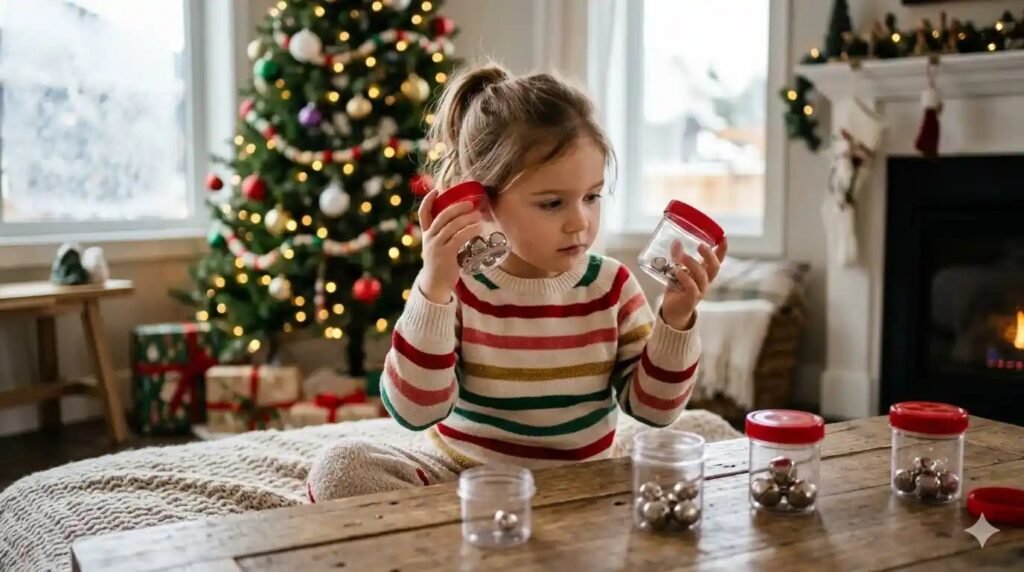
Materials Needed
- Jingle bells
- Small containers
- Tape
Step-by-Step Instructions
- Place different numbers of bells in containers.
- Seal containers securely.
- Shake each one.
- Encourage children to compare sounds.
- Match similar sounds together.
- Create simple listening games.
What They Are Learning
Children develop:
- Auditory discrimination
- Listening skills
- Attention
- Memory
- Early problem-solving
Health & Development Benefits
Careful listening activities strengthen auditory processing skills. These skills contribute to language development and learning readiness.
Children practice focusing attention on subtle differences, an important cognitive skill.
Matching and comparing sounds encourages memory development and analytical thinking.
Because children must slow down and listen carefully, this activity naturally promotes calm engagement.
Safety Tips
- Secure containers tightly.
- Avoid loose bells around young children.
- Supervise play.
Parent-to-Parent Note
Many children surprise parents with how accurately they can identify matching sounds.
8. Christmas Sticker Scene
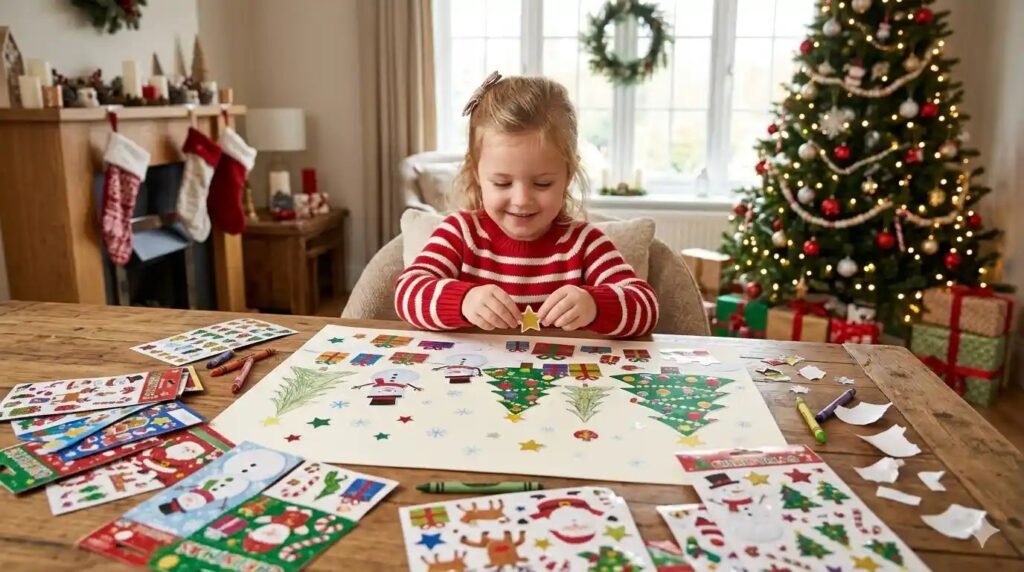
Materials Needed
- Holiday stickers
- Large sheet of paper
- Crayons
Step-by-Step Instructions
- Create a simple winter background.
- Offer holiday stickers.
- Encourage scene building.
- Ask open-ended questions.
- Add drawings and details.
- Extend with storytelling.
What They Are Learning
Children practice:
- Fine motor skills
- Creativity
- Storytelling
- Language development
- Planning skills
Health & Development Benefits
Peeling stickers strengthens finger muscles and coordination. These small movements contribute to later writing readiness.
Creating scenes encourages narrative thinking. Children organize ideas, sequence events, and communicate stories.
Art activities also support emotional expression and confidence.
The process provides meaningful screen-free entertainment while strengthening developmental skills.
Safety Tips
- Monitor small stickers around toddlers.
- Use age-appropriate materials.
Parent-to-Parent Note
You may hear some wonderfully imaginative holiday stories during this activity.
9. Wrapped Treasure Hunt
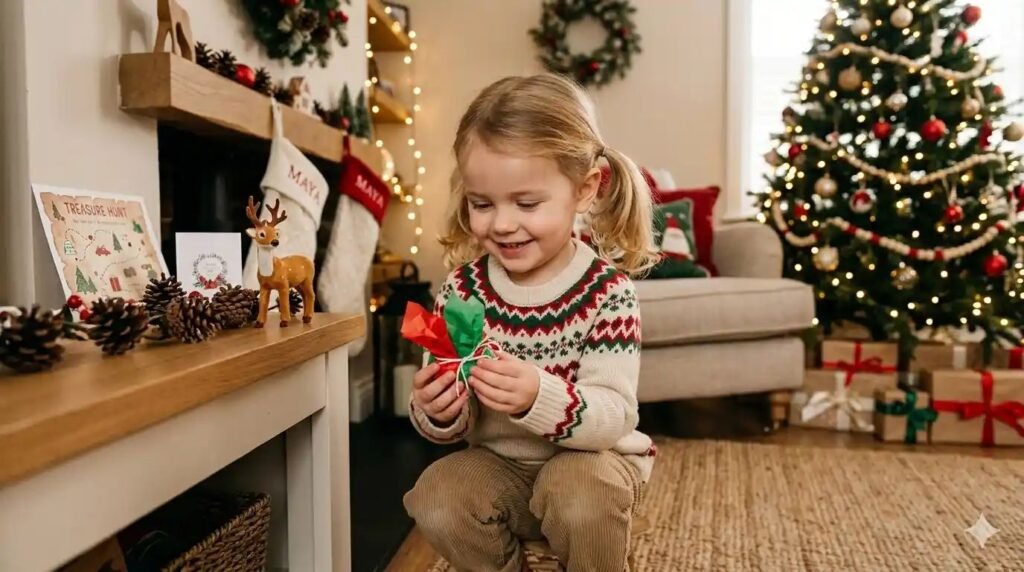
Materials Needed
- Small toys
- Tissue paper
- Gift bags
Step-by-Step Instructions
- Wrap toys in tissue paper.
- Hide them around a room.
- Encourage children to search.
- Help unwrap discovered treasures.
- Discuss findings.
- Rehide and repeat.
What They Are Learning
Children build:
- Problem-solving skills
- Memory
- Gross motor skills
- Attention
- Language skills
Health & Development Benefits
Searching and moving through space supports motor planning and coordination. Children learn to navigate their environment intentionally.
The anticipation involved in finding hidden objects strengthens attention and persistence.
Unwrapping develops fine motor control while providing satisfying sensory feedback.
The combination of movement and thinking supports whole-child development.
Safety Tips
- Avoid small choking hazards.
- Supervise exploration.
- Ensure safe hiding locations.
Parent-to-Parent Note
Children often enjoy wrapping the treasures again just as much as finding them.
10. Cozy Christmas Reading Nook
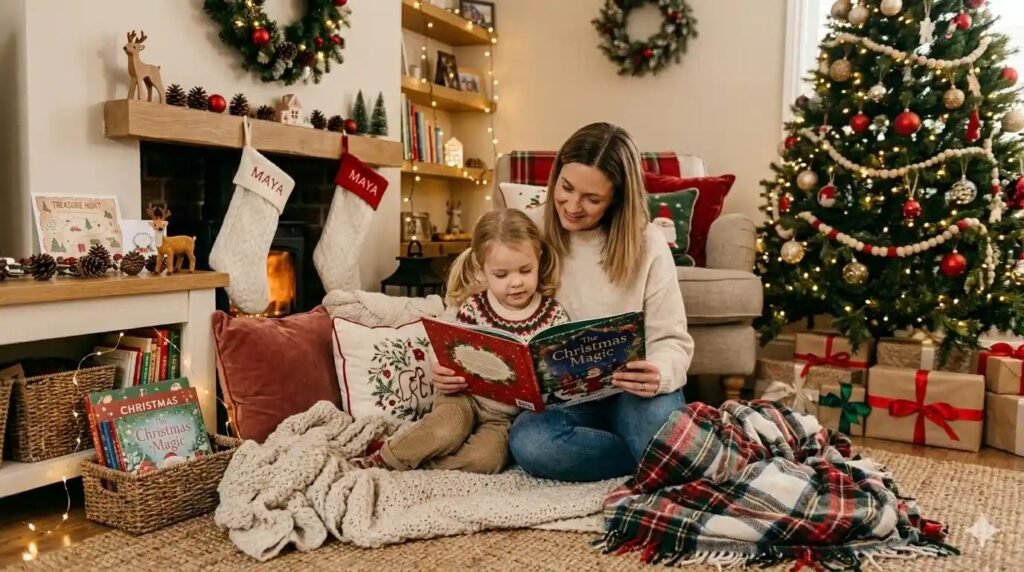
Materials Needed
- Blankets
- Pillows
- Holiday books
- Soft lighting
Step-by-Step Instructions
- Create a comfortable reading space.
- Add pillows and blankets.
- Select holiday books.
- Read together slowly.
- Discuss pictures and characters.
- Encourage independent browsing.
What They Are Learning
Children develop:
- Language skills
- Listening comprehension
- Emotional understanding
- Early literacy
- Attention span
Health & Development Benefits
Shared reading is one of the strongest supports for language and cognitive development. Children hear new vocabulary and learn how stories work.
A cozy reading environment also encourages emotional connection between caregiver and child. These moments of closeness help children feel secure.
Reading supports attention, memory, imagination, and social-emotional growth while providing a calm break from holiday excitement.
Most importantly, it creates meaningful family memories that often last long after specific toys are forgotten.
Safety Tips
- Use battery-operated lights when possible.
- Keep blankets away from infants.
- Maintain supervision.
Parent-to-Parent Note
Some of my favorite holiday memories involve reading the same Christmas book night after night because a child loved it so much.
The holidays do not have to be packed with constant activity to be meaningful. Often, the quiet moments spent exploring, creating, reading, and connecting become the memories children treasure most. Giving children opportunities for calm sensory play can help balance the excitement of the season while supporting healthy development.
Frequently Asked Questions
What are the best quiet Christmas activities for toddlers?
Sensory bins, play dough, sticker scenes, cotton ball snow play, and cozy reading corners are excellent choices. They provide hands-on engagement while helping toddlers stay calm and focused.
How do sensory activities help children during the holidays?
Sensory activities offer predictable, calming experiences that can help children manage excitement, changes in routine, and busy social gatherings. They also support fine motor, cognitive, and emotional development.
Are Christmas sensory activities good for children with sensory sensitivities?
Many are. Activities such as sensory bottles, water painting, and reading nooks provide gentle sensory input that can feel comforting. Always adapt activities to your child’s individual preferences and needs.
How long should sensory activities last?
Follow your child’s lead. Some children engage for five minutes, while others may stay focused for thirty minutes or longer. The goal is meaningful engagement, not a specific time limit.
Final Conclusion
The holiday season is filled with excitement, traditions, and special moments, but young children often need quiet opportunities to recharge along the way. Simple sensory Christmas activities can provide exactly that balance. They create peaceful spaces where children can explore, learn, and connect while building important developmental skills.
Activities such as sensory bins, play dough, reading nooks, and water painting support fine motor development, attention, creativity, language growth, and emotional regulation. Just as importantly, they offer screen-free opportunities for meaningful family interaction during one of the busiest times of the year.
As parents, it’s easy to feel pressure to create elaborate holiday experiences. In reality, children often find the greatest joy in simple moments spent together. A bin of rice, a cozy blanket fort, or a handful of cotton-ball snowflakes can become the highlight of a child’s day.
Give yourself permission to keep things simple. Slow down when you can, enjoy the little moments, and remember that your presence matters far more than perfection. Wishing you and your family a peaceful, joyful, and wonderfully calm holiday season.