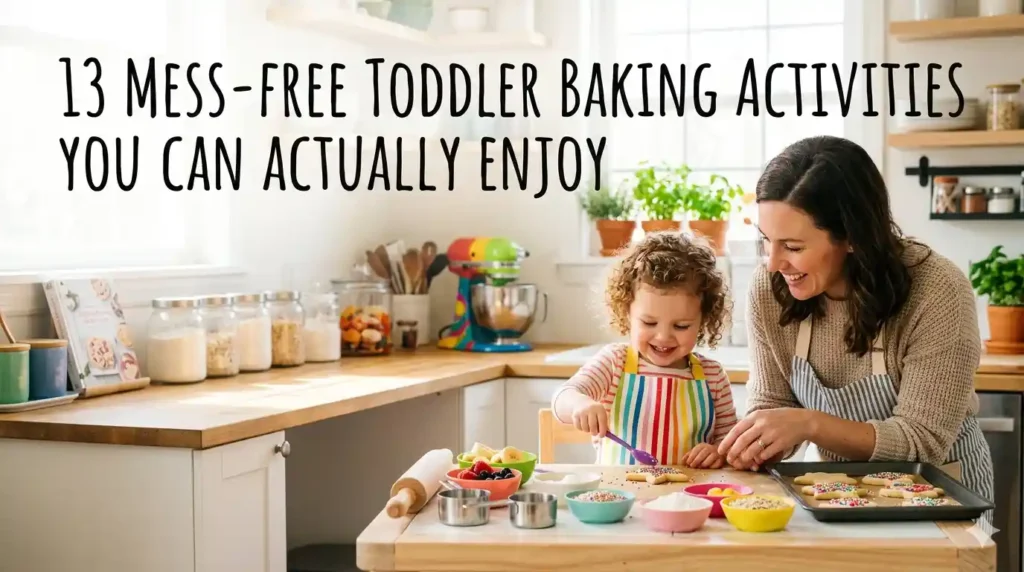
Busy toddlers seem to have a sixth sense for knowing exactly when you’re trying to get something done. The moment you step into the kitchen, tiny feet appear behind you, eager to help, explore, and touch absolutely everything within reach. While that curiosity is wonderful for learning, it can make baking feel more stressful than fun.
The good news is that toddlers genuinely love kitchen activities, and with the right setup, they can safely join the fun without turning your counters into a disaster zone. As both a pediatrician and a parent educator, I’ve found that simple, low-mess baking activities offer the perfect blend of learning, sensory play, and quality family time. Best of all, you’ll actually enjoy these activities instead of spending the next hour cleaning flour off the ceiling.
13 Mess-Free Toddler Baking Activities You Can Actually Enjoy
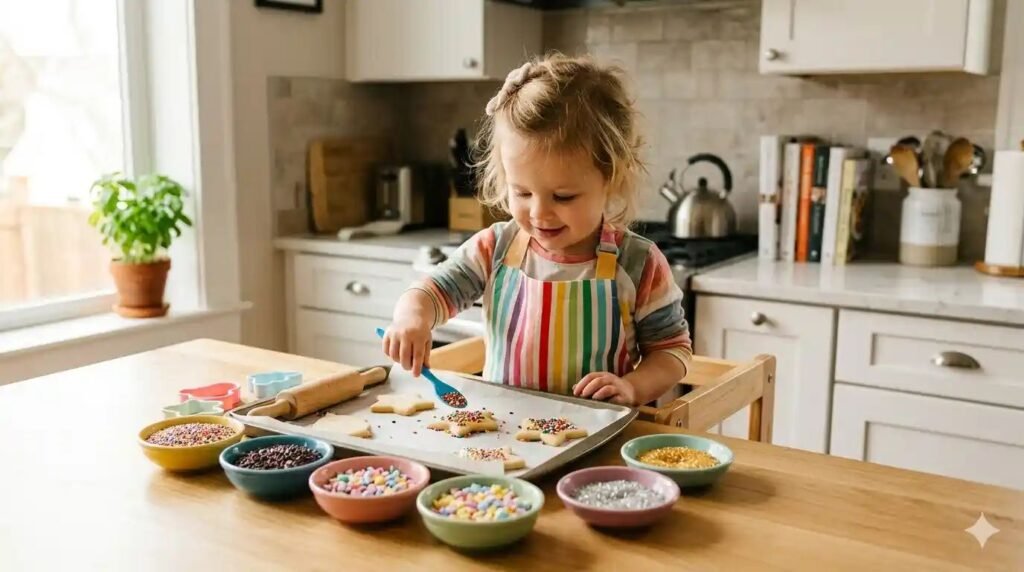
1. Sprinkle Decorating Station
Materials Needed:
- Plain cookies or graham crackers
- Yogurt or icing
- Colored sprinkles
- Small spoon
Step-by-Step Instructions:
- Place cookies on a tray.
- Spread a thin layer of yogurt or icing beforehand.
- Pour small amounts of sprinkles into shallow bowls.
- Show your toddler how to pinch and sprinkle.
- Let them decorate freely.
What They Are Learning:
- Fine motor control
- Hand-eye coordination
- Creativity
- Pincer grasp development
Safety Note: Use age-appropriate sprinkles and supervise closely with younger toddlers.
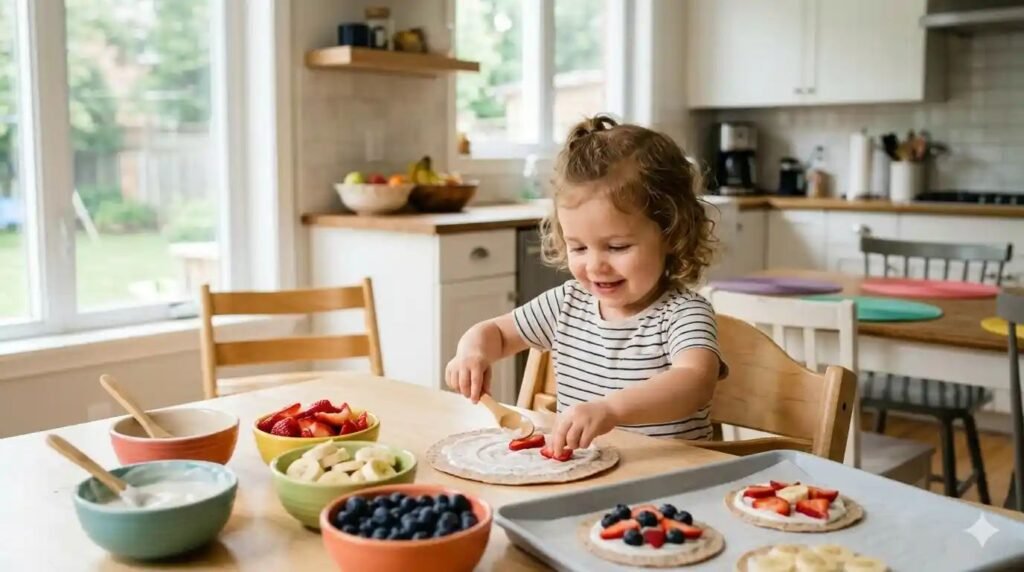
2. Fruit Pizza Creations
Materials Needed:
- Mini tortillas
- Cream cheese or yogurt
- Sliced strawberries, bananas, and blueberries
Step-by-Step Instructions:
- Spread cream cheese onto each tortilla.
- Place fruit pieces into small bowls.
- Encourage your child to create designs.
- Talk about colors and shapes while decorating.
- Enjoy together afterward.
What They Are Learning:
- Pattern recognition
- Color identification
- Healthy food exposure
- Creativity
Parent Tip: Expect a few fruit samples to disappear before the pizza is finished. That’s part of the fun.
3. Muffin Cup Ingredient Sorting
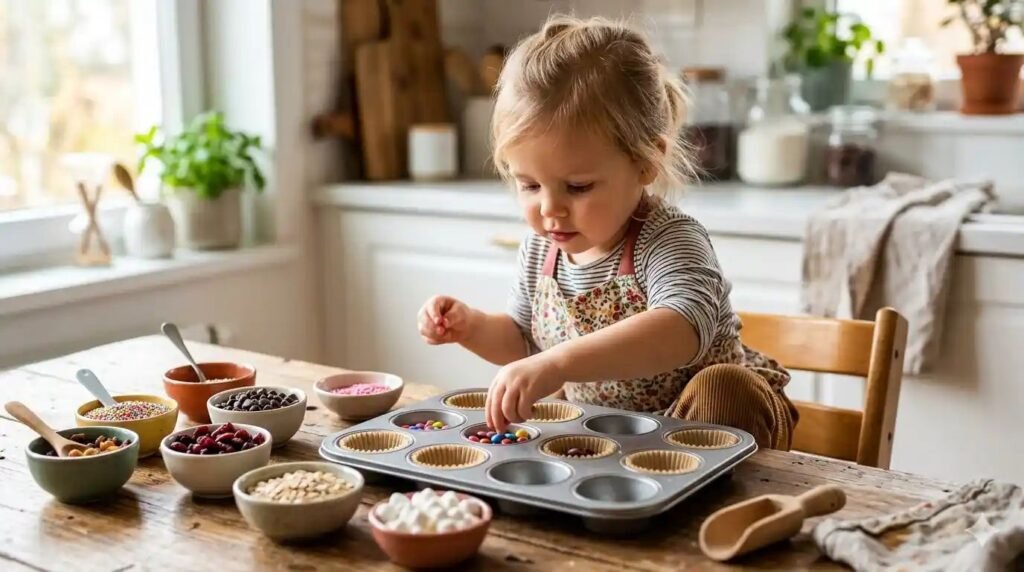
Materials Needed:
- Muffin tin
- Safe baking ingredients
- Measuring spoons
Step-by-Step Instructions:
- Place ingredients in separate bowls.
- Label muffin cups with pictures or colors.
- Invite your toddler to sort ingredients.
- Count together as they transfer items.
What They Are Learning:
- Sorting skills
- Early math concepts
- Focus
- Vocabulary development
4. Banana Smash Baking Helper
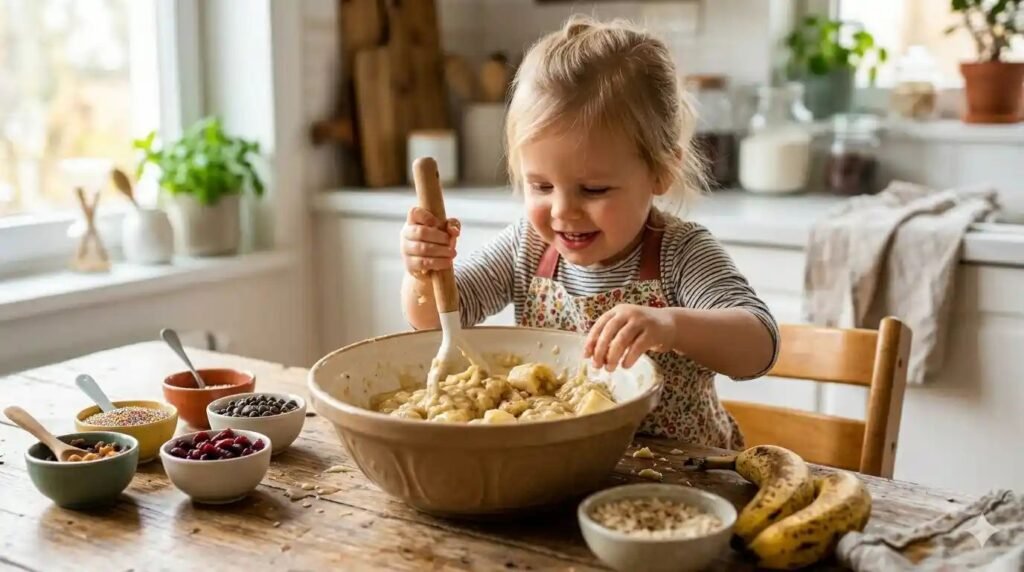
Materials Needed:
- Ripe bananas
- Large bowl
- Toddler-safe masher or fork
Step-by-Step Instructions:
- Place peeled bananas in a bowl.
- Demonstrate gentle mashing.
- Let your toddler continue independently.
- Add mashed bananas to muffins or pancakes.
What They Are Learning:
- Hand strength
- Cause and effect
- Sensory exploration
- Food preparation awareness
Real-World Observation: This activity often keeps toddlers focused longer than expected because they love seeing the texture change.
5. Cookie Cutter Dough Shapes
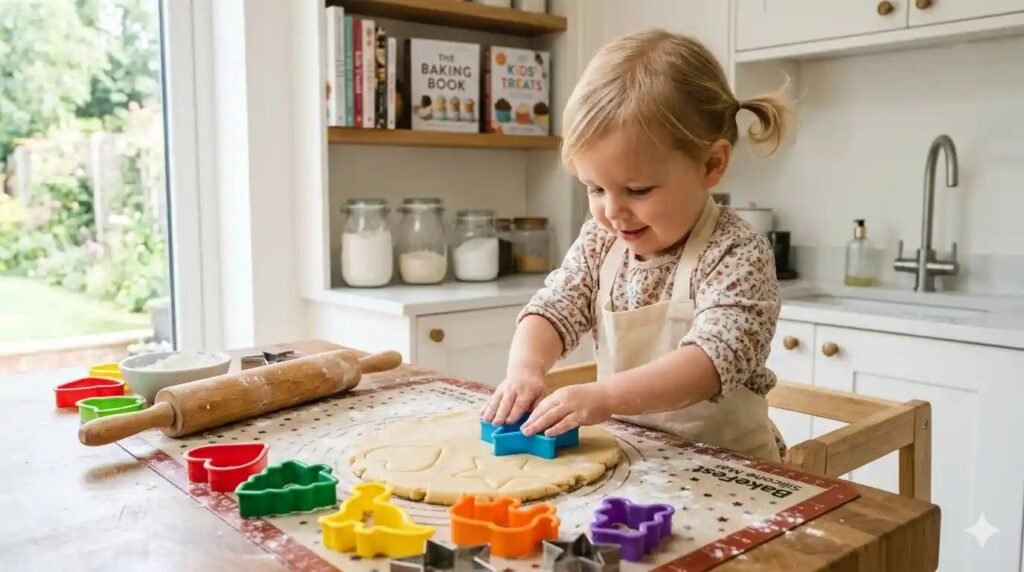
Materials Needed:
- Prepared cookie dough
- Cookie cutters
- Baking sheet
Step-by-Step Instructions:
- Roll dough out ahead of time.
- Offer several cookie cutter shapes.
- Show how to press firmly.
- Let your toddler cut shapes repeatedly.
- Transfer shapes to a baking tray.
What They Are Learning:
- Hand strength
- Shape recognition
- Coordination
- Spatial awareness
Safety Tip: Avoid metal cutters with sharp edges for very young children.
6. Raisin Pattern Cookies
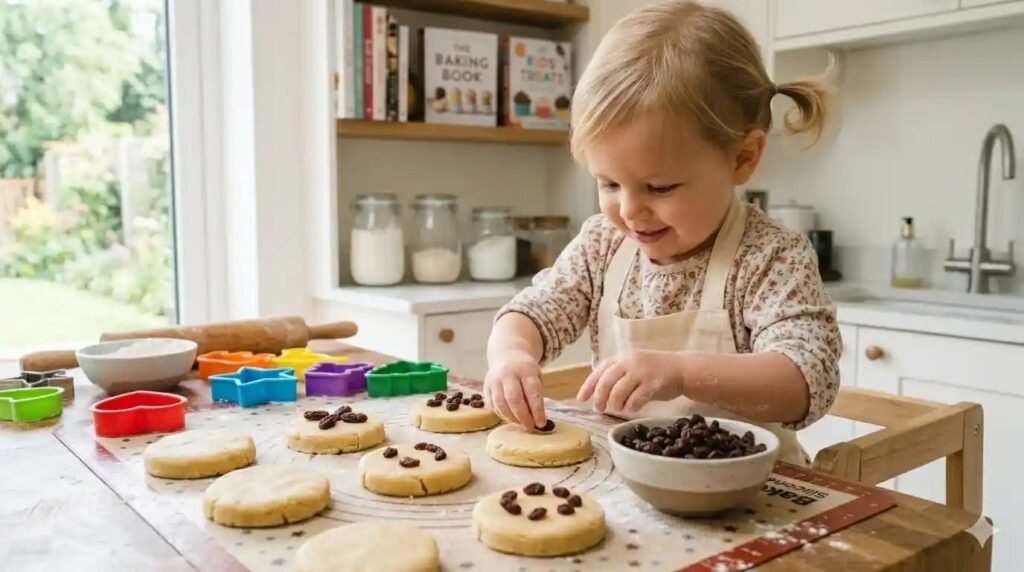
Materials Needed:
- Prepared cookie dough
- Raisins
- Baking tray
Step-by-Step Instructions:
- Place cookie dough rounds on a tray.
- Provide a bowl of raisins.
- Encourage simple patterns.
- Count raisins together as they place them.
- Bake according to recipe instructions.
What They Are Learning:
- Early math skills
- Sequencing
- Pattern recognition
- Fine motor development
7. Measuring Cup Pour Practice
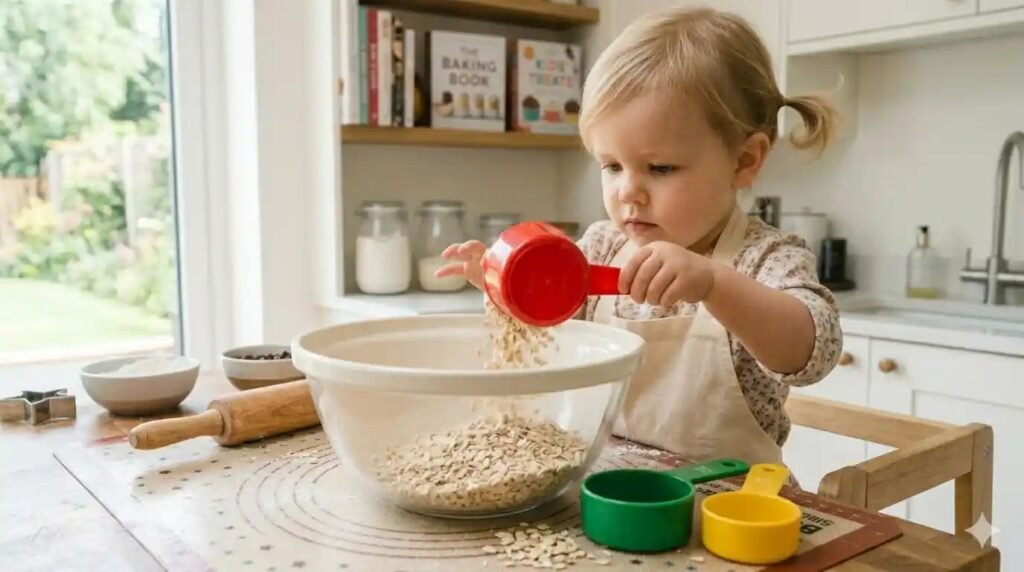
Materials Needed:
- Measuring cups
- Oats or dry cereal
- Large mixing bowl
Step-by-Step Instructions:
- Fill measuring cups ahead of time.
- Demonstrate careful pouring.
- Allow your child to empty each cup.
- Repeat several times.
What They Are Learning:
- Volume awareness
- Coordination
- Focus
- Early science concepts
Parent Tip: Place a baking tray underneath to catch stray oats and keep cleanup easy.
8. Cinnamon Toast Decorating
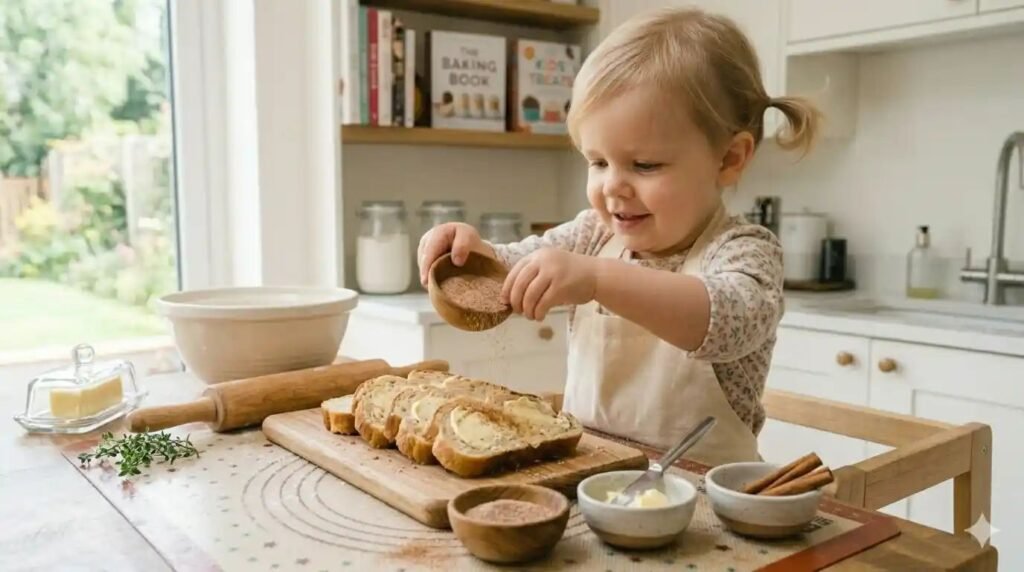
Materials Needed:
- Bread slices
- Butter
- Cinnamon sugar
- Small spoon
Step-by-Step Instructions:
- Spread butter on bread.
- Give your toddler a spoonful of cinnamon sugar.
- Let them sprinkle carefully.
- Toast and serve.
What They Are Learning:
- Controlled hand movements
- Sensory exploration
- Independence
- Following directions
9. Berry Washing Station
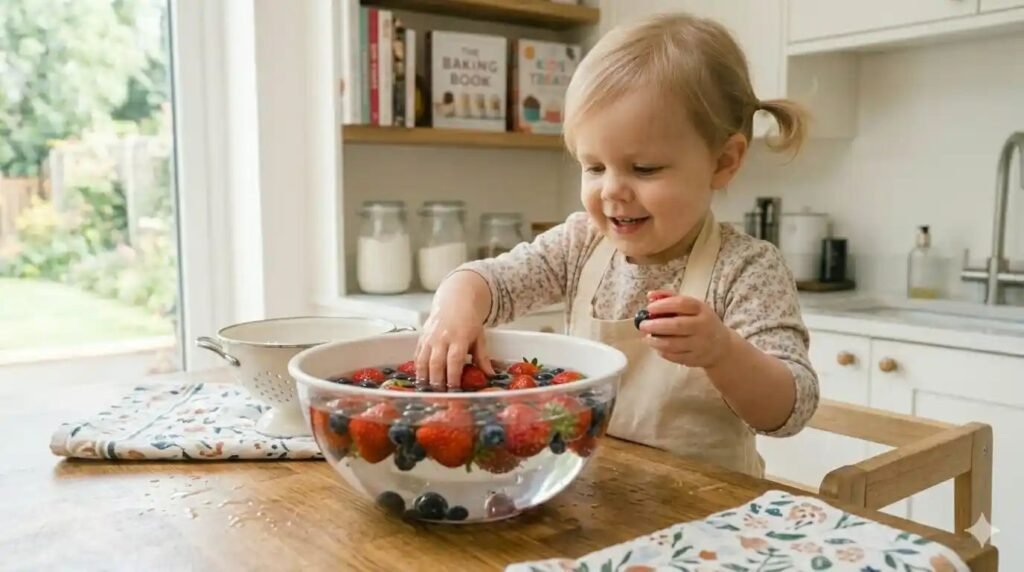
Materials Needed:
- Strawberries or blueberries
- Colander
- Bowl of water
Step-by-Step Instructions:
- Fill a bowl with cool water.
- Place berries inside.
- Let your toddler gently swish them around.
- Transfer berries into a colander.
- Use berries in baking recipes.
What They Are Learning:
- Responsibility
- Practical life skills
- Sensory experiences
- Hand coordination
Safety Note: Always inspect berries before serving and supervise water activities.
10. Mini Muffin Liner Filling
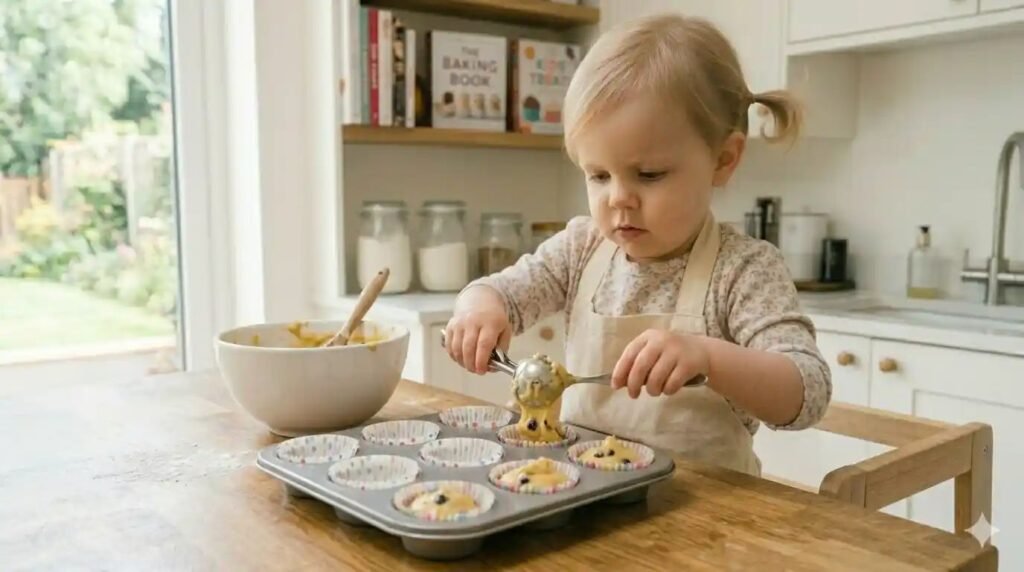
Materials Needed:
- Mini muffin liners
- Muffin pan
- Batter prepared by an adult
Step-by-Step Instructions:
- Place liners into the muffin pan.
- Provide a small scoop.
- Help your toddler transfer batter.
- Fill each liner partially.
- Bake as directed.
What They Are Learning:
- Precision
- Hand-eye coordination
- Patience
- Following instructions
11. Apple Slice Decorating
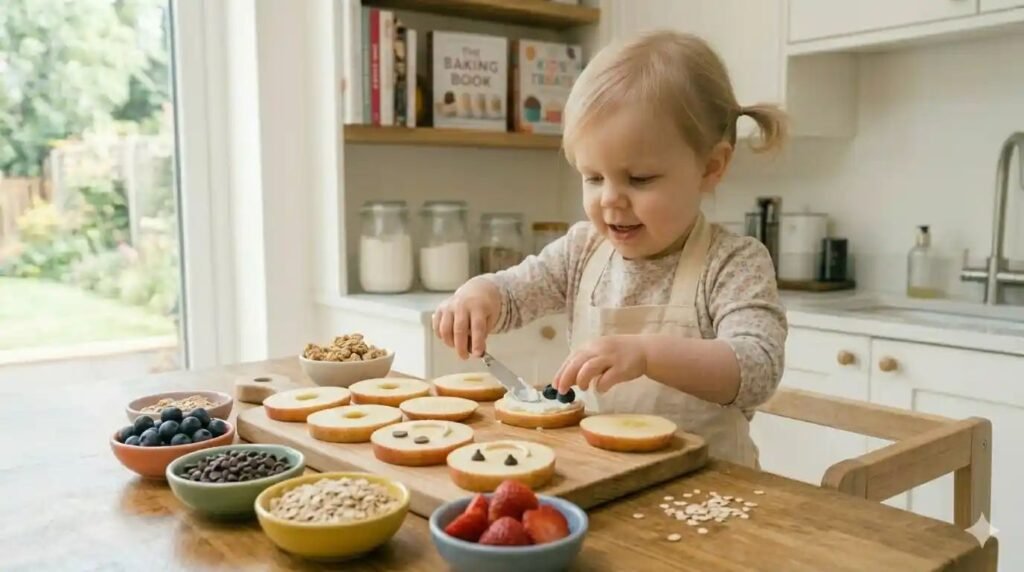
Materials Needed:
- Apple slices
- Sunflower seed butter or cream cheese
- Small toppings like oats
Step-by-Step Instructions:
- Spread topping onto apple slices.
- Place toppings into bowls.
- Let your toddler decorate.
- Create funny faces or simple designs.
- Eat together afterward.
What They Are Learning:
- Creativity
- Fine motor skills
- Food familiarity
- Imagination
12. No-Bake Energy Ball Rolling
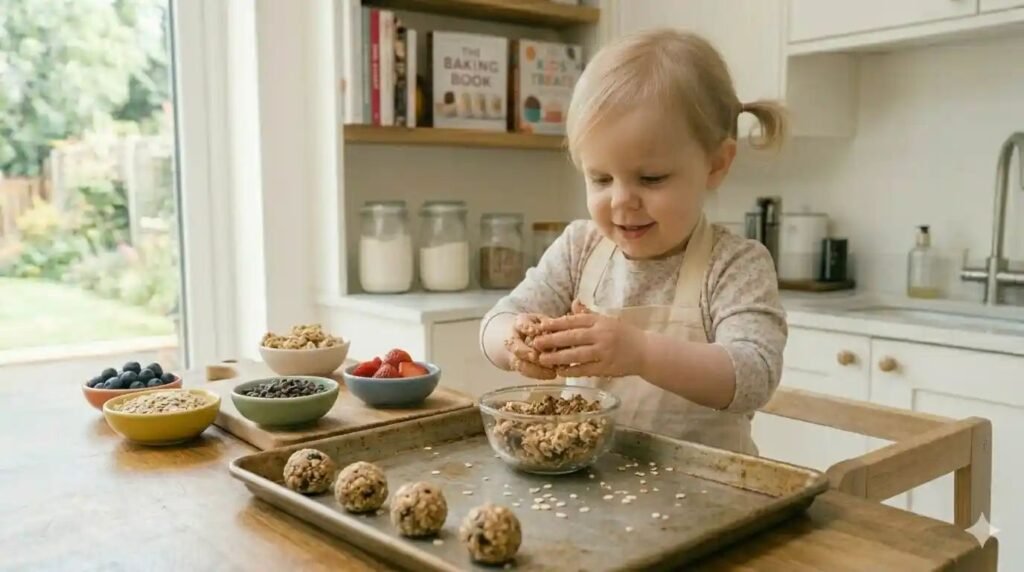
Materials Needed:
- Oats
- Nut-free butter alternative
- Honey (for children over 1 year)
- Mixing bowl
Step-by-Step Instructions:
- Mix ingredients beforehand.
- Scoop small portions onto a tray.
- Demonstrate rolling into balls.
- Allow your toddler to roll with both hands.
- Chill before serving.
What They Are Learning:
- Bilateral coordination
- Sensory exploration
- Muscle development
- Food preparation skills
Safety Warning: Honey should never be given to babies under 12 months.
13. Pretzel and Fruit Kabob Building
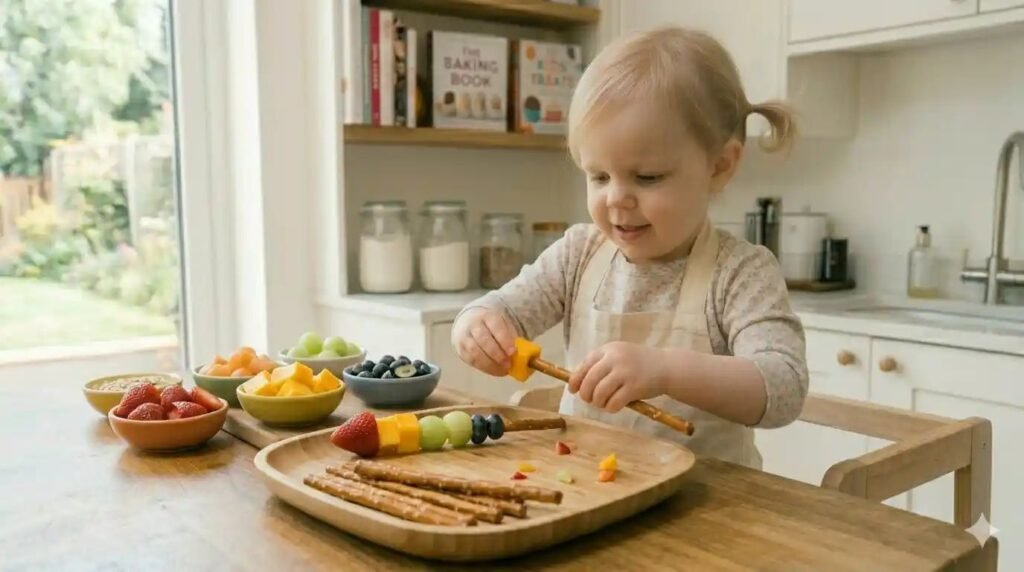
Materials Needed:
- Thick pretzel sticks
- Soft fruit pieces
- Tray
Step-by-Step Instructions:
- Place fruit pieces on a tray.
- Show your toddler how to carefully thread fruit.
- Alternate colors and shapes.
- Create simple patterns together.
- Enjoy as a snack.
What They Are Learning:
- Pattern creation
- Fine motor control
- Problem-solving
- Color recognition
Safety Note: Use soft fruits and supervise closely to reduce choking risks.
Frequently Asked Questions
What age can toddlers start helping with baking?
Most children can begin simple baking activities around 18 months with close supervision. Activities should always match developmental abilities.
Are baking activities good for toddler development?
Yes. Baking supports fine motor skills, language development, early math concepts, problem-solving, and sensory learning.
How do I keep baking activities mess-free?
Use trays under work areas, pre-measure ingredients, provide small portions, and choose activities that involve decorating rather than large amounts of mixing.
What are the safest baking tasks for toddlers?
Washing fruit, decorating cookies, mashing bananas, sorting ingredients, and sprinkling toppings are some of the safest options.
A Little Encouragement for Busy Parents
If your toddler only spends five minutes decorating a cookie before wandering away, that’s okay. The goal isn’t perfection. It’s connection, exploration, and giving your child opportunities to learn through everyday experiences. Some days you’ll get beautifully decorated treats. Other days you’ll get sprinkles in unexpected places. Both are memories worth keeping.
Conclusion
Mess-free baking activities are one of the easiest ways to combine learning, independence, and family bonding in a single experience. With a little preparation and realistic expectations, your toddler can become a confident kitchen helper while developing important skills that support future learning. Start with one simple activity, keep the experience playful, and remember that the best ingredient is always time spent together.