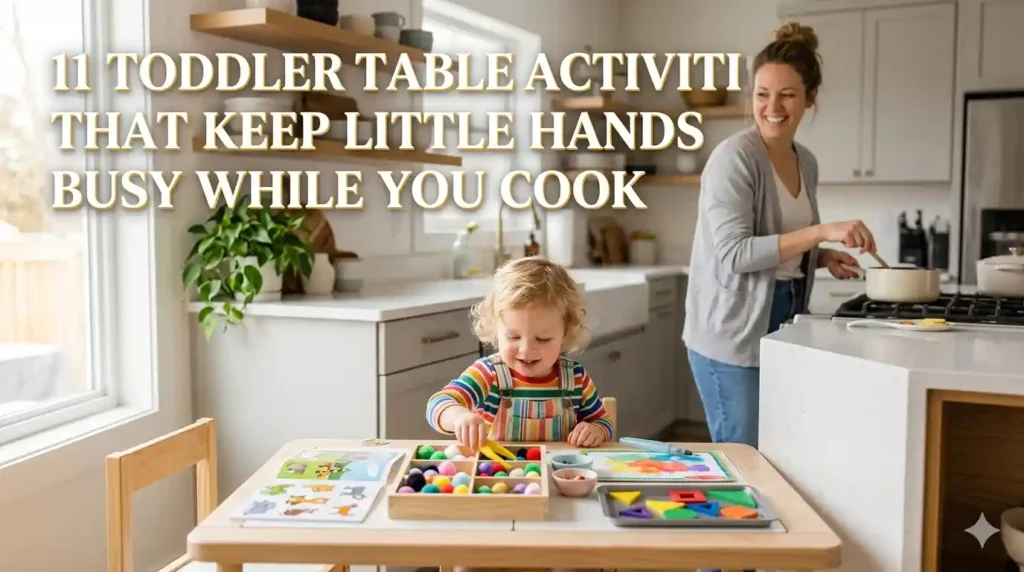
Keeping a toddler busy for even ten minutes can feel like a major parenting victory—especially when you’re trying to get dinner on the table. One minute they’re happily stacking blocks, and the next they’re tugging at your leg asking for snacks, cuddles, or a front-row seat to whatever you’re cooking. If you’ve ever wished for a few peaceful moments in the kitchen, you’re definitely not alone.
As a pediatrician and child development specialist, I’ve found that simple table activities can be a lifesaver during busy parts of the day. The best ones don’t require fancy supplies, keep little hands engaged, and quietly support important developmental skills. Here are some easy toddler table activities that can help you cook, clean, or tackle a quick task while your little one stays happily occupied nearby.
11 Toddler Table Activities That Keep Little Hands Busy While You Cook
1. Sticker Peel-and-Place Fun
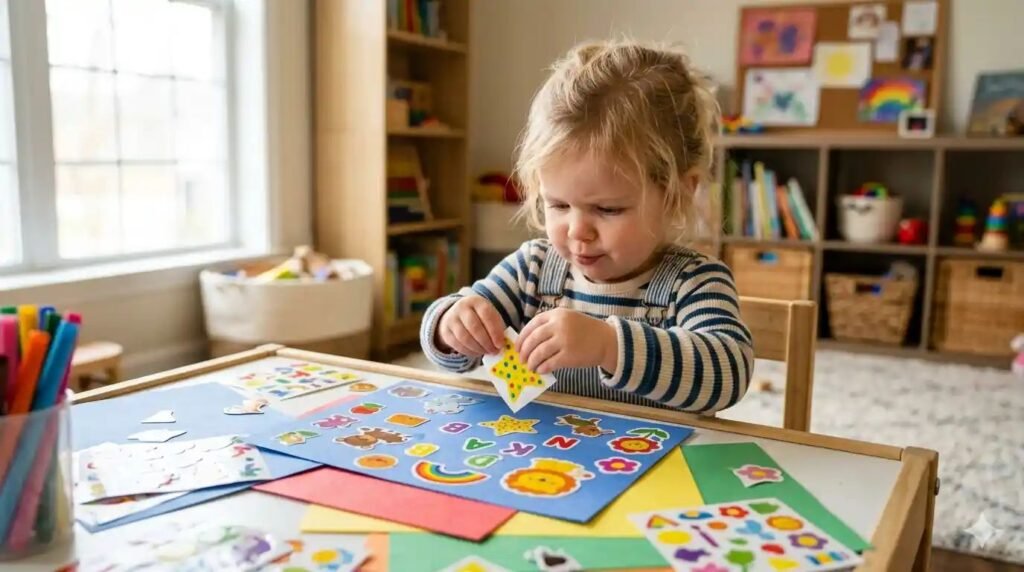
Materials Needed:
- Large stickers
- Construction paper
- Tray or placemat
Step-by-Step Instructions:
- Place a sheet of paper on the table.
- Partially peel stickers to make them easier to grab.
- Invite your toddler to place stickers anywhere they like.
- Encourage them to create rows, shapes, or simple pictures.
What They Are Learning:
- Fine motor skills
- Finger strength
- Hand-eye coordination
- Creativity
Parent Tip: Expect a few stickers on shirts and cheeks. That’s completely normal and often means they’re deeply engaged.
2. Pom-Pom Sorting Station
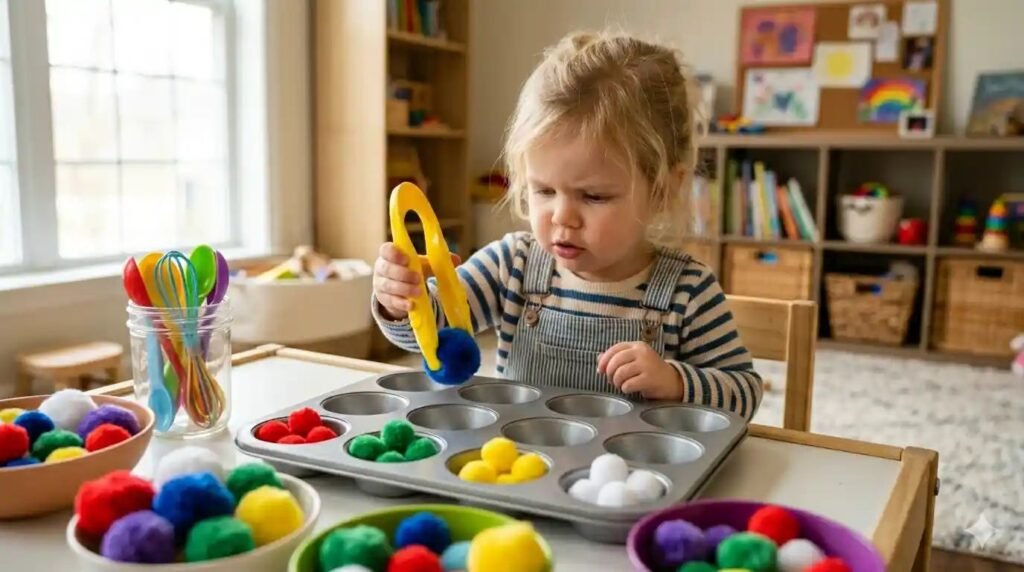
Materials Needed:
- Large pom-poms
- Muffin tin
- Plastic tongs
Step-by-Step Instructions:
- Place colorful pom-poms in a bowl.
- Set out a muffin tin.
- Show your toddler how to transfer pom-poms using tongs.
- Sort by color or simply move them from section to section.
What They Are Learning:
- Fine motor control
- Color recognition
- Concentration
- Problem-solving
Safety Note: Use only large pom-poms and supervise closely to prevent choking hazards.
3. Dry Pasta Scoop and Pour
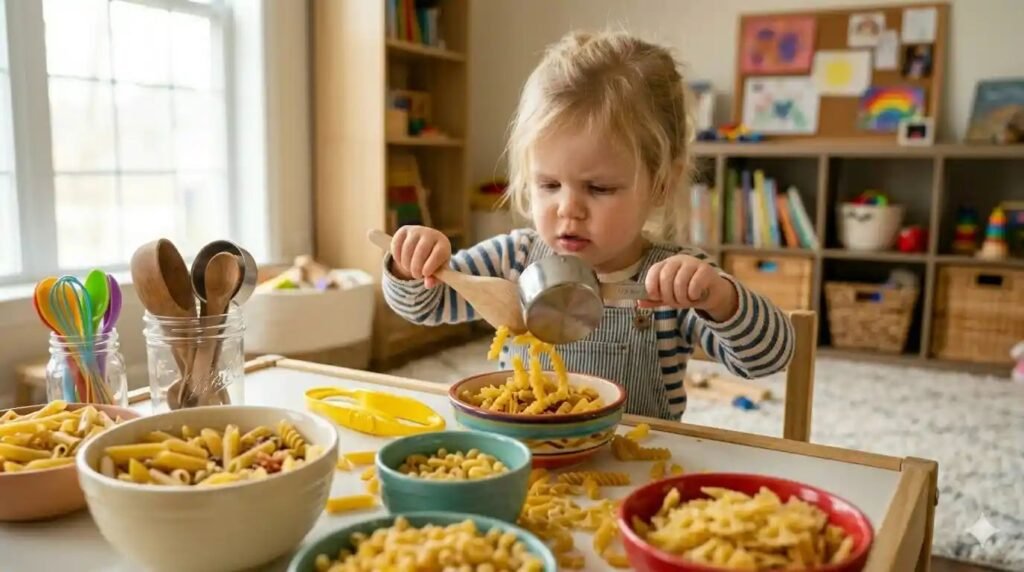
Materials Needed:
- Large dry pasta shapes
- Measuring cups
- Bowls
Step-by-Step Instructions:
- Fill one bowl with pasta.
- Provide measuring cups and spoons.
- Demonstrate scooping and pouring.
- Let your child transfer pasta between containers.
What They Are Learning:
- Hand control
- Early math concepts
- Cause and effect
- Sensory exploration
Real-World Observation: Some pasta will end up on the floor. Keep a small broom nearby and consider it part of the activity.
4. Tape Pull Challenge
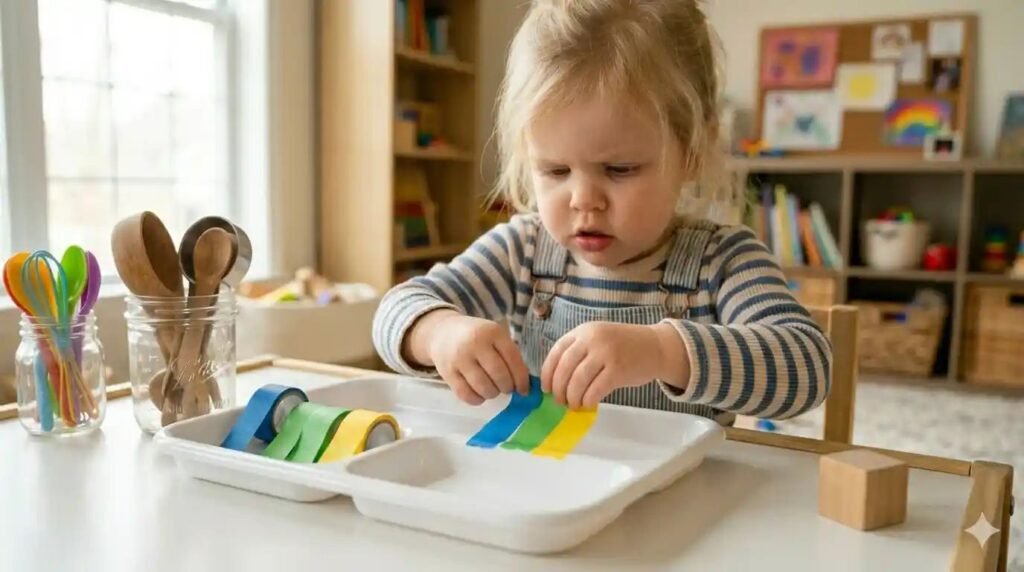
Materials Needed:
- Painter’s tape
- Tray or plastic plate
Step-by-Step Instructions:
- Place strips of tape across a tray.
- Stick the ends down firmly.
- Invite your toddler to peel off each strip.
- Let them crumple and restick the tape.
What They Are Learning:
- Finger dexterity
- Focus
- Bilateral coordination
- Persistence
Bonus: This activity is surprisingly calming for many toddlers.
5. Water Painting Magic
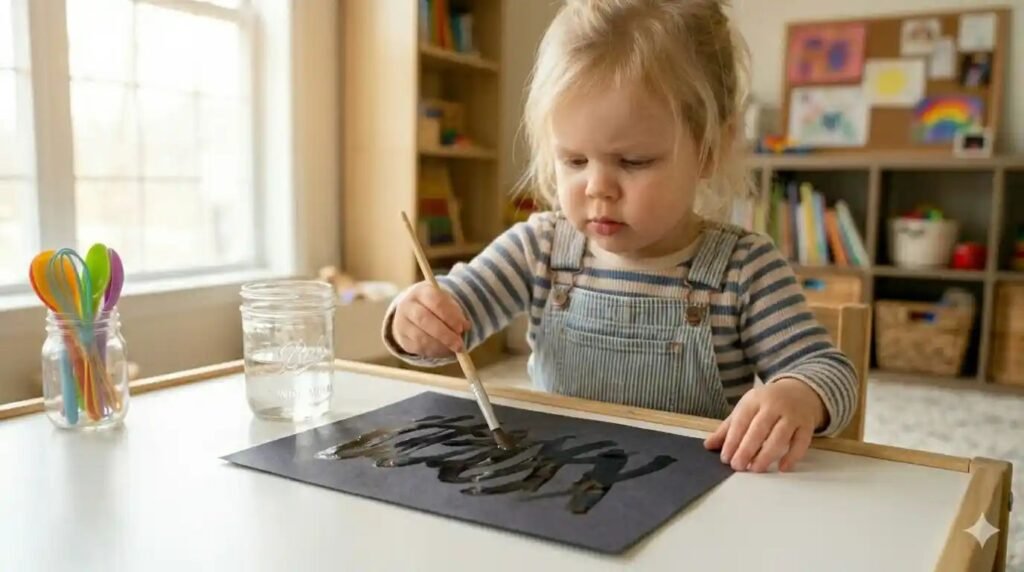
Materials Needed:
- Small cup of water
- Paintbrush
- Construction paper or cardboard
Step-by-Step Instructions:
- Fill a cup with a small amount of water.
- Give your child a paintbrush.
- Show them how to paint with water.
- Watch as the marks appear and disappear while drying.
What They Are Learning:
- Brush control
- Creativity
- Attention span
- Cause and effect
Safety Tip: Use only a small amount of water to reduce spills.
6. Color Matching Egg Carton Game
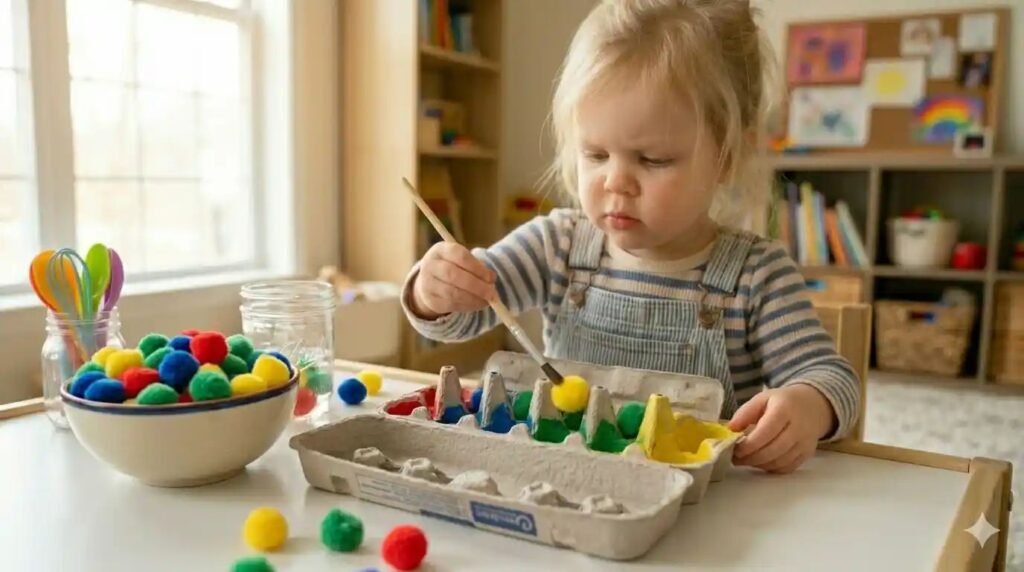
Materials Needed:
- Empty egg carton
- Colored paper circles
- Matching objects or pom-poms
Step-by-Step Instructions:
- Glue colored circles into each egg cup.
- Place matching objects in a bowl.
- Encourage your child to match colors.
- Celebrate each successful match.
What They Are Learning:
- Color recognition
- Sorting skills
- Visual discrimination
- Early cognitive development
Parent Win: Setup takes just a few minutes and often keeps toddlers busy longer than expected.
7. Cotton Ball Transfer Race
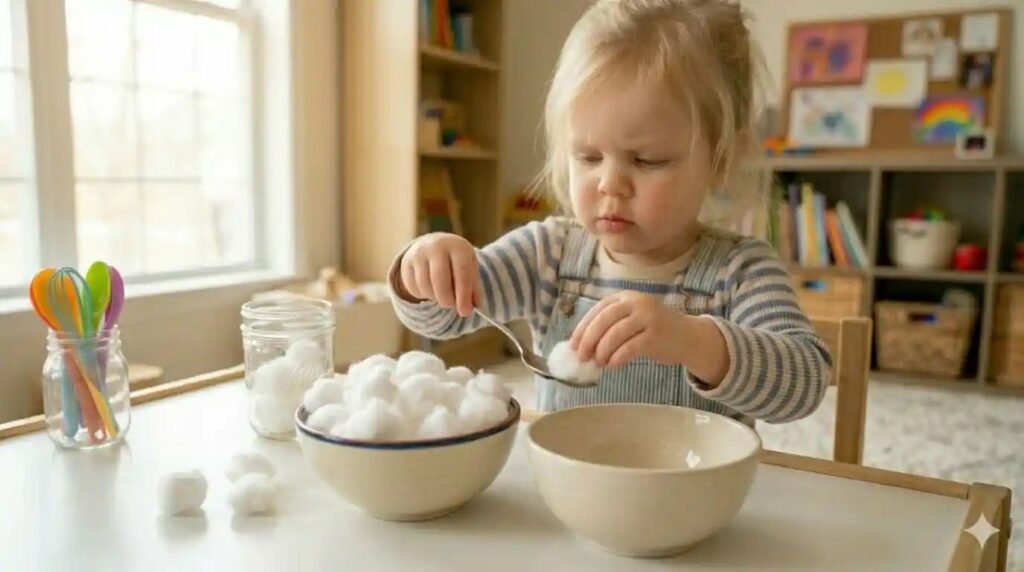
Materials Needed:
- Cotton balls
- Spoon
- Two bowls
Step-by-Step Instructions:
- Fill one bowl with cotton balls.
- Place an empty bowl beside it.
- Show your child how to transfer cotton balls using a spoon.
- Let them continue until all cotton balls are moved.
What They Are Learning:
- Coordination
- Balance
- Patience
- Focus
Fun Fact: Many toddlers love the soft texture and will spend extra time exploring it.
8. Giant Dot Marker Art
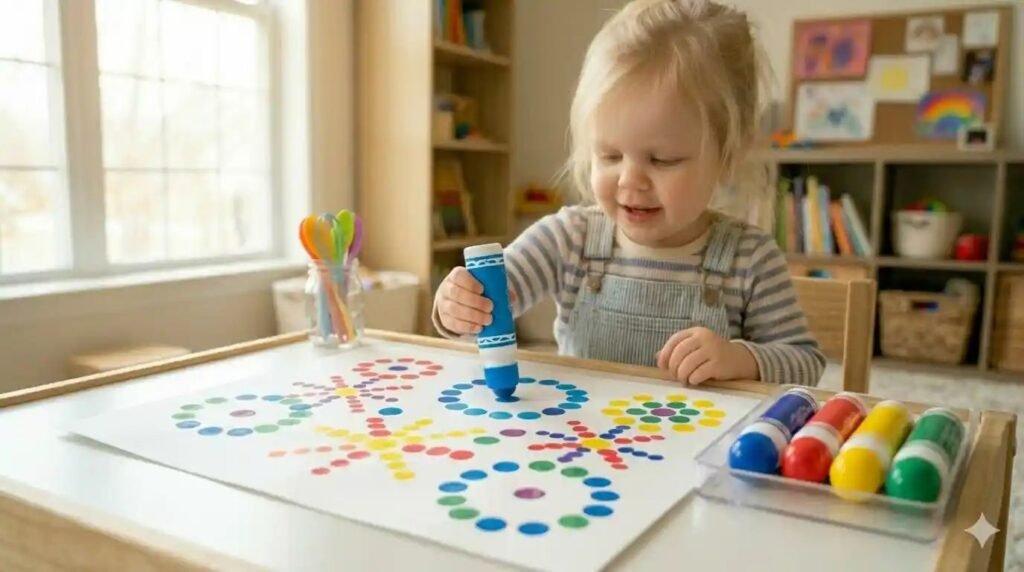
Materials Needed:
- Washable dot markers
- Large paper
Step-by-Step Instructions:
- Tape paper to the table.
- Demonstrate how to press the marker straight down.
- Encourage free exploration.
- Create patterns or simple pictures together.
What They Are Learning:
- Grip development
- Color awareness
- Creativity
- Visual motor skills
Safety Note: Always choose washable, non-toxic markers designed for young children.
9. Animal Rescue Tape Tray
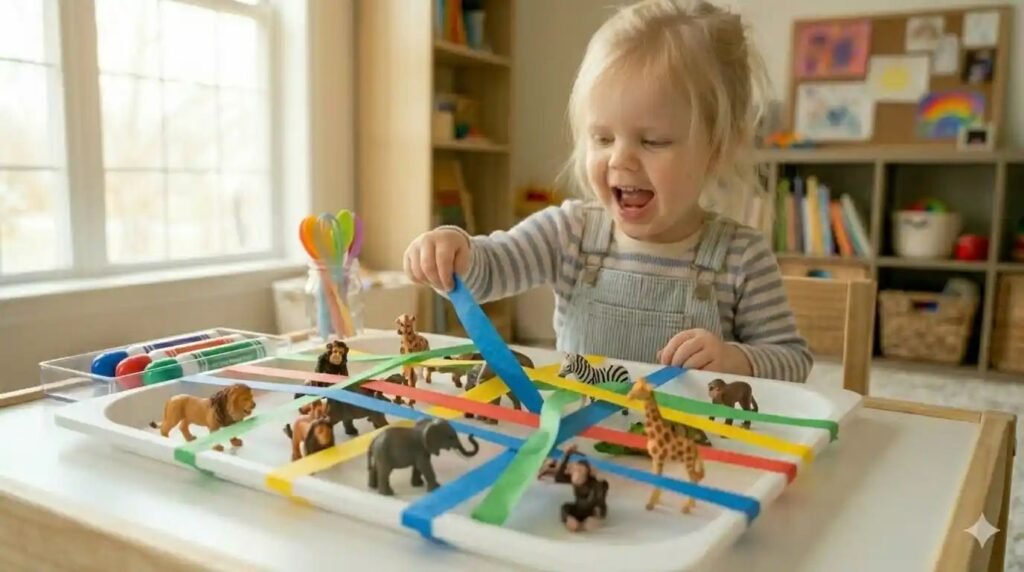
Materials Needed:
- Small toy animals
- Shallow tray
- Painter’s tape
Step-by-Step Instructions:
- Place animals in a tray.
- Crisscross painter’s tape over the top.
- Challenge your toddler to rescue the animals.
- Celebrate each successful rescue.
What They Are Learning:
- Problem-solving
- Fine motor skills
- Persistence
- Spatial awareness
Parent Observation: This activity often captures attention much longer than expected because it feels like a mission.
10. Button Drop Tube Game
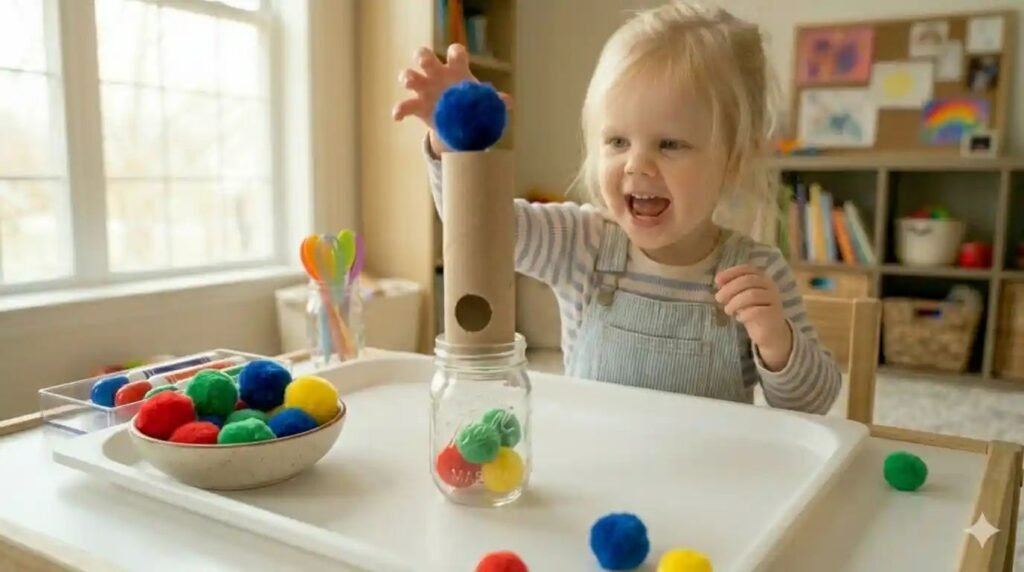
Materials Needed:
- Empty paper towel tube
- Large buttons or large pom-poms
- Container
Step-by-Step Instructions:
- Place the tube vertically into a container.
- Show your toddler how to drop items through the tube.
- Listen for the sound as they land.
- Repeat again and again.
What They Are Learning:
- Hand-eye coordination
- Cause and effect
- Auditory awareness
- Concentration
Safety Warning: Only use extra-large items that cannot fit into a toddler’s mouth.
11. Magnetic Cookie Sheet Play
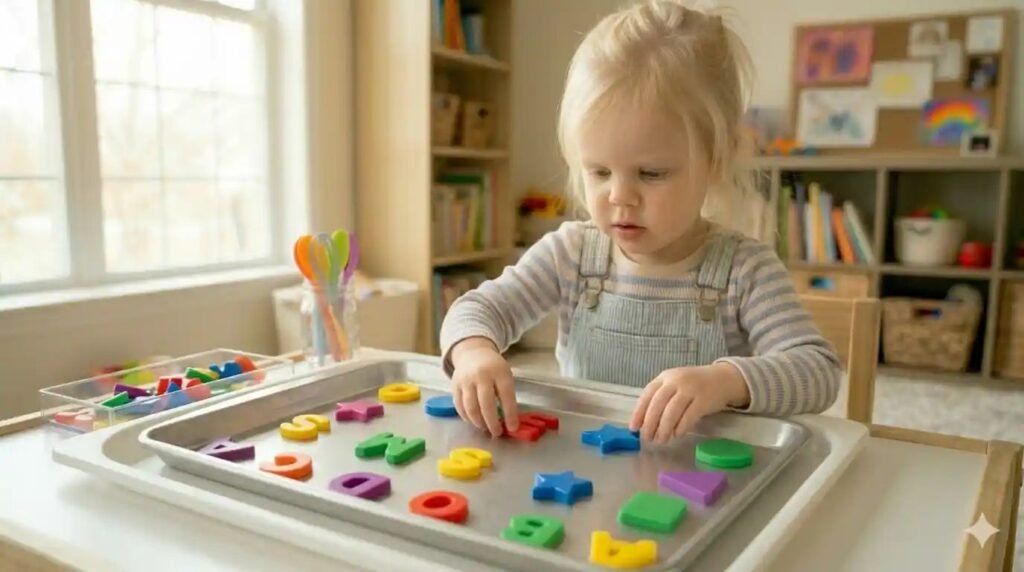
Materials Needed:
- Cookie sheet
- Large magnets
- Magnetic letters or shapes
Step-by-Step Instructions:
- Place a cookie sheet on the table.
- Spread magnets nearby.
- Encourage your toddler to move, sort, and arrange them.
- Create simple patterns or pictures together.
What They Are Learning:
- Spatial reasoning
- Fine motor development
- Creativity
- Early literacy exposure
Safety Note: Ensure magnets are large and securely made. Never use small loose magnets around young children.
Frequently Asked Questions
How long should a toddler table activity last?
Most toddlers stay engaged for 5–20 minutes depending on age, temperament, and interest level. Short engagement periods are completely normal.
What age are these activities best for?
Most activities work well for children between 18 months and 3 years old, with close supervision and age-appropriate adjustments.
Are sensory activities important for toddler development?
Yes. Sensory play supports brain development, language growth, problem-solving skills, and fine motor coordination through hands-on exploration.
How can I keep my toddler interested in table activities?
Rotate activities regularly. Even simple materials can feel brand new when reintroduced after a few days.
A Little Encouragement for Busy Parents
Remember, you don’t need elaborate crafts or expensive toys to support your toddler’s learning. Some of the most meaningful developmental moments happen with a muffin tin, a few pom-poms, and your child’s natural curiosity. If an activity lasts five minutes instead of fifteen, that’s okay too. Toddlers are learning every time they explore, experiment, and play. Give yourself credit for creating opportunities for growth while also getting dinner started or crossing a task off your list. You’re doing an amazing job.
Conclusion
Simple table activities can turn hectic kitchen moments into valuable learning opportunities. With a few household items and a little creativity, you can keep your toddler happily engaged while supporting important developmental skills like coordination, problem-solving, and concentration. The goal isn’t perfection—it’s creating safe, enjoyable moments that work for your family. Try a few of these ideas, see what captures your child’s attention, and remember that even small pockets of independent play are a big win for both toddlers and parents.