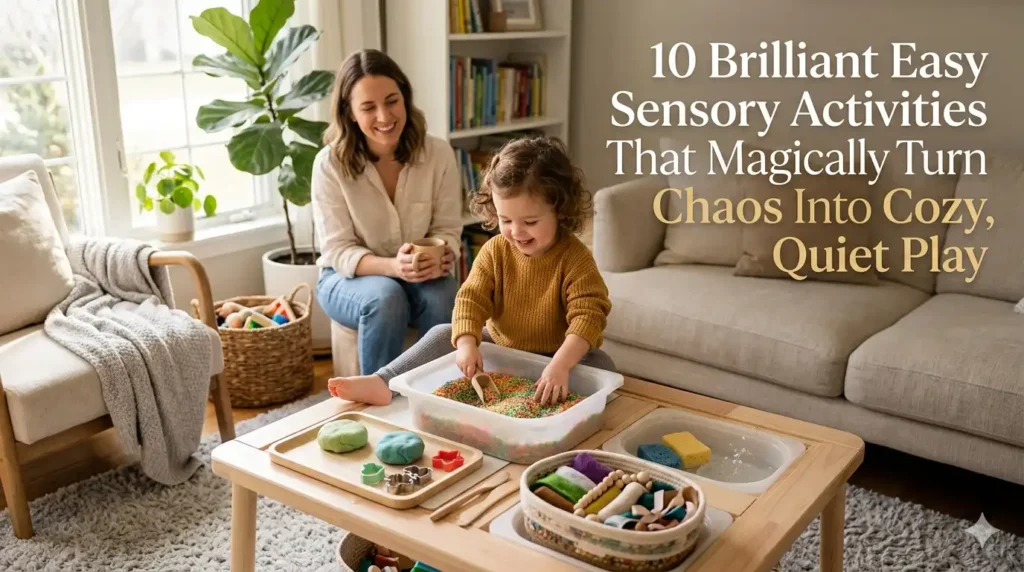
Keeping little ones happily occupied can feel like a full-time job. One minute they’re giggling on the floor, and the next they’re exploring every cupboard in the house. The good news is that babies and toddlers don’t need fancy toys to stay engaged. Some of the best play experiences come from simple sensory activities using everyday items you already have at home.
As a pediatrician and child development specialist, I’ve seen how sensory play can transform a busy, noisy afternoon into focused, peaceful exploration. These activities encourage learning through touch, sight, sound, and movement while giving caregivers a much-needed moment to sip a warm cup of tea. Expect a little mess, lots of curiosity, and plenty of happy discoveries along the way.
10 Brilliant Easy Sensory Activities
1. Rainbow Rice Sensory Bin
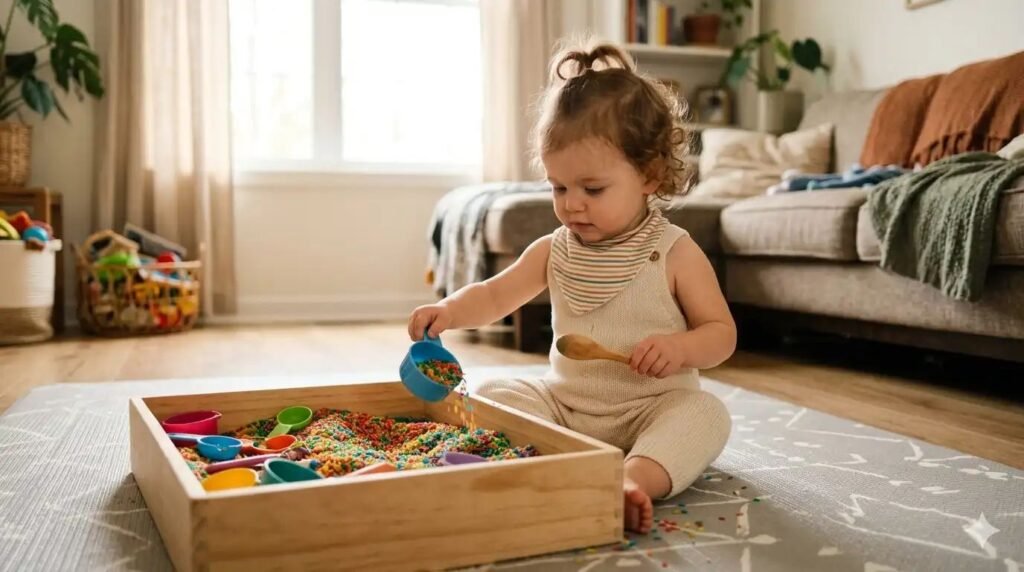
Materials Needed:
- Colored rice (store-bought or homemade)
- Large shallow container
- Measuring cups
- Small spoons
- Plastic bowls
Step-by-Step Instructions:
- Pour colored rice into a large shallow bin.
- Add measuring cups, spoons, and bowls.
- Place the bin on a washable mat.
- Encourage your child to scoop, pour, and transfer rice.
- Show them how to fill and empty containers.
What They Are Learning:
- Fine motor skills
- Hand-eye coordination
- Early math concepts like volume and quantity
- Concentration and independent play
Safety Note: Closely supervise children who still mouth objects. Rice can be a choking hazard for young babies.
2. Water and Sponge Squeeze Station
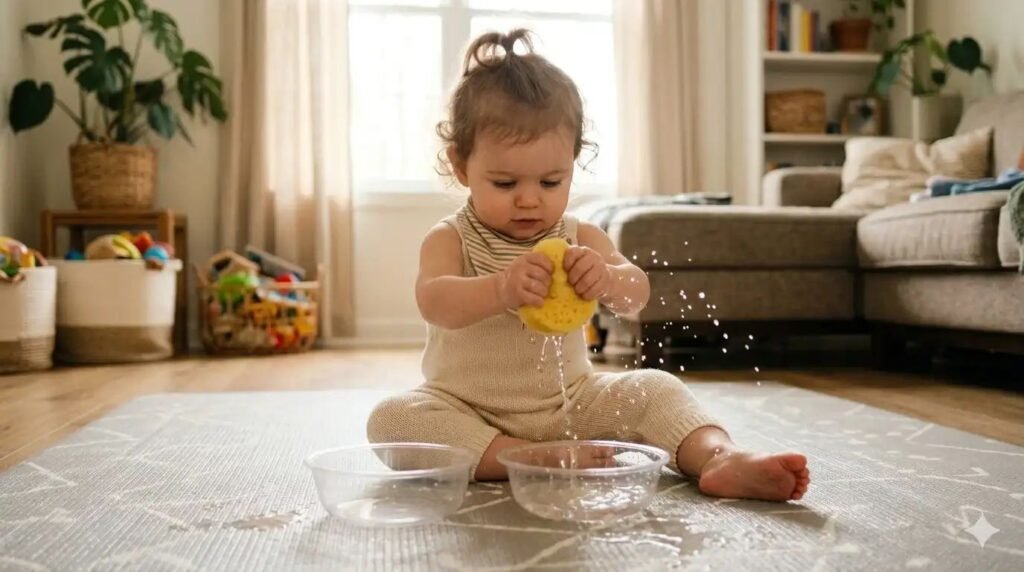
Materials Needed:
- Two bowls
- Clean sponges
- Water
- Towel
Step-by-Step Instructions:
- Fill one bowl with water.
- Place an empty bowl beside it.
- Demonstrate soaking a sponge.
- Show your child how to squeeze water into the empty bowl.
- Let them repeat as long as they enjoy it.
What They Are Learning:
- Hand strength
- Bilateral coordination
- Cause-and-effect understanding
- Sensory awareness through temperature and texture
Real-Life Observation: This activity often creates surprising calm. Many toddlers become deeply focused on the squeezing motion.
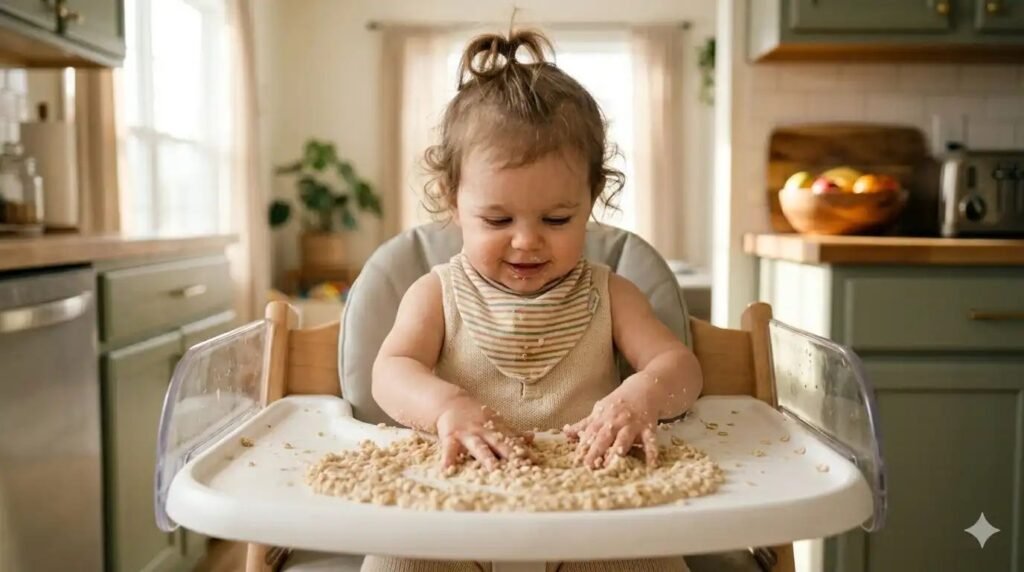
3. Taste-Safe Oatmeal Exploration
Materials Needed:
- Cooked plain oatmeal
- Baking tray
- Silicone spoons
- Small cups
Step-by-Step Instructions:
- Spread cooled oatmeal across a tray.
- Add spoons and cups.
- Let your child squish, scoop, and spread.
- Encourage simple patterns and movements.
- Allow safe tasting if desired.
What They Are Learning:
- Sensory processing
- Texture exploration
- Fine motor development
- Early creativity
Safety Note: Always ensure the oatmeal is completely cool before play.
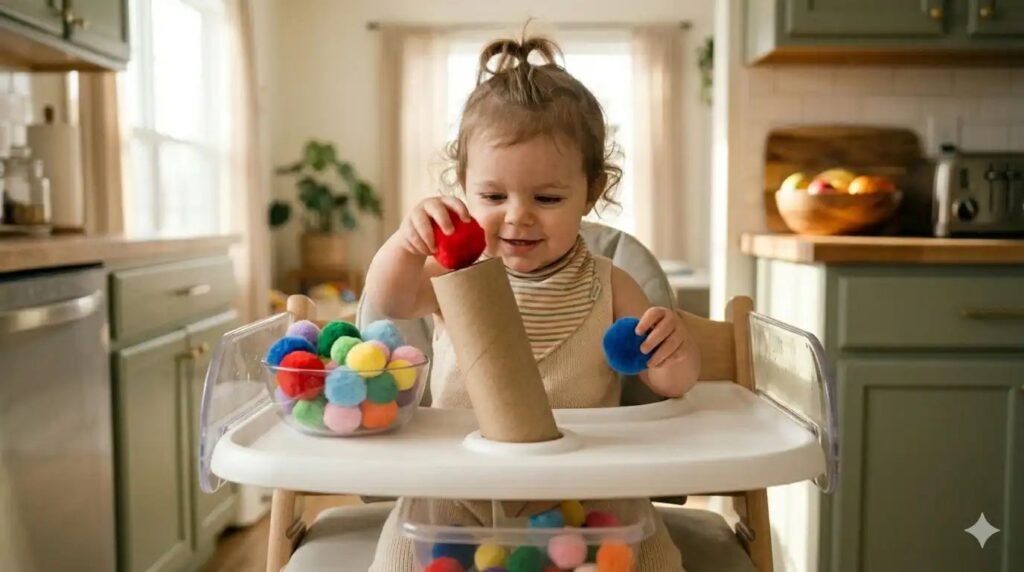
4. Pom-Pom Drop Challenge
Materials Needed:
- Cardboard tube
- Large pom-poms
- Container
Step-by-Step Instructions:
- Stand the cardboard tube upright.
- Place a container underneath.
- Demonstrate dropping pom-poms through the tube.
- Let your child repeat the process.
- Count the pom-poms together as they fall.
What They Are Learning:
- Hand control
- Problem-solving
- Visual tracking
- Early counting skills
Safety Warning: Pom-poms can be choking hazards. Use only large-sized pom-poms and supervise closely.
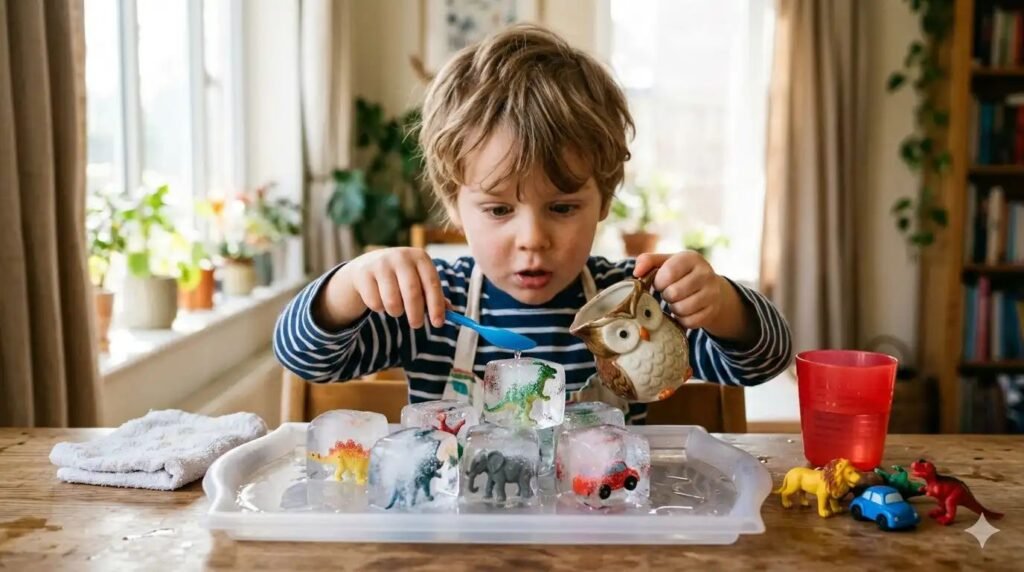
5. Ice Cube Treasure Rescue
Materials Needed:
- Ice cubes with small toys frozen inside
- Large bowl
- Warm water
- Plastic spoon
Step-by-Step Instructions:
- Freeze small waterproof toys inside ice cubes.
- Place cubes in a bowl.
- Provide warm water and a spoon.
- Let your child pour water over the cubes.
- Watch the treasures slowly emerge.
What They Are Learning:
- Scientific observation
- Patience
- Cause and effect
- Sensory discrimination
Real-Life Observation: Children are often fascinated by the temperature change and can stay engaged far longer than expected.
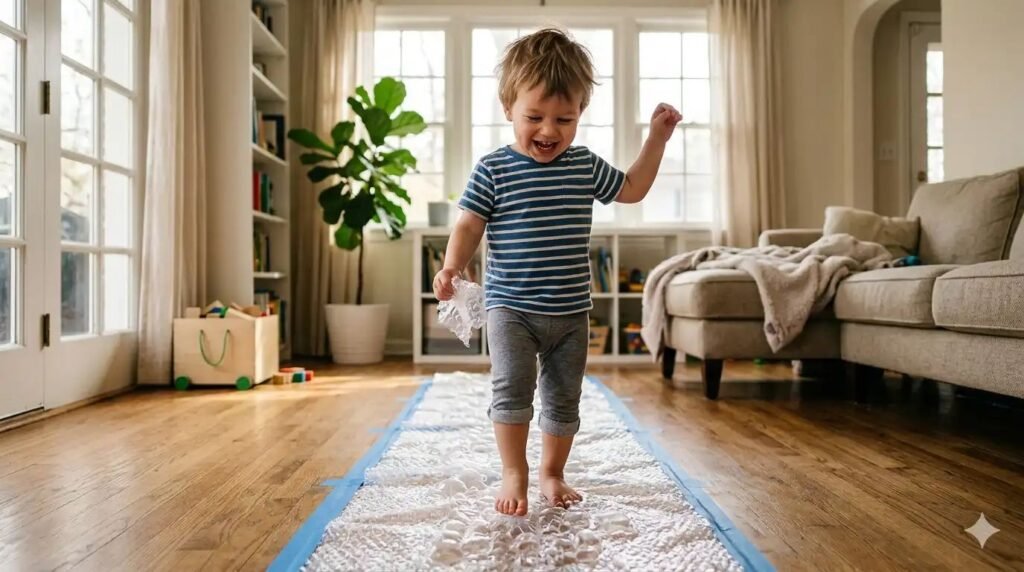
6. Bubble Wrap Stomp Path
Materials Needed:
- Bubble wrap
- Painter’s tape
Step-by-Step Instructions:
- Tape strips of bubble wrap to the floor.
- Create a simple path.
- Encourage walking, stomping, or crawling.
- Talk about the sounds being made.
- Try moving slowly and quickly.
What They Are Learning:
- Gross motor skills
- Body awareness
- Auditory processing
- Balance and coordination
Safety Note: Secure edges firmly to prevent slipping.
7. Nature Texture Basket
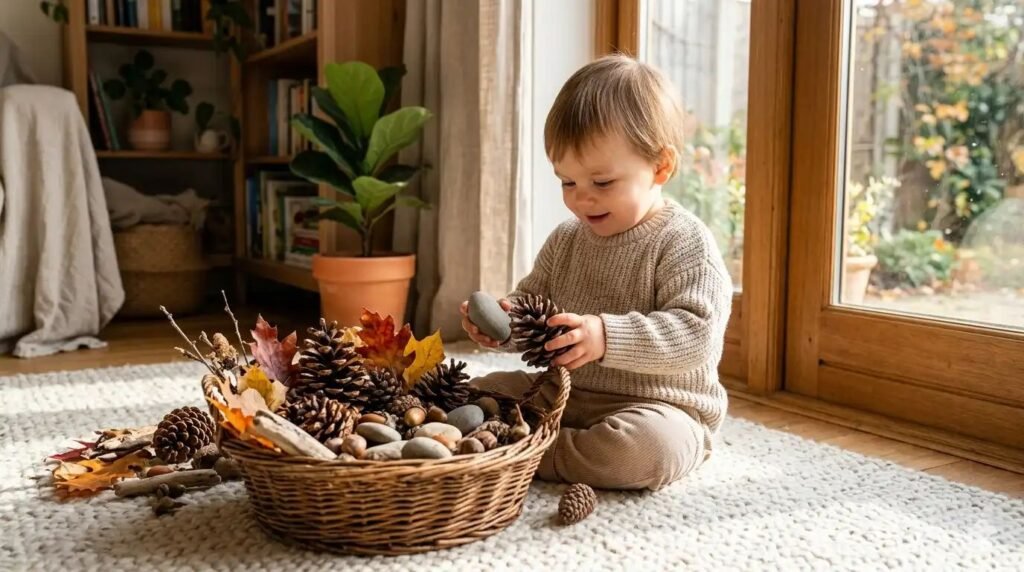
Materials Needed:
- Pinecones
- Large leaves
- Smooth stones
- Safe sticks
- Basket
Step-by-Step Instructions:
- Collect natural items during a walk.
- Place them in a basket.
- Invite your child to touch and compare textures.
- Discuss rough, smooth, soft, and hard.
- Sort items into groups.
What They Are Learning:
- Vocabulary development
- Sensory discrimination
- Observation skills
- Connection with nature
Safety Note: Avoid sharp objects and inspect all items before play.
8. Muffin Tin Sorting Station
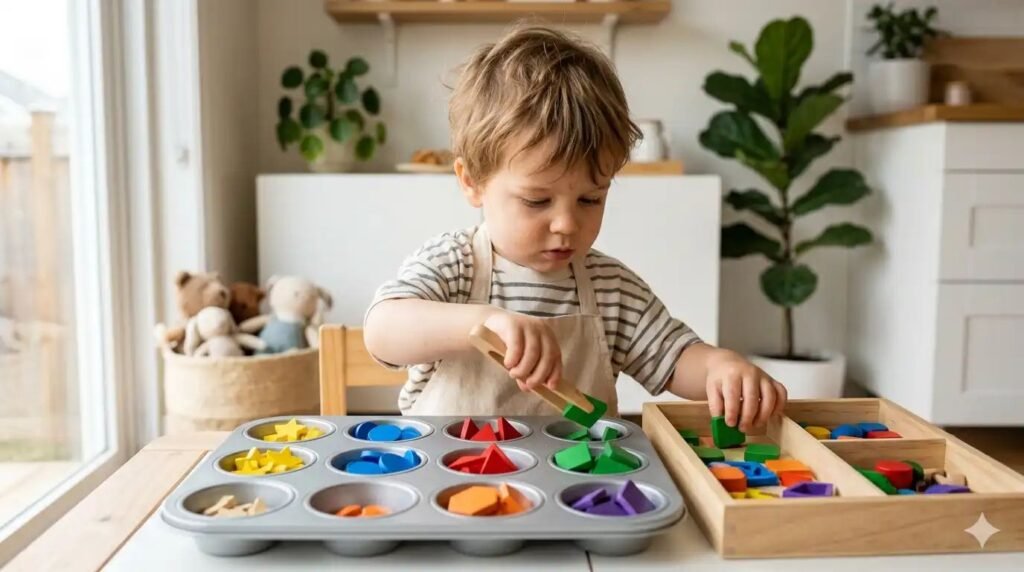
Materials Needed:
- Muffin tin
- Large buttons, blocks, or pom-poms
- Tongs (optional)
Step-by-Step Instructions:
- Place mixed objects in a bowl.
- Set out a muffin tin.
- Encourage sorting by color, shape, or size.
- Older toddlers can use tongs.
- Celebrate completed sorting groups.
What They Are Learning:
- Categorization
- Logical thinking
- Fine motor precision
- Early math skills
Real-Life Observation: Many children enjoy repeating this activity multiple times because they love creating order.
9. Sensory Scarf Pull Box
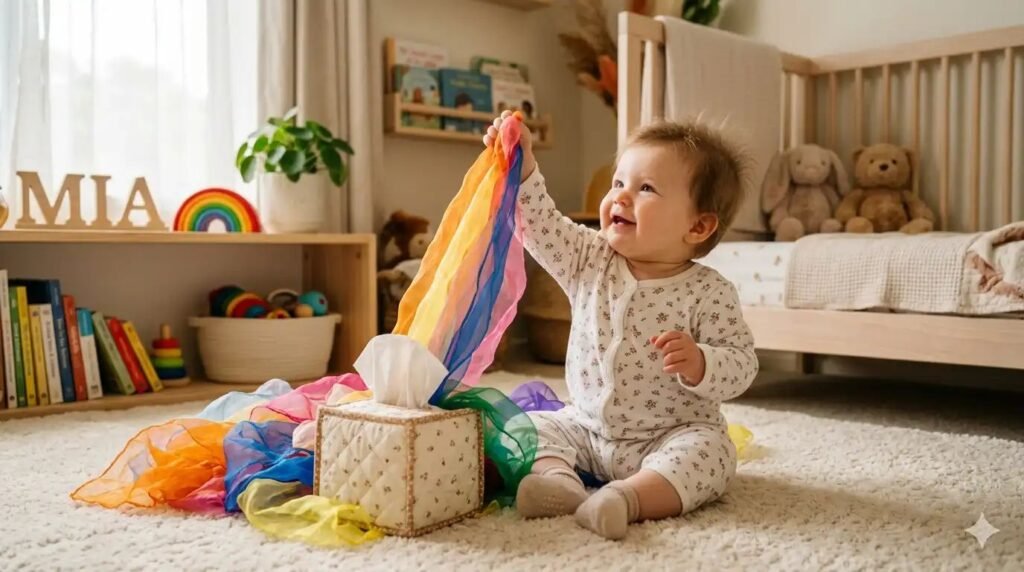
Materials Needed:
- Tissue box
- Lightweight scarves or fabric strips
Step-by-Step Instructions:
- Thread scarves through the tissue box.
- Leave one end sticking out.
- Demonstrate pulling the scarf.
- Allow your child to continue pulling.
- Restuff the scarves and repeat.
What They Are Learning:
- Cause and effect
- Hand coordination
- Visual attention
- Problem-solving
Expect Some Drool: Babies often become intensely focused on this activity and may mouth the fabric while exploring.
10. Calm Lavender Play Dough
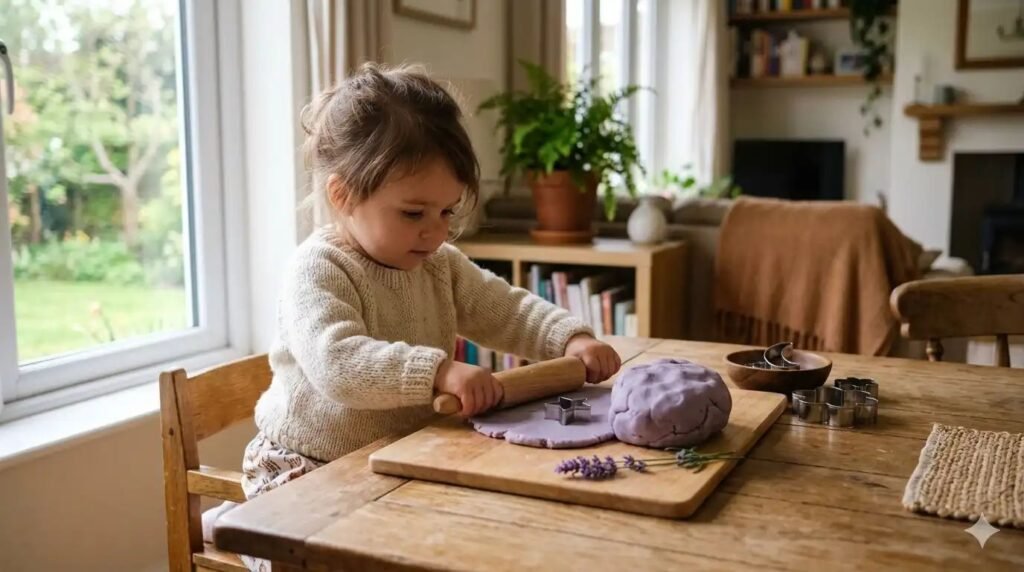
Materials Needed:
- Homemade play dough
- A drop of child-safe lavender scent (optional)
- Rolling pin
- Cookie cutters
Step-by-Step Instructions:
- Prepare soft homemade play dough.
- Add a tiny amount of child-safe scent if appropriate.
- Offer rolling tools and cutters.
- Encourage squeezing, rolling, and shaping.
- Join in and model simple creations.
What They Are Learning:
- Hand strength
- Creativity
- Emotional regulation
- Sensory integration
Safety Note: Ensure all ingredients are non-toxic and age-appropriate.
A Gentle Reminder for Caregivers
Sensory play does not need to be perfect to be meaningful. Some days your child may engage for twenty minutes. Other days they may lose interest after two. That’s completely normal. The goal is not creating a Pinterest-worthy setup—it’s giving your child opportunities to explore, discover, and learn through their senses. A few simple materials, a little curiosity, and your presence are often all they need.
Frequently Asked Questions
What age is sensory play appropriate for?
Sensory play can begin in infancy with closely supervised, age-appropriate activities and continue throughout the preschool years.
How long should a sensory activity last?
Most babies and toddlers engage for 5–20 minutes. Follow your child’s interest level rather than a strict schedule.
Is sensory play messy?
Sometimes, yes. Using mats, trays, and washable materials can help keep cleanup manageable.
What are the benefits of sensory play?
Sensory activities support brain development, language growth, fine and gross motor skills, problem-solving abilities, and emotional regulation.
Final Thoughts
The beauty of sensory play is its simplicity. These cozy, quiet activities help children learn naturally while creating moments of calm in even the busiest households. Keep it simple, stay flexible, and remember that some of the most valuable learning happens when little hands are exploring, experimenting, and having fun.