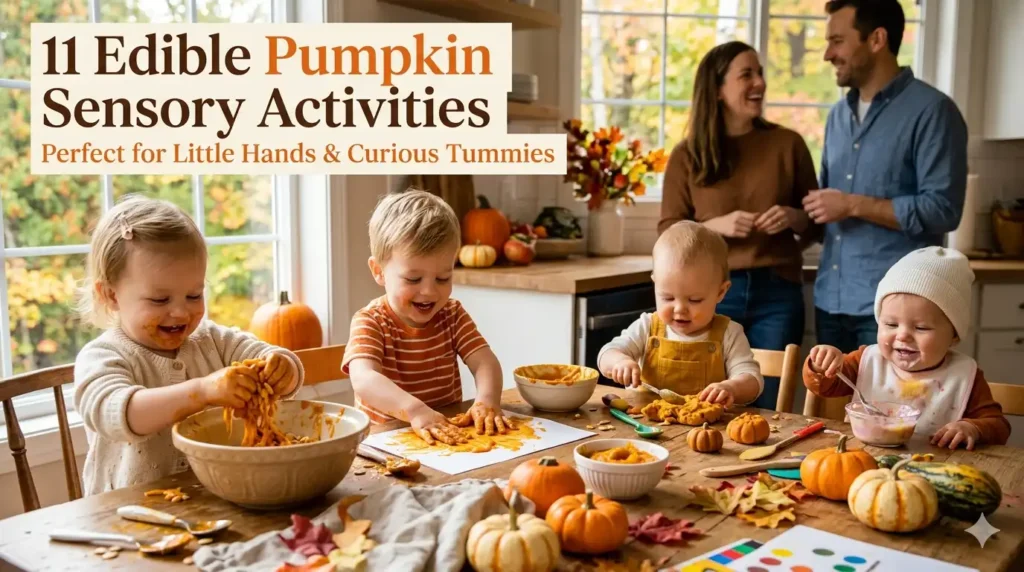
Keeping little ones busy can feel like a full-time job. One minute they are happily exploring a toy, and the next they are crawling toward the dog’s water bowl with impressive determination. The good news is that some of the best learning experiences come from simple, hands-on play using everyday foods.
Pumpkins are a wonderful sensory tool for babies and toddlers. They are colorful, textured, naturally fascinating, and safe to explore when prepared appropriately. From squishing pumpkin pulp to tasting pumpkin-based creations, these activities encourage learning through touch, sight, smell, and taste while creating sweet family memories along the way.
11 Edible Pumpkin Sensory Activities
1. Pumpkin Pulp Exploration Bin
Materials Needed:
- Fresh pumpkin
- Large shallow tray
- Spoon
- Bib or old clothes
Step-by-Step Instructions:
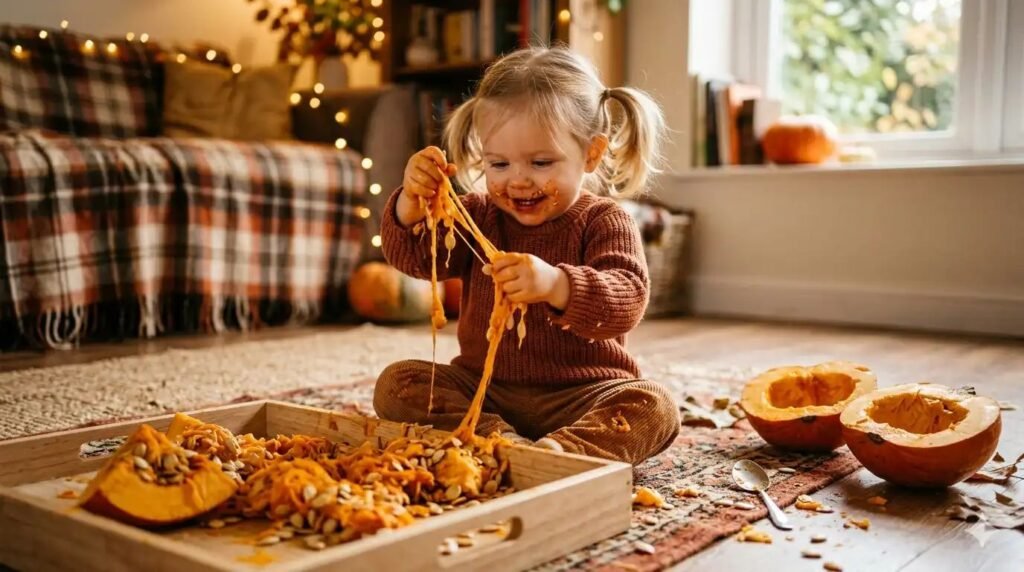
- Cut open a pumpkin and scoop out the pulp.
- Place the pulp and seeds into a shallow tray.
- Sit your child beside the tray and let them explore freely.
- Encourage squeezing, pulling, and patting the pulp.
- Talk about how it feels—sticky, wet, stringy, and squishy.
What They Are Learning:
- Sensory processing
- Hand strength
- Vocabulary development
- Cause-and-effect learning
Safety Tip: Always supervise closely. Remove large chunks if your child tends to stuff everything into their mouth.
2. Pumpkin Seed Treasure Hunt
Materials Needed:
- Roasted pumpkin seeds (for older toddlers)
- Pumpkin puree
- Small tray
Step-by-Step Instructions:
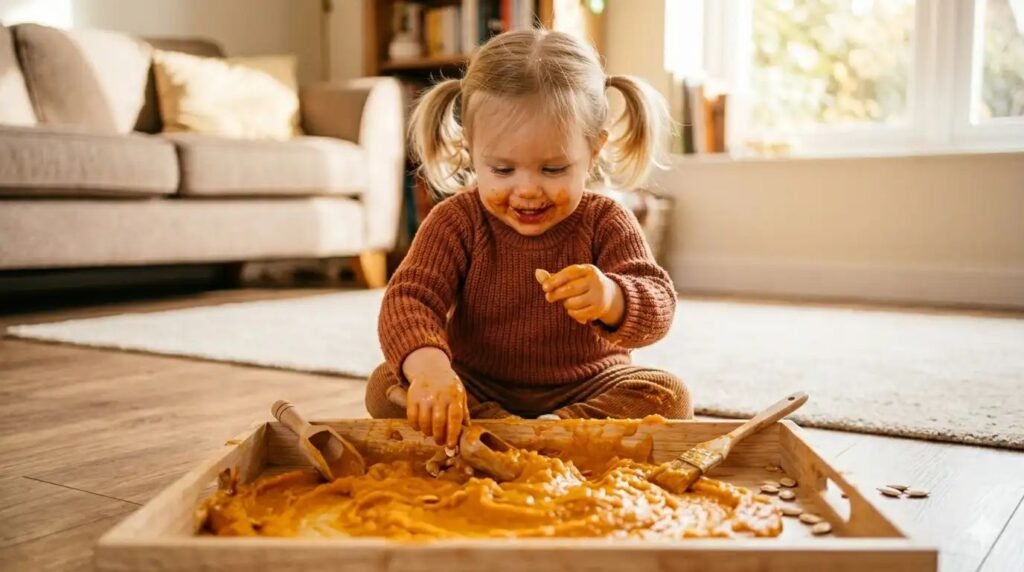
- Spread pumpkin puree across a tray.
- Hide roasted pumpkin seeds within the puree.
- Invite your child to search for the hidden treasures.
- Let them use fingers to dig and uncover seeds.
What They Are Learning:
- Fine motor development
- Tactile discrimination
- Problem-solving skills
- Concentration
Safety Tip: Whole seeds can be a choking hazard for babies. Use only with children who safely manage solid foods.
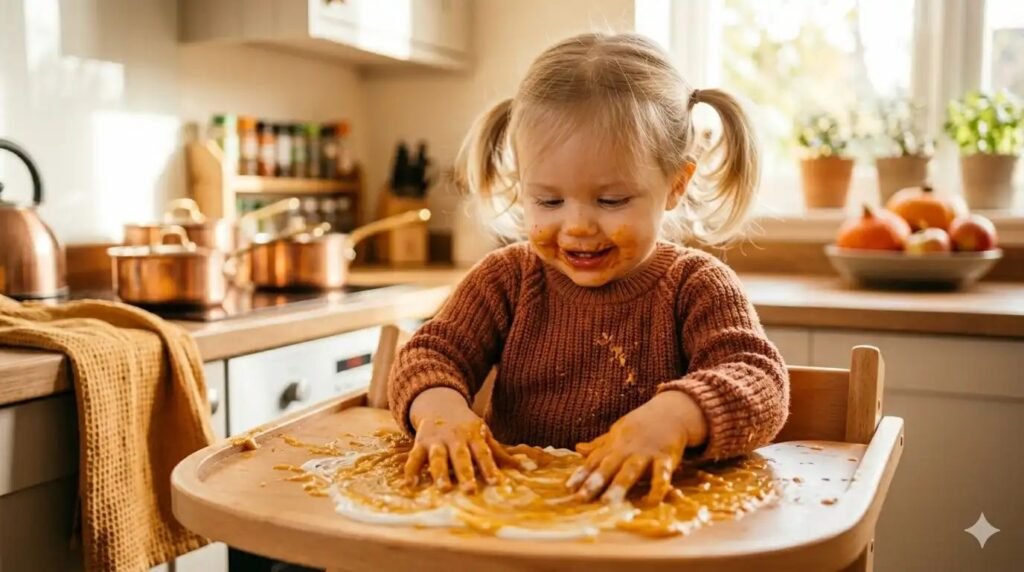
3. Edible Pumpkin Finger Painting
Materials Needed:
- Pumpkin puree
- Plain yogurt
- Highchair tray or table
Step-by-Step Instructions:
- Mix pumpkin puree with yogurt until smooth.
- Spread a thin layer onto a clean surface.
- Encourage your child to make lines, circles, and handprints.
- Allow them to taste as they paint.
What They Are Learning:
- Creativity
- Hand-eye coordination
- Early writing readiness
- Sensory exploration
Real-Life Note: Expect some drool and a few enthusiastic face smears. That’s often a sign of deep concentration and engagement.
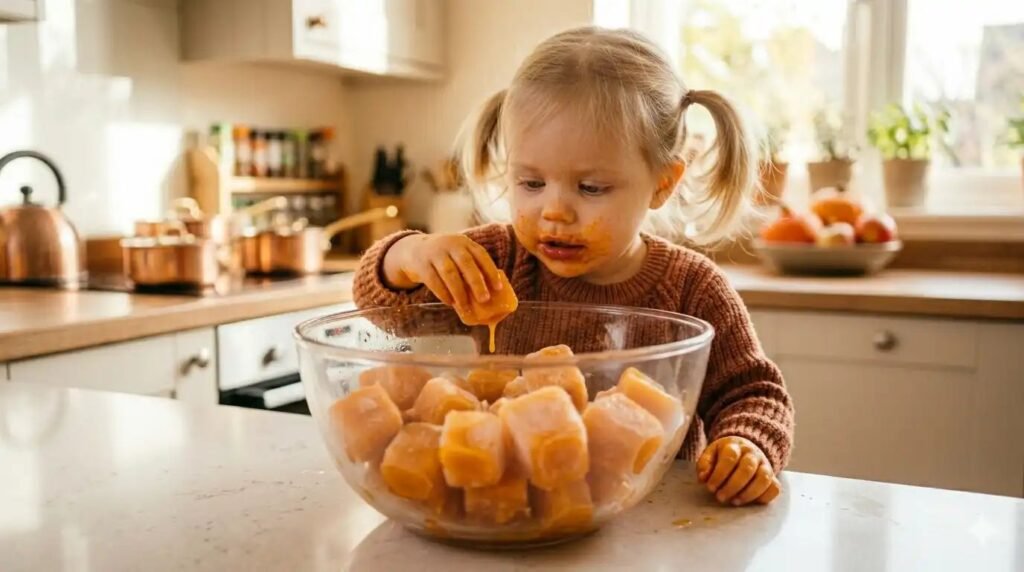
4. Pumpkin Ice Cube Sensory Play
Materials Needed:
- Pumpkin puree
- Ice cube tray
- Large bowl
Step-by-Step Instructions:
- Freeze pumpkin puree in an ice cube tray.
- Place frozen cubes into a bowl.
- Let your child touch, hold, and watch them melt.
- Talk about warm versus cold sensations.
What They Are Learning:
- Temperature awareness
- Scientific observation
- Sensory integration
- Language development
Safety Tip: Avoid small cubes with very young babies who may attempt to swallow them whole.
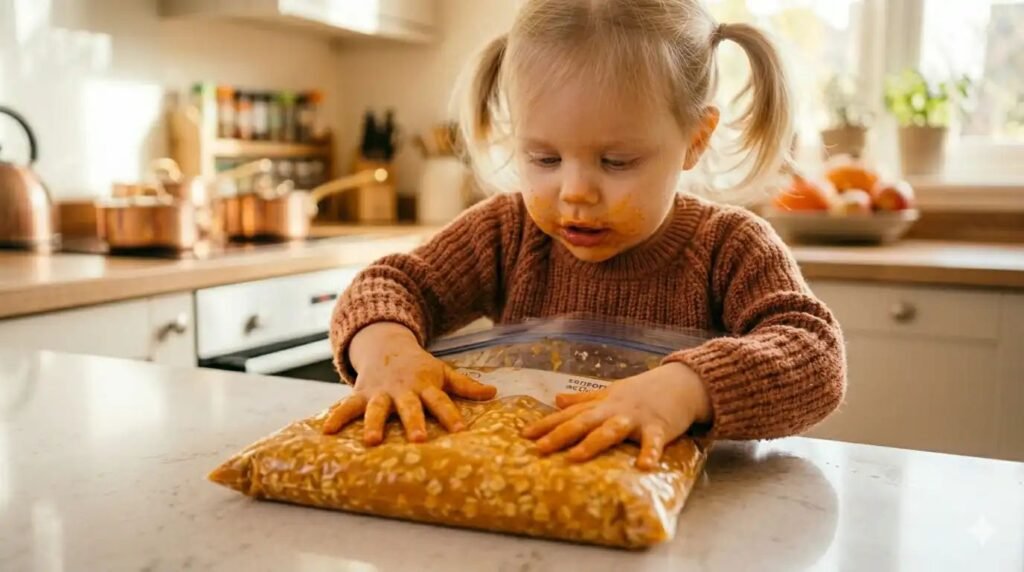
5. Pumpkin Oatmeal Squish Bags
Materials Needed:
- Pumpkin puree
- Cooked oatmeal
- Zip-top freezer bag
- Strong tape
Step-by-Step Instructions:
- Mix oatmeal and pumpkin puree together.
- Place mixture into a sturdy freezer bag.
- Seal tightly and tape all edges.
- Allow your child to squish, poke, and press the bag.
What They Are Learning:
- Finger strength
- Sensory exploration
- Cause-and-effect understanding
- Visual tracking
Parent Bonus: This activity delivers all the sensory fun with much less cleanup.
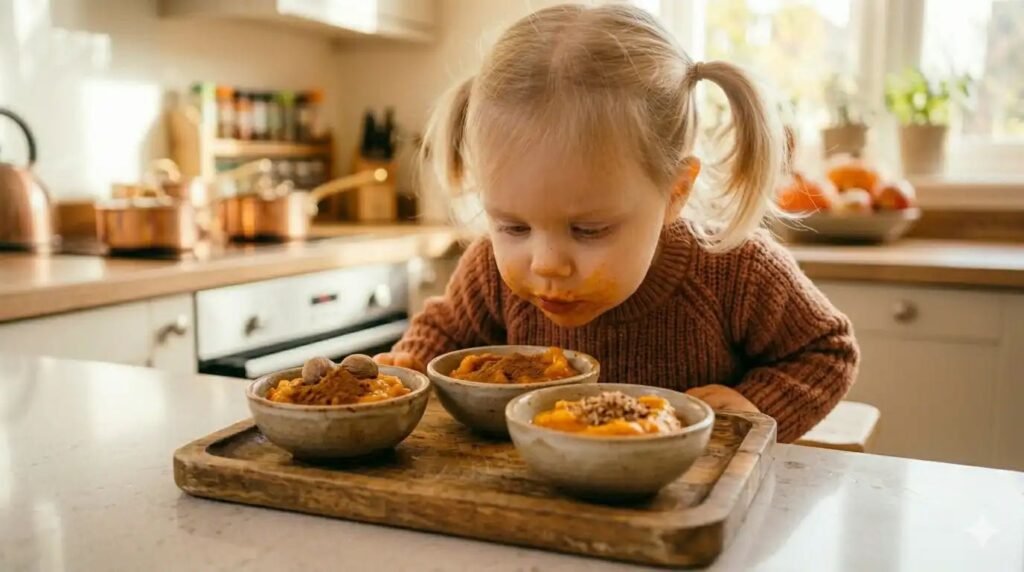
6. Pumpkin Spice Scent Discovery
Materials Needed:
- Pumpkin puree
- Cinnamon
- Nutmeg
- Small bowls
Step-by-Step Instructions:
- Place small amounts of pumpkin puree into bowls.
- Add different spices to each bowl.
- Let your child smell each one.
- Describe the scents using simple words.
What They Are Learning:
- Sensory awareness
- Language development
- Memory connections
- Early science skills
Safety Tip: Avoid placing spices directly near your child’s nose to prevent irritation.
7. Pumpkin Muffin Crumble Play
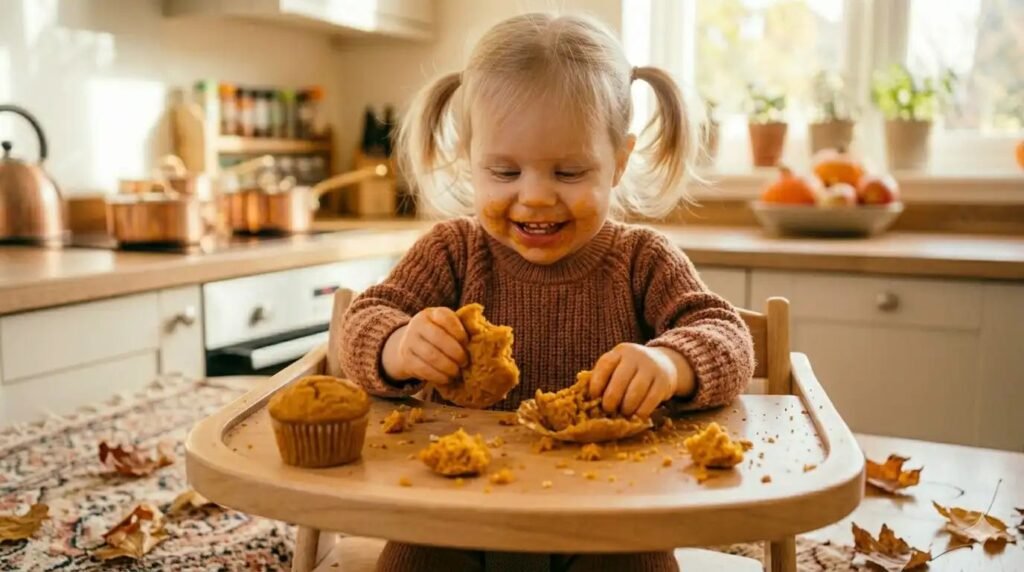
Materials Needed:
- Soft homemade pumpkin muffins
- Highchair tray
Step-by-Step Instructions:
- Break muffins into large pieces.
- Place them on the tray.
- Encourage your child to squeeze, crumble, and taste.
- Talk about textures as they explore.
What They Are Learning:
- Fine motor skills
- Self-feeding practice
- Texture acceptance
- Sensory confidence
Real-Life Note: The crumbs will travel farther than you think. A floor mat underneath is your friend.
8. Pumpkin Scoop and Transfer Station
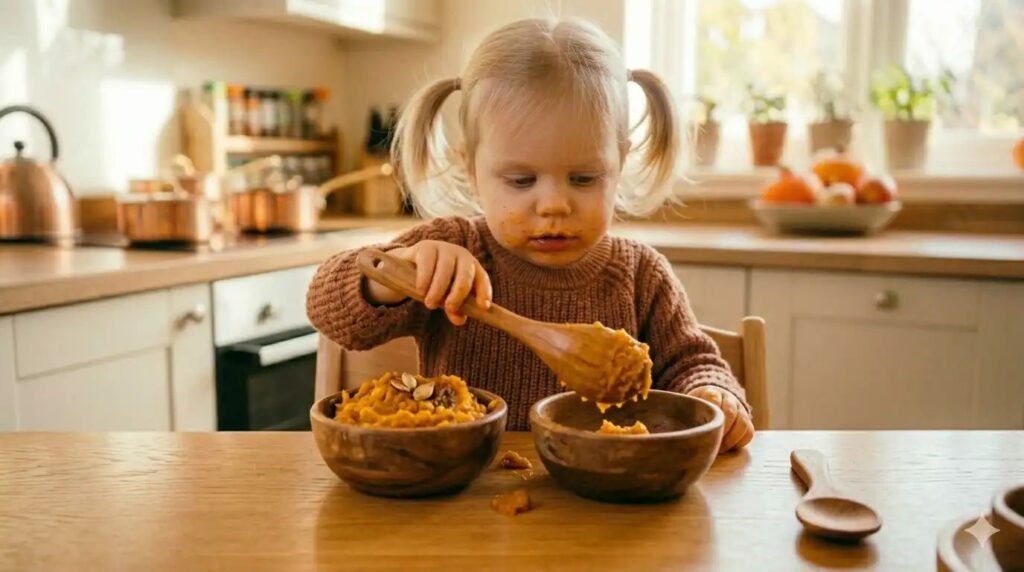
Materials Needed:
- Pumpkin puree
- Two bowls
- Large spoon or scoop
Step-by-Step Instructions:
- Fill one bowl with puree.
- Leave the second bowl empty.
- Demonstrate scooping and transferring.
- Let your child try independently.
What They Are Learning:
- Hand-eye coordination
- Bilateral coordination
- Focus and patience
- Early practical life skills
Safety Tip: Use large, child-safe utensils without sharp edges.
9. Pumpkin Gelatin Sensory Cubes
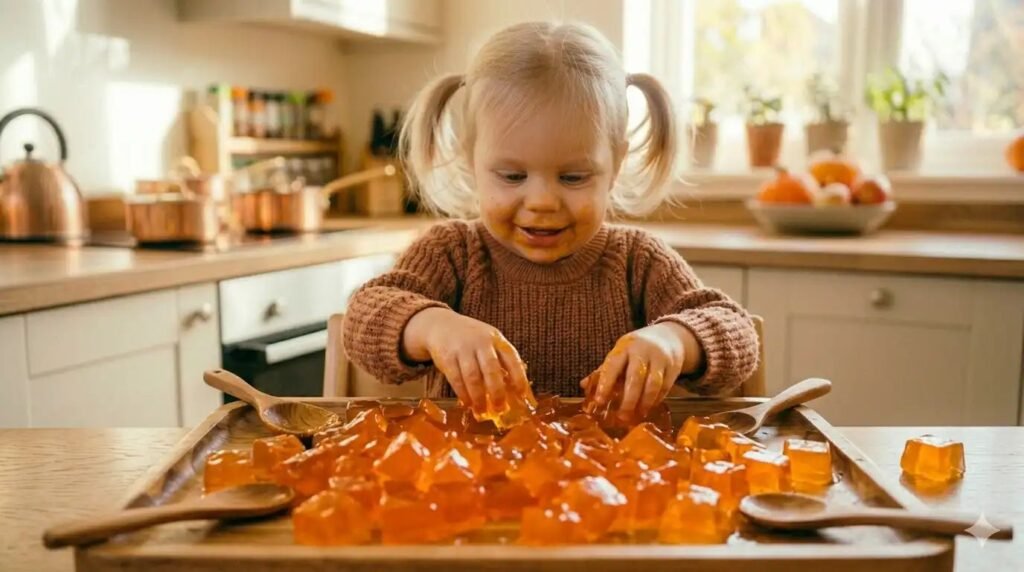
Materials Needed:
- Orange gelatin made with reduced water
- Tray
- Child-safe utensils
Step-by-Step Instructions:
- Prepare gelatin according to package directions using less water for firmness.
- Chill until set.
- Cut into large cubes.
- Allow your child to poke, squeeze, and taste.
What They Are Learning:
- Texture exploration
- Fine motor control
- Curiosity and experimentation
- Sensory flexibility
Parent Observation: Many toddlers become fascinated by how the cubes wobble and bounce.
10. Pumpkin Play Dough Taste-Safe Fun
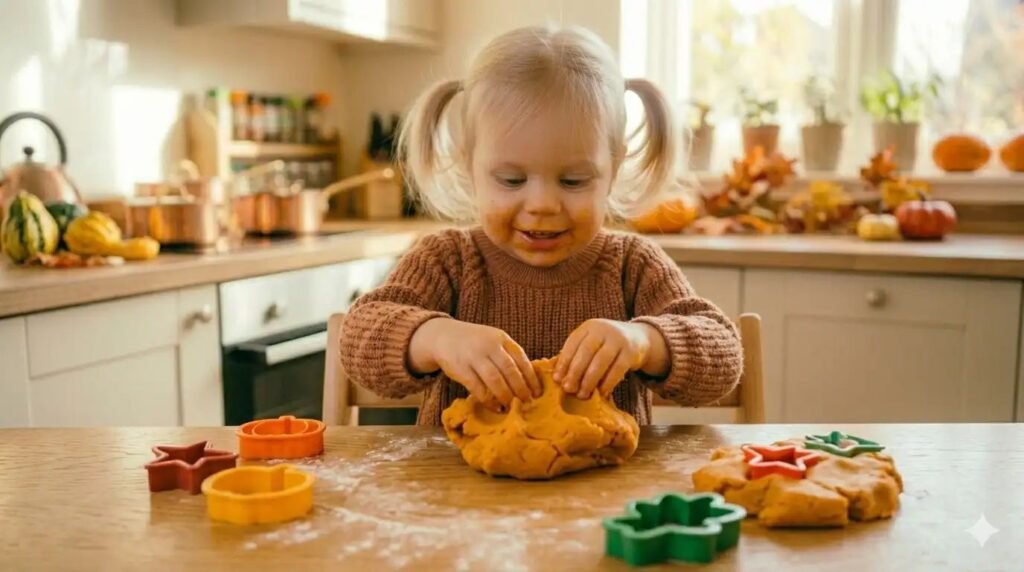
Materials Needed:
- Pumpkin puree
- Flour
- Small amount of cinnamon
Step-by-Step Instructions:
- Mix ingredients into a soft dough.
- Knead until smooth.
- Provide cookie cutters or safe kitchen tools.
- Encourage rolling, pressing, and shaping.
What They Are Learning:
- Hand strength
- Creativity
- Imaginative play
- Fine motor development
Safety Tip: Although taste-safe, large bites of dough should still be discouraged.
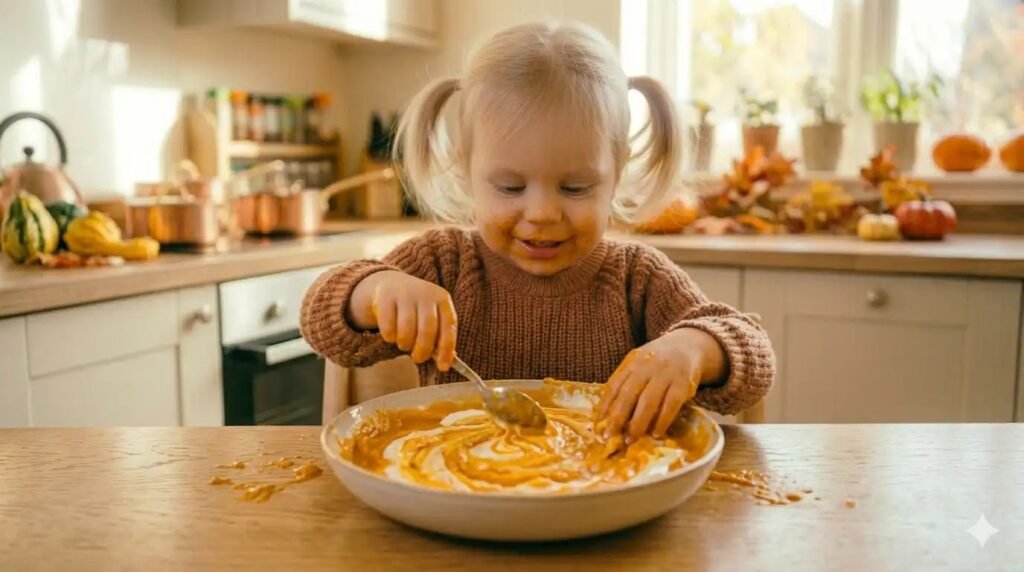
11. Pumpkin Yogurt Swirl Sensory Snack
Materials Needed:
- Plain yogurt
- Pumpkin puree
- Bowl and spoon
Step-by-Step Instructions:
- Add yogurt and pumpkin puree to a bowl.
- Swirl lightly without fully mixing.
- Let your child stir, scoop, and taste.
- Discuss the colors and patterns they create.
What They Are Learning:
- Visual tracking
- Self-feeding skills
- Color recognition
- Independent exploration
Real-Life Note: This activity often turns into a mini science experiment as children discover how colors blend together.
A Little Encouragement for Caregivers
Sensory play does not need expensive toys or complicated setups. Some of the most meaningful learning moments happen around the kitchen table with simple ingredients and a curious child. If things get messy, remember that mess often means exploration is happening. Take photos, laugh through the cleanup, and enjoy watching your little one discover the world one squish, scoop, and taste at a time.
Frequently Asked Questions
Are pumpkins safe for babies to play with?
Yes, pumpkin flesh and puree are generally safe for supervised sensory play. Always stay nearby and remove any choking hazards, especially for babies under 12 months.
What age can babies start pumpkin sensory activities?
Most babies can begin simple, supervised sensory activities around 6 months of age, once they are sitting with support and starting solid foods.
How do sensory activities help child development?
Sensory play supports brain development by strengthening connections related to movement, problem-solving, language, attention, and emotional regulation.
Can toddlers eat pumpkin during sensory play?
Yes, if the pumpkin is prepared safely and age-appropriate. Edible sensory activities are often a great way to encourage picky eaters to explore new foods without pressure.
Final Thoughts
Pumpkin sensory play offers a perfect blend of fun, learning, and seasonal excitement. Whether your child is happily squishing pumpkin pulp, painting with puree, or exploring a taste-safe dough, each activity supports important developmental skills while creating joyful memories. Keep it simple, stay present, and let your child’s curiosity lead the way. Those tiny messy hands are doing big learning every step of the journey.