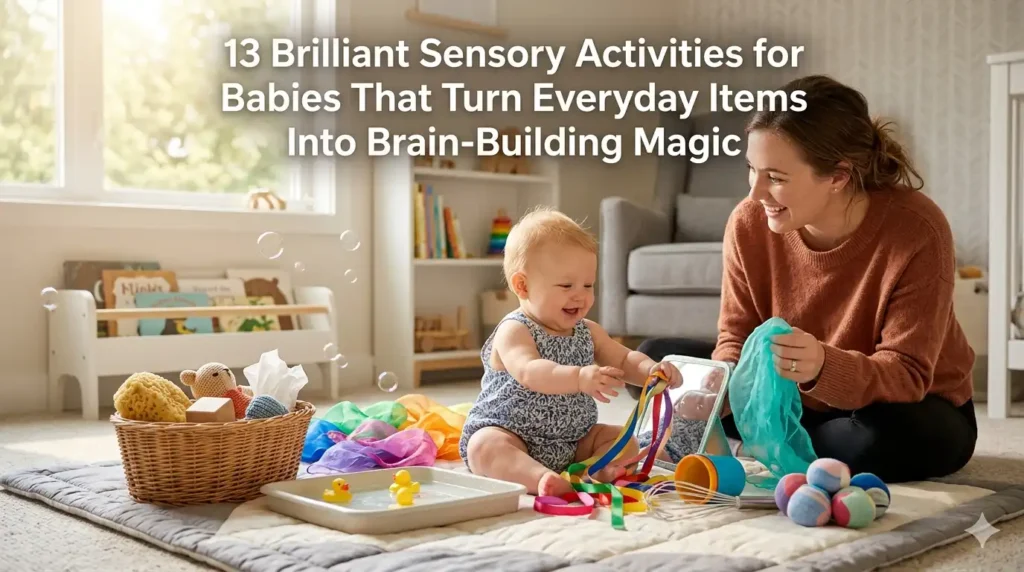
Keeping a baby entertained can feel like a full-time job. One minute they are fascinated by a spoon, and the next they are determined to explore something completely different. The good news is that babies do not need expensive toys to learn and grow. Some of the most powerful sensory experiences come from everyday items already sitting around your home.
As a pediatrician and child development specialist, I often remind parents that babies learn best through hands-on exploration. Every touch, squeeze, shake, and wiggle helps build important brain connections. These simple sensory activities encourage curiosity, support development, and create joyful moments together during those busy baby days.
13 Brilliant Sensory Activities for Babies
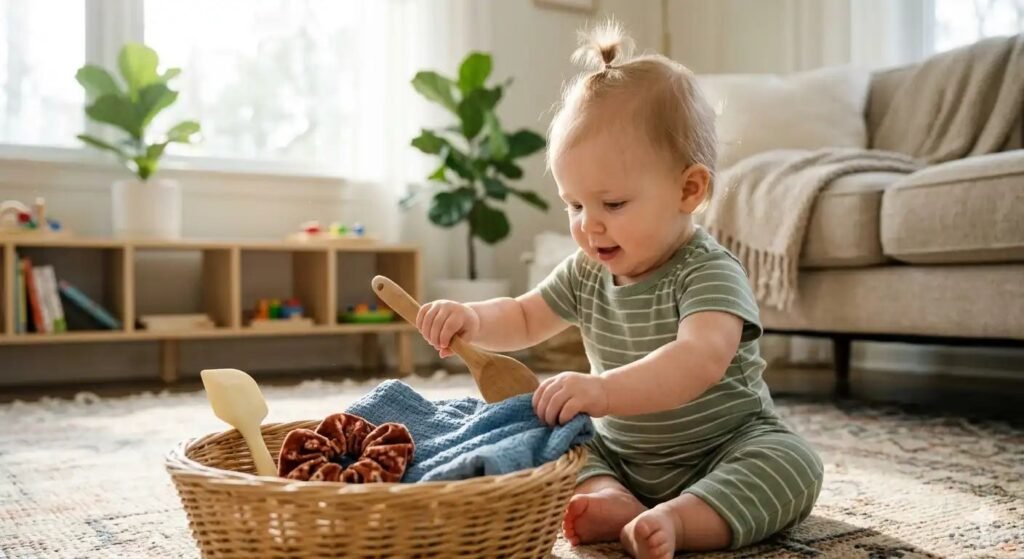
1. Texture Treasure Basket
Materials Needed:
- Wooden spoon
- Soft washcloth
- Silicone spatula
- Large fabric scrunchie
- Small basket
Step-by-Step Instructions:
- Gather several safe objects with different textures.
- Place them inside a shallow basket.
- Sit with your baby on the floor.
- Allow them to reach, grab, squeeze, and explore each item.
- Describe what they are touching: “soft,” “smooth,” or “bumpy.”
What They Are Learning:
- Sensory processing
- Vocabulary development
- Fine motor skills
- Curiosity and exploration
Safety Note: Avoid small objects that could fit into a baby’s mouth.
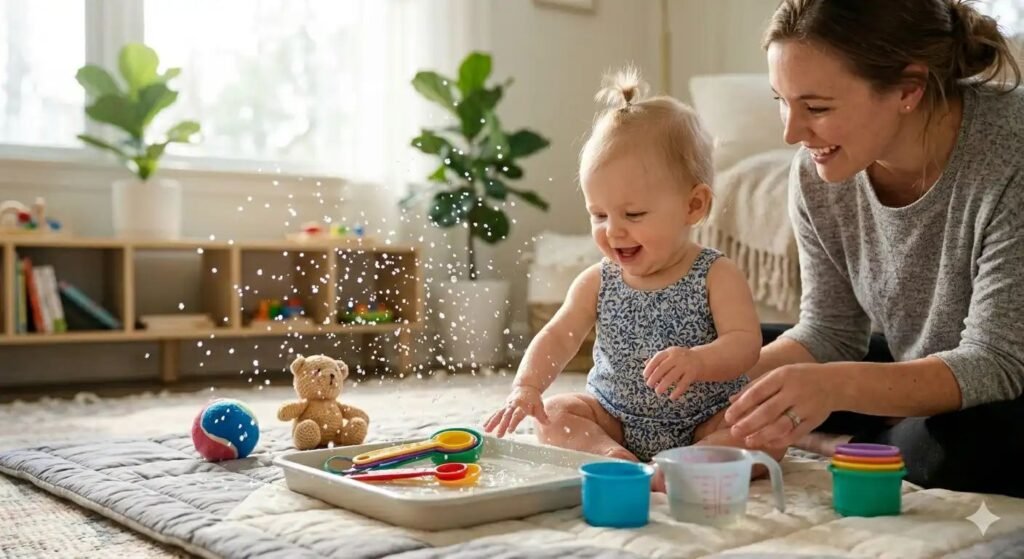
2. Water Splash Station
Materials Needed:
- Shallow baking tray
- Warm water
- Plastic cups
- Measuring spoons
Step-by-Step Instructions:
- Fill the tray with a small amount of water.
- Place cups and spoons nearby.
- Let your baby splash, pour, and pat the water.
- Model simple actions and encourage imitation.
What They Are Learning:
- Cause and effect
- Hand-eye coordination
- Early problem-solving
- Sensory awareness
Expect some wet clothes and lots of giggles. The mess is usually worth it.
3. Crinkly Scarf Discovery
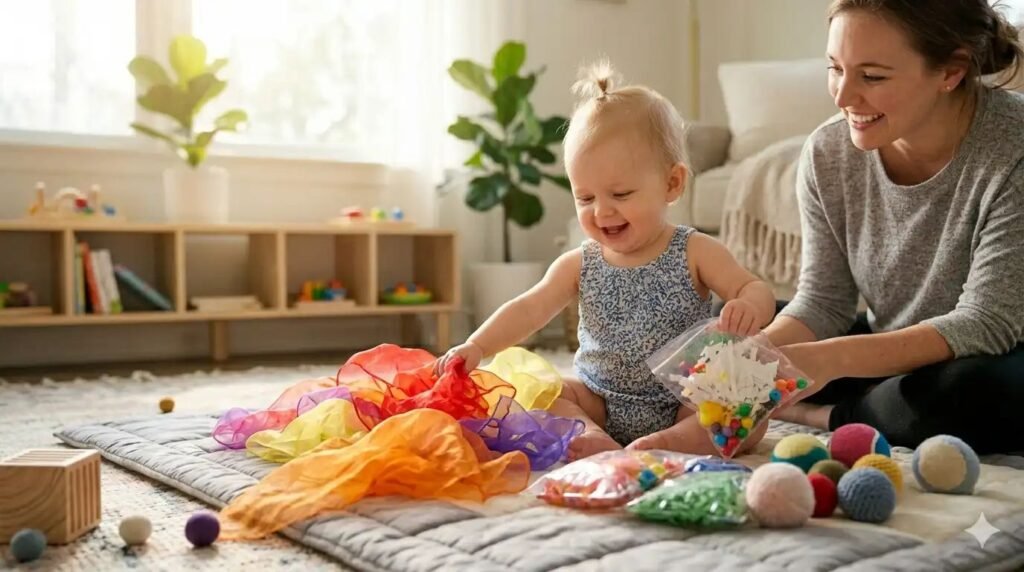
Materials Needed:
- Lightweight scarves
- Tissue paper placed inside a sealed zip bag
Step-by-Step Instructions:
- Lay the scarves on the floor.
- Allow your baby to pull, wave, and scrunch them.
- Introduce the crinkly bag and encourage touching.
- Talk about the sounds being created.
What They Are Learning:
- Auditory processing
- Motor planning
- Sensory exploration
- Attention skills
Safety Note: Always supervise closely around bags and fabrics.
4. Kitchen Drum Band
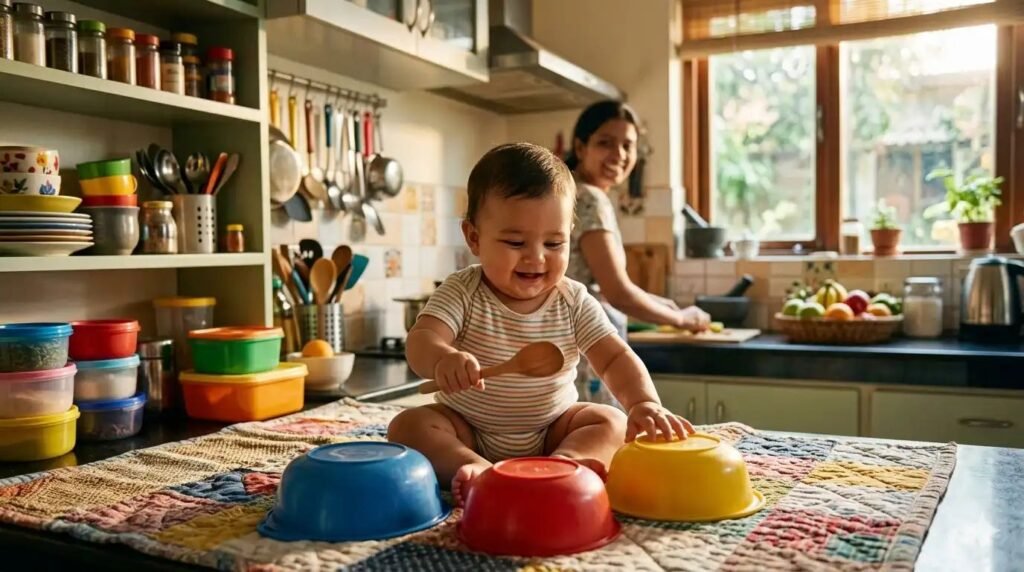
Materials Needed:
- Plastic bowls
- Wooden spoon
- Silicone utensils
Step-by-Step Instructions:
- Arrange bowls upside down.
- Demonstrate tapping gently.
- Encourage your baby to copy.
- Experiment with different surfaces and sounds.
What They Are Learning:
- Cause and effect
- Rhythm awareness
- Bilateral coordination
- Listening skills
This activity is a favorite in group settings because babies love making noise and seeing reactions.
5. Ice Cube Exploration
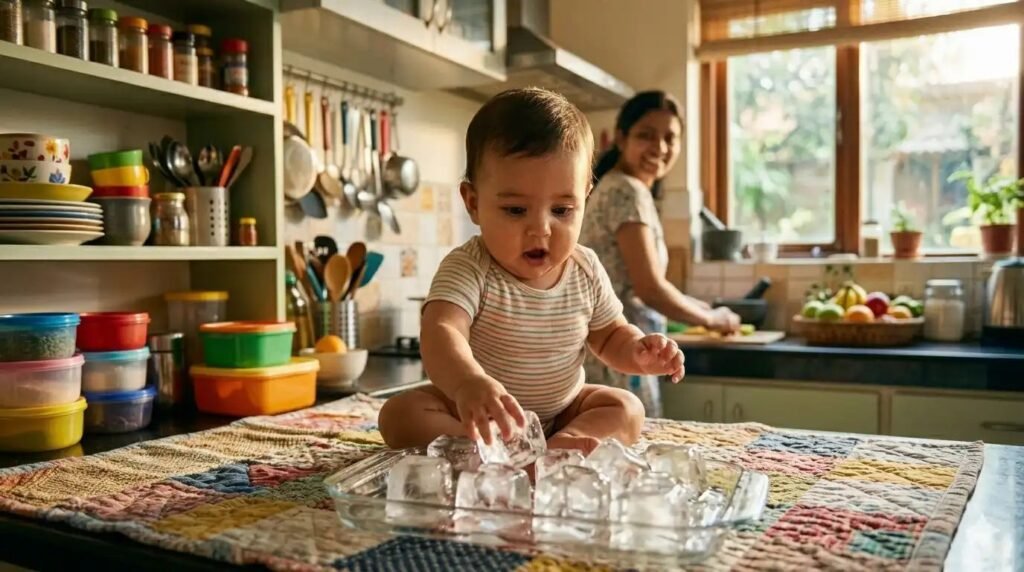
Materials Needed:
- Large ice cubes
- Baking tray
- Towel
Step-by-Step Instructions:
- Place a few large ice cubes in a tray.
- Sit your baby nearby.
- Allow them to touch and observe.
- Describe how the ice feels and changes.
What They Are Learning:
- Temperature awareness
- Scientific observation
- Sensory discrimination
- Language development
Safety Note: Use large cubes only and supervise constantly.
6. Mirror Face Fun
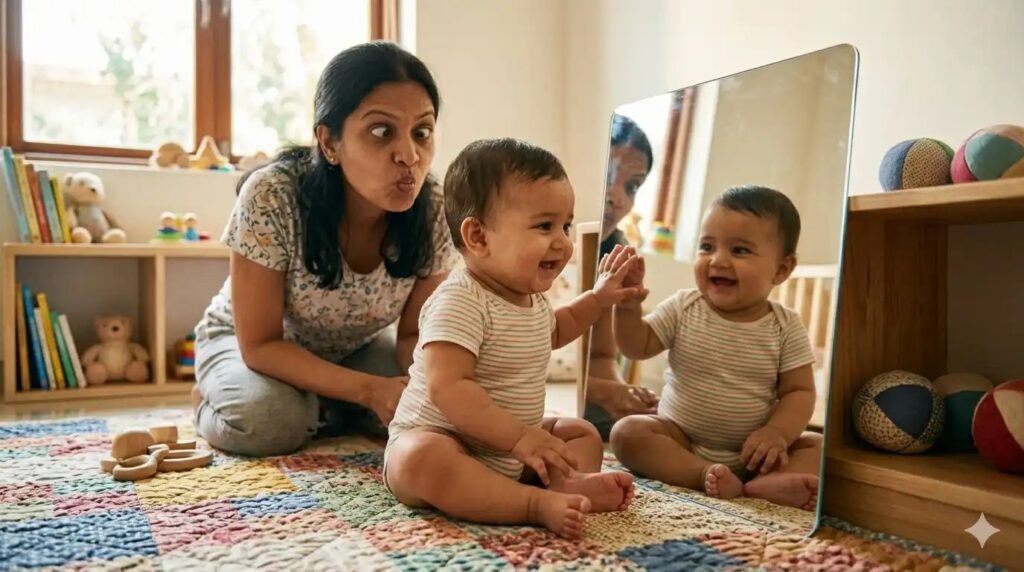
Materials Needed:
- Baby-safe mirror
Step-by-Step Instructions:
- Place the mirror at floor level.
- Sit beside your baby.
- Point to facial features.
- Make funny expressions and watch their reactions.
What They Are Learning:
- Self-awareness
- Social development
- Visual tracking
- Emotional recognition
Babies often become completely captivated by their reflection.
7. Sock Ball Grab Game
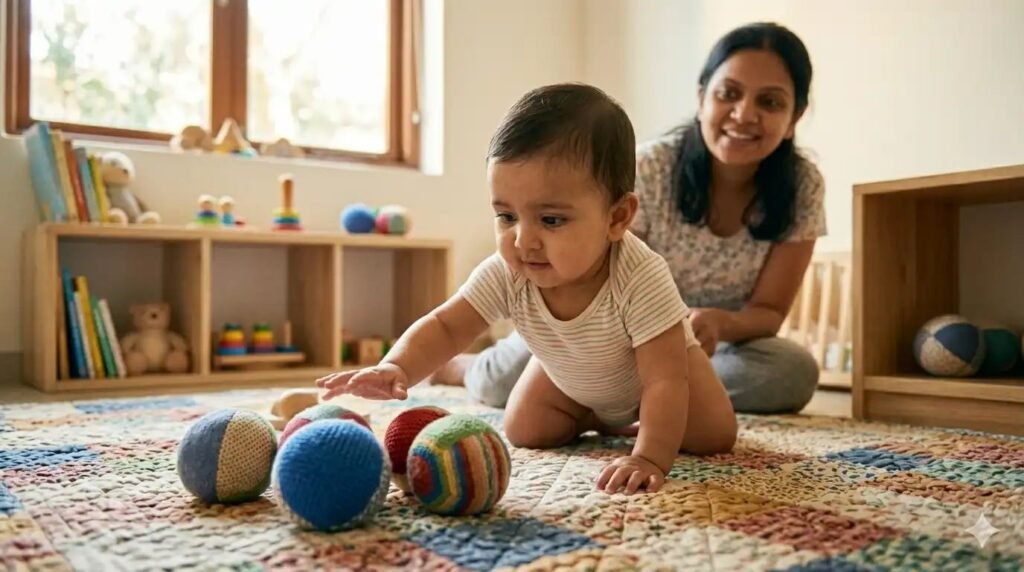
Materials Needed:
- Clean socks
- Soft fabric scraps
Step-by-Step Instructions:
- Roll socks into soft balls.
- Scatter them on a blanket.
- Encourage reaching and grasping.
- Move them slightly to motivate crawling.
What They Are Learning:
- Gross motor development
- Hand strength
- Coordination
- Spatial awareness
8. Bubble Watching Adventure

Materials Needed:
- Baby-safe bubbles
Step-by-Step Instructions:
- Blow bubbles slowly near your baby.
- Encourage reaching and tracking.
- Name what is happening.
- Let bubbles float and pop around them.
What They Are Learning:
- Visual tracking
- Attention skills
- Hand-eye coordination
- Early prediction skills
Expect some drool on this one, but that is often a sign of deep concentration.
9. Paper Tube Roll
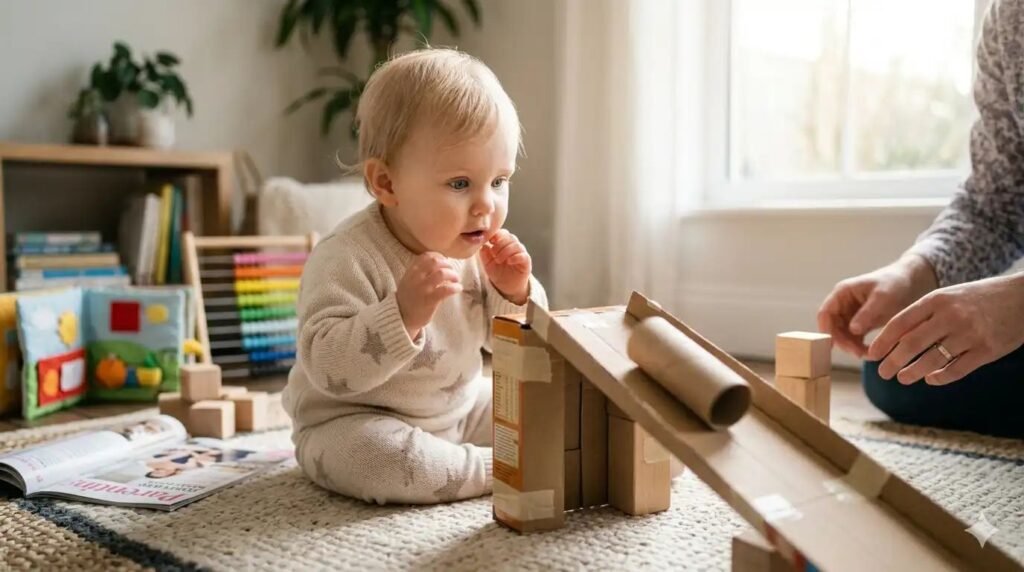
Materials Needed:
- Empty paper towel tube
- Small ramp made from cardboard
Step-by-Step Instructions:
- Create a gentle slope.
- Roll the tube down.
- Encourage your baby to push it back.
- Repeat several times.
What They Are Learning:
- Cause and effect
- Motor planning
- Problem-solving
- Tracking movement
Safety Note: Remove any loose cardboard pieces.
10. Scent Discovery Jars
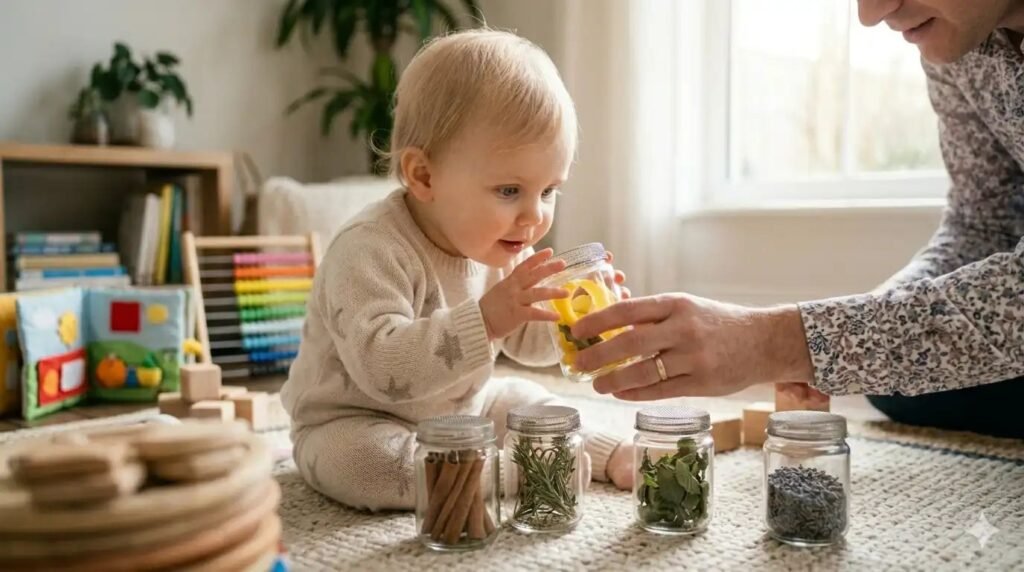
Materials Needed:
- Small containers with holes
- Lemon peel
- Cinnamon stick
- Fresh herbs
Step-by-Step Instructions:
- Place each scent in a separate container.
- Hold them near your baby.
- Allow brief sniffing.
- Observe reactions and describe smells.
What They Are Learning:
- Sensory discrimination
- Memory building
- Language skills
- Environmental awareness
Avoid strong or irritating scents.
11. Ribbon Pull Box
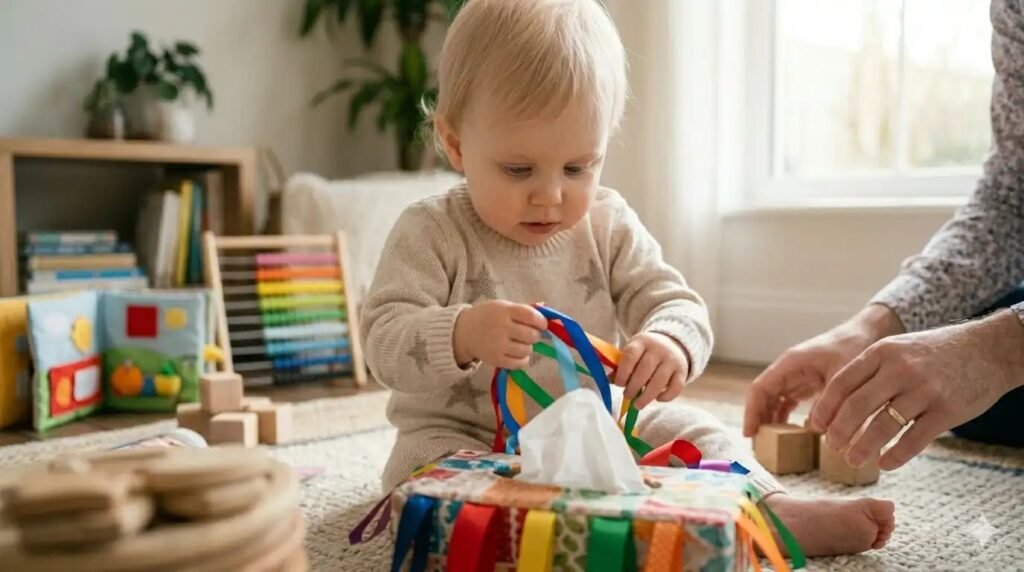
Materials Needed:
- Tissue box
- Wide ribbons
Step-by-Step Instructions:
- Thread ribbons through the opening.
- Leave ends hanging out.
- Encourage pulling one ribbon at a time.
- Celebrate discoveries.
What They Are Learning:
- Fine motor control
- Hand strength
- Problem-solving
- Focus and persistence
12. Frozen Fruit Bag Sensory Play
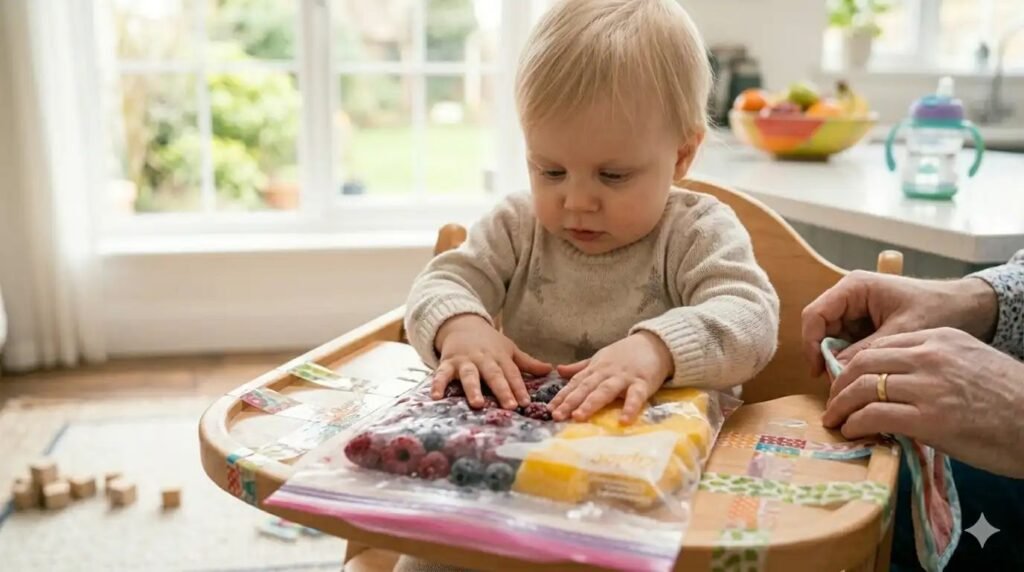
Materials Needed:
- Zip-top freezer bag
- Frozen berries or mango chunks
- Tape
Step-by-Step Instructions:
- Place frozen fruit inside the bag.
- Seal tightly.
- Tape the bag to a highchair tray.
- Let your baby squish and press.
What They Are Learning:
- Texture exploration
- Finger strength
- Cause and effect
- Sensory integration
Safety Note: Ensure the bag remains sealed throughout play.
13. Crawling Obstacle Adventure
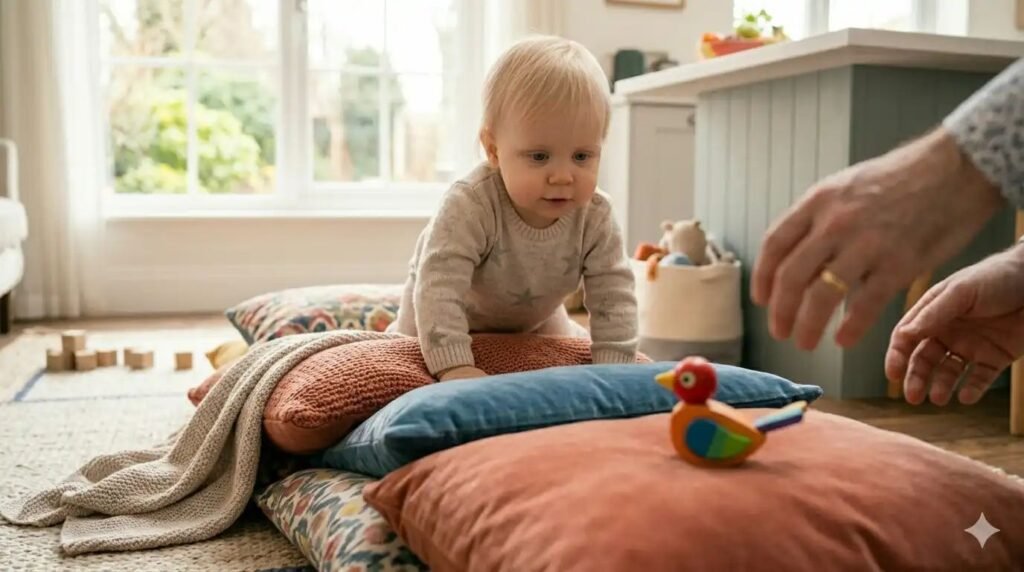
Materials Needed:
- Pillows
- Rolled blankets
- Cushions
Step-by-Step Instructions:
- Arrange safe obstacles on the floor.
- Place a favorite toy at the end.
- Encourage crawling over and around objects.
- Offer support when needed.
What They Are Learning:
- Gross motor skills
- Balance
- Body awareness
- Confidence building
Keep obstacles soft and low to the ground.
A Little Encouragement for Caregivers
You do not need a house full of fancy toys to support your baby’s development. The everyday moments often create the richest learning experiences. A wooden spoon, a bowl of water, or a basket of textures can spark curiosity and strengthen important brain connections. Focus on connection, conversation, and exploration. Your attention is the most valuable learning tool your baby has.
Frequently Asked Questions
At what age can babies start sensory activities?
Most babies can begin simple sensory experiences from birth. Activities should always match their developmental stage, with close supervision.
How long should sensory play sessions last?
For young babies, 5 to 15 minutes is often enough. Follow your baby’s cues and stop when they seem tired or overstimulated.
Are sensory activities important for brain development?
Yes. Sensory experiences help build neural connections that support learning, movement, language, and emotional development.
How can I tell if my baby is overstimulated?
Signs may include turning away, fussiness, crying, yawning, or difficulty focusing. If you notice these signals, offer a calm break.
Final Thoughts
The best sensory activities are often the simplest ones. By turning ordinary household items into opportunities for exploration, you help your baby build skills, confidence, and curiosity every single day. Small moments of play today become the foundation for learning tomorrow.