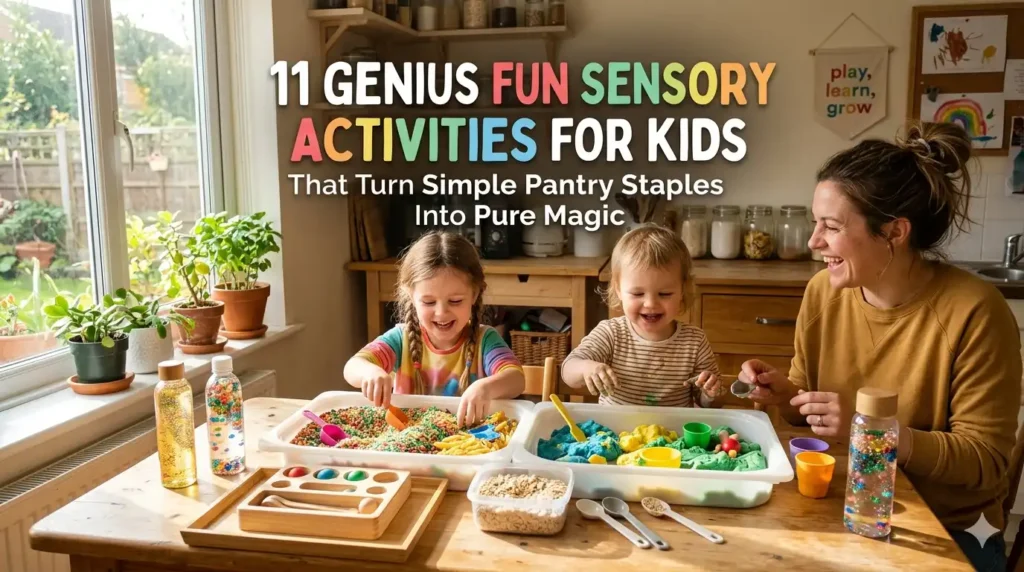
Keeping little ones happily engaged can feel like a full-time job. One minute they’re fascinated by a wooden spoon, and the next they’re determined to explore every kitchen cabinet. The good news? Some of the best sensory play experiences don’t require expensive toys or complicated setups.
As both a pediatrician and child development specialist, I’ve seen how simple sensory activities can spark curiosity, build important skills, and create meaningful moments between children and caregivers. Better yet, many of these activities can be made with ingredients already sitting in your pantry. Expect a little mess, plenty of smiles, and lots of learning along the way.
11 Genius Fun Sensory Activities for Kids
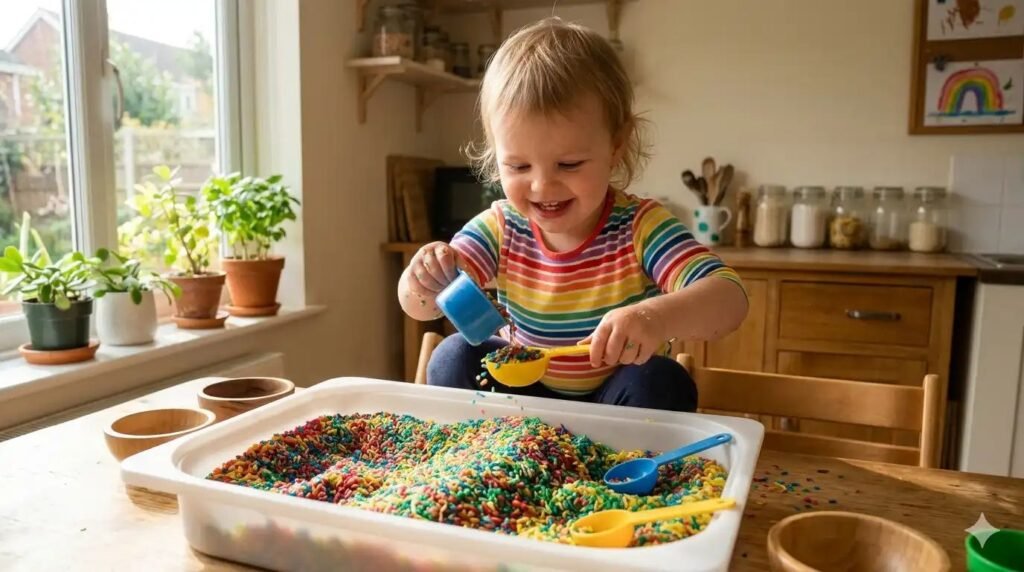
1. Rainbow Rice Sensory Bin
Materials Needed:
- Uncooked rice
- Food coloring
- Zip-top bags
- Large container
- Measuring cups and spoons
Step-by-Step Instructions:
- Divide rice into separate bags.
- Add a few drops of food coloring to each bag.
- Shake until the color spreads evenly.
- Let the rice dry completely.
- Pour into a large sensory bin.
- Add cups, scoops, and spoons for exploration.
What They Are Learning:
- Fine motor skills
- Hand-eye coordination
- Color recognition
- Early math concepts through scooping and pouring
Safety Tip: Always supervise young children, as uncooked rice can be a choking hazard.
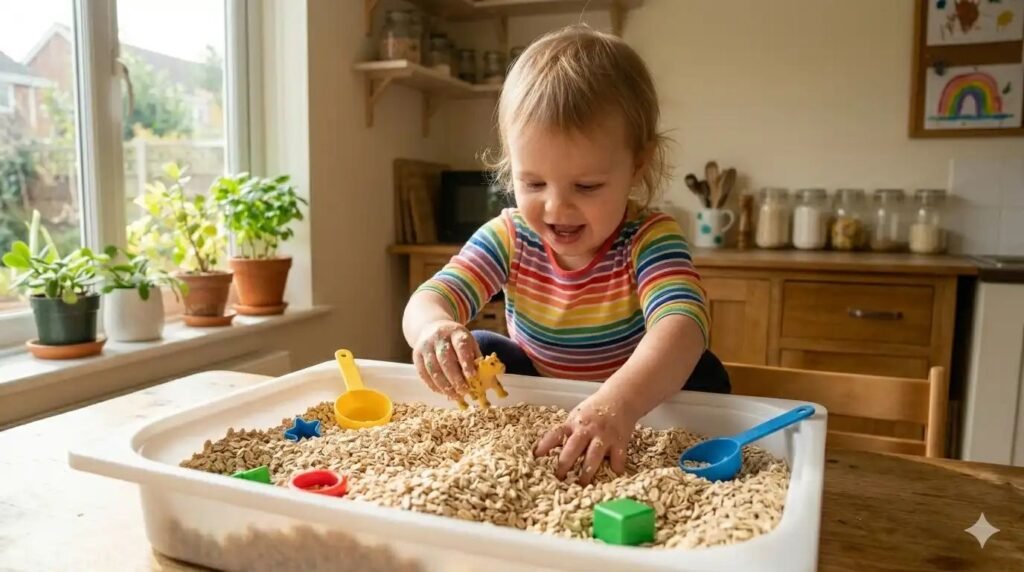
2. Oatmeal Treasure Hunt
Materials Needed:
- Dry oats
- Large bowl or bin
- Large plastic toys or objects
Step-by-Step Instructions:
- Fill a container with oats.
- Hide toys beneath the surface.
- Invite your child to dig and search.
- Encourage them to describe what they find.
What They Are Learning:
- Tactile exploration
- Problem-solving skills
- Vocabulary development
- Sensory processing
Real-Life Note: Expect oats to travel surprisingly far. A sheet under the play area makes cleanup easier.
3. Magic Cornstarch Dough
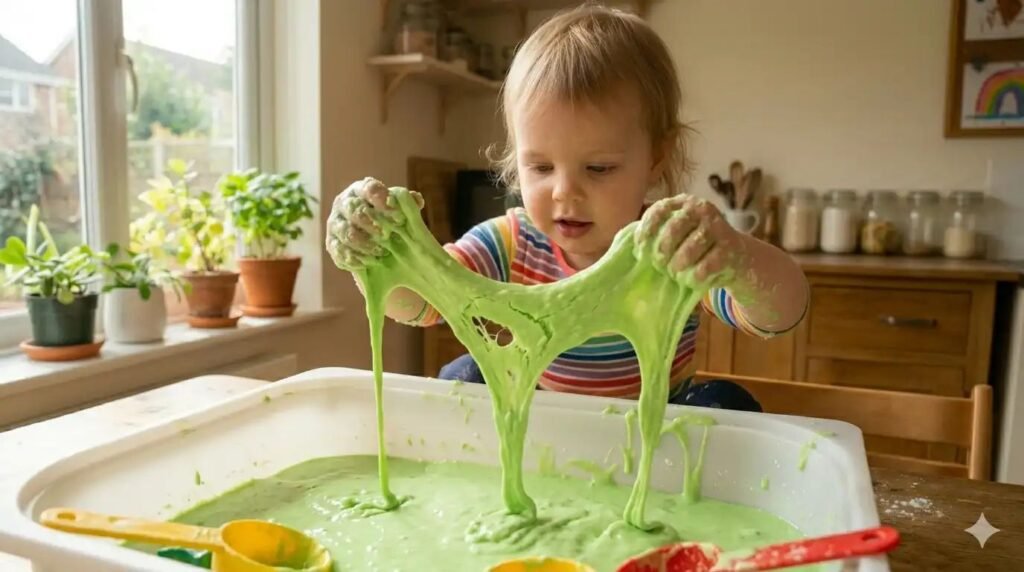
Materials Needed:
- Cornstarch
- Water
- Bowl
Step-by-Step Instructions:
- Mix two parts cornstarch with one part water.
- Stir slowly until it forms a strange, moldable mixture.
- Let children squeeze, poke, and shape it.
- Observe how it acts like both a liquid and a solid.
What They Are Learning:
- Scientific thinking
- Cause-and-effect understanding
- Sensory awareness
- Fine motor development
Safety Tip: This activity is best for children who no longer put everything in their mouths.
4. Cinnamon Spice Painting
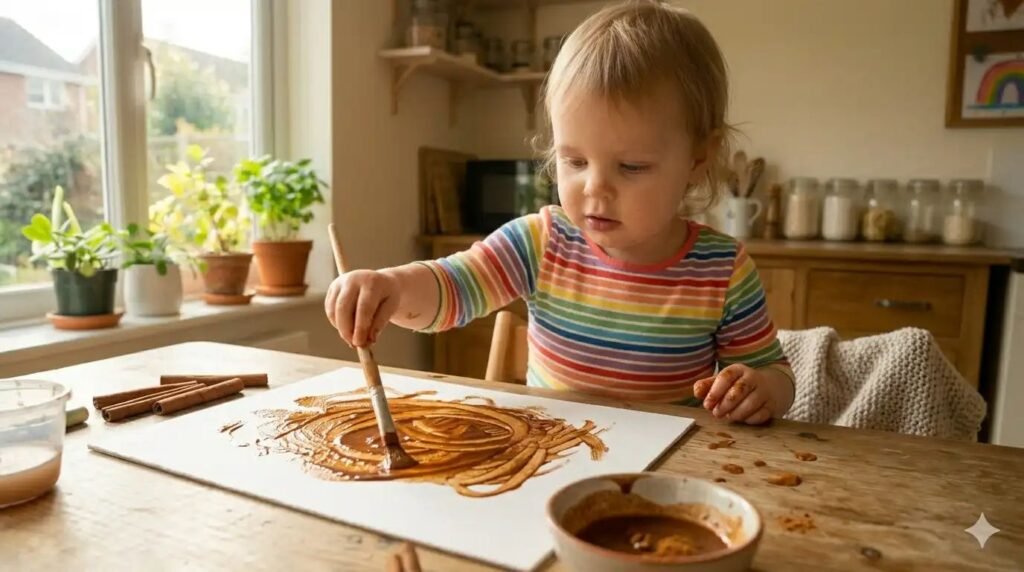
Materials Needed:
- Ground cinnamon
- Water
- Paintbrushes
- Paper
Step-by-Step Instructions:
- Mix cinnamon with a small amount of water.
- Create a paint-like consistency.
- Let children paint freely.
- Talk about the smell while creating artwork.
What They Are Learning:
- Sensory integration
- Creativity
- Early artistic expression
- Smell recognition
Bonus: The kitchen will smell wonderful during this activity.
5. Dry Pasta Sorting Station
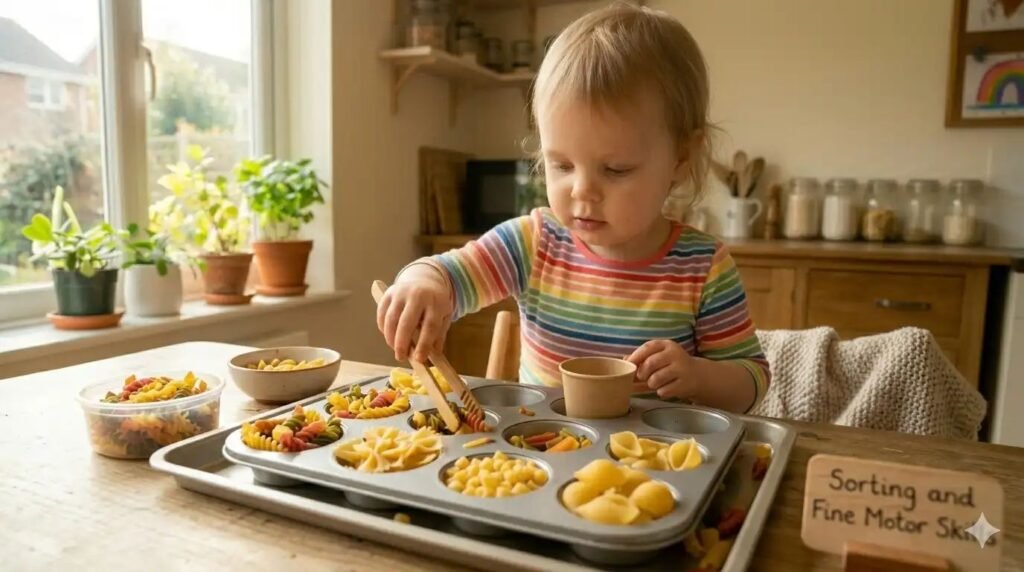
Materials Needed:
- Different pasta shapes
- Muffin tin or small bowls
- Tongs or spoons
Step-by-Step Instructions:
- Mix several pasta varieties together.
- Ask your child to sort them by shape.
- Use tongs for an added challenge.
- Count the pieces in each section.
What They Are Learning:
- Classification skills
- Fine motor strength
- Early counting
- Visual discrimination
Safety Tip: Use larger pasta shapes with younger children to reduce choking risks.
6. Flour Construction Zone
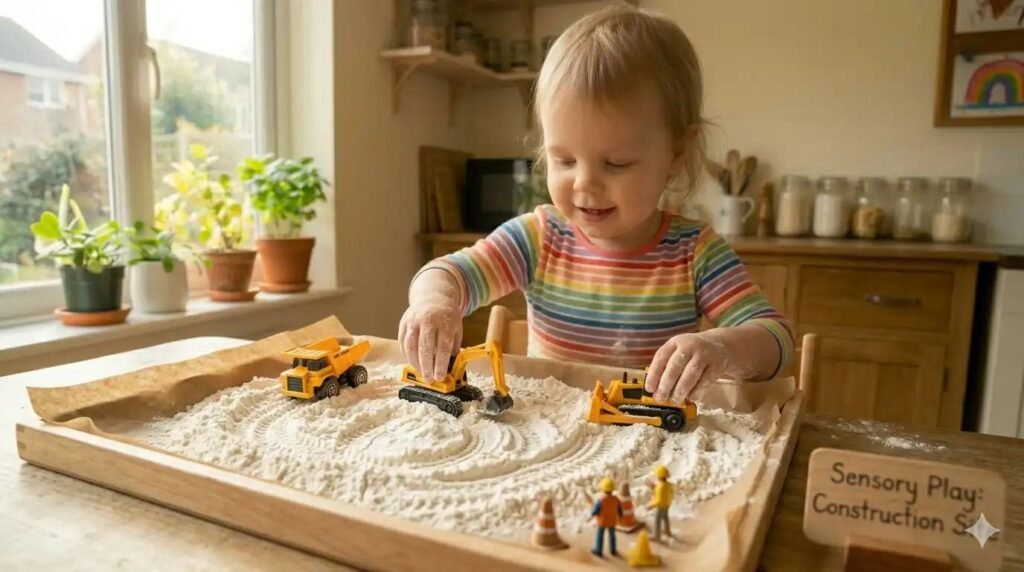
Materials Needed:
- Flour
- Baking tray
- Toy vehicles
Step-by-Step Instructions:
- Spread flour across a baking tray.
- Let children drive toy trucks through it.
- Create roads, tracks, and patterns.
- Draw shapes or letters in the flour.
What They Are Learning:
- Pre-writing skills
- Sensory exploration
- Imaginative play
- Hand control
Real-Life Note: Expect some dusty hands and delighted giggles.
7. Bean Scoop and Pour Challenge
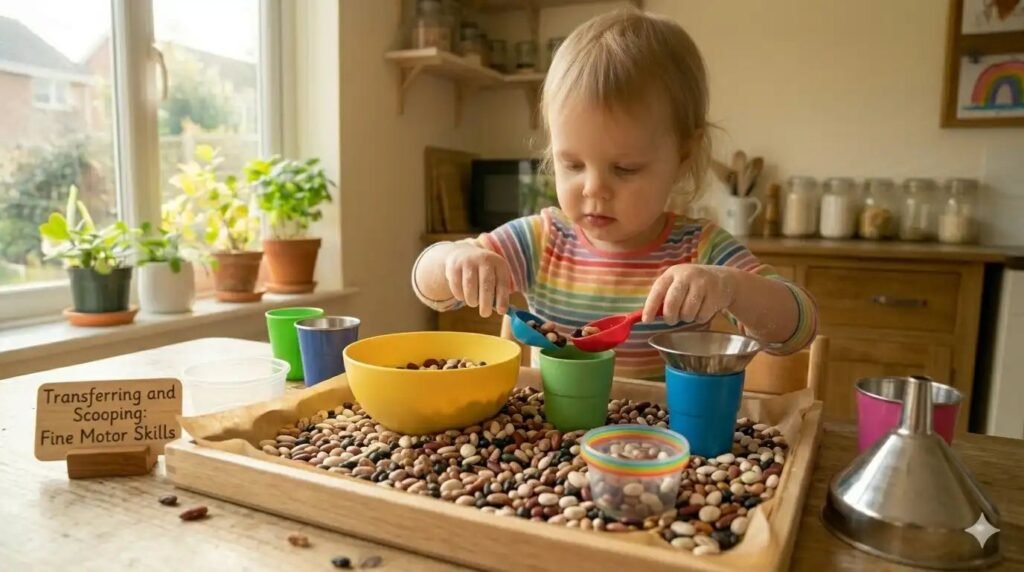
Materials Needed:
- Dried beans
- Cups
- Funnels
- Containers
Step-by-Step Instructions:
- Set out several containers.
- Fill one with dried beans.
- Encourage scooping, pouring, and transferring.
- Add funnels for extra fun.
What They Are Learning:
- Bilateral coordination
- Concentration
- Precision movements
- Understanding volume
Safety Tip: Constant supervision is essential because dried beans can be choking hazards.
8. Frozen Pea Sensory Exploration
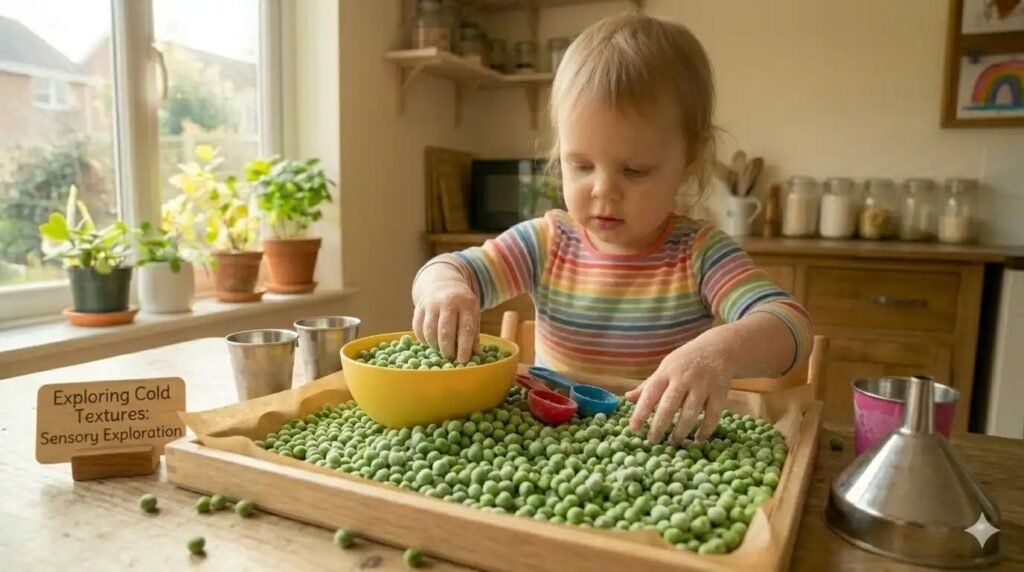
Materials Needed:
- Frozen peas
- Large bowl
- Towels
Step-by-Step Instructions:
- Place frozen peas in a shallow bowl.
- Invite your child to touch and move them.
- Compare the temperature to room-temperature items.
- Scoop and pour the peas.
What They Are Learning:
- Temperature awareness
- Sensory tolerance
- Descriptive language
- Fine motor skills
Real-Life Note: Many children spend surprisingly long periods exploring the cold sensation.
9. Popcorn Kernel Discovery Bin
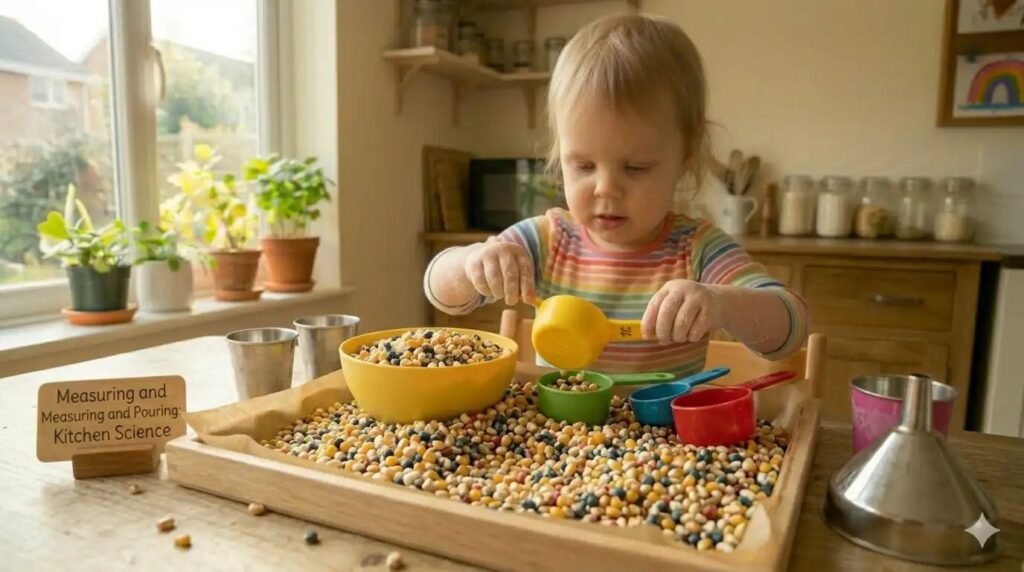
Materials Needed:
- Unpopped popcorn kernels
- Measuring tools
- Small containers
Step-by-Step Instructions:
- Fill a sensory bin with kernels.
- Add scoops and cups.
- Encourage pouring and measuring.
- Talk about how kernels transform into popcorn.
What They Are Learning:
- Science concepts
- Motor planning
- Sensory processing
- Early measurement skills
Safety Tip: Unpopped kernels should never be given to children who still mouth objects.
10. Brown Sugar Sand Play
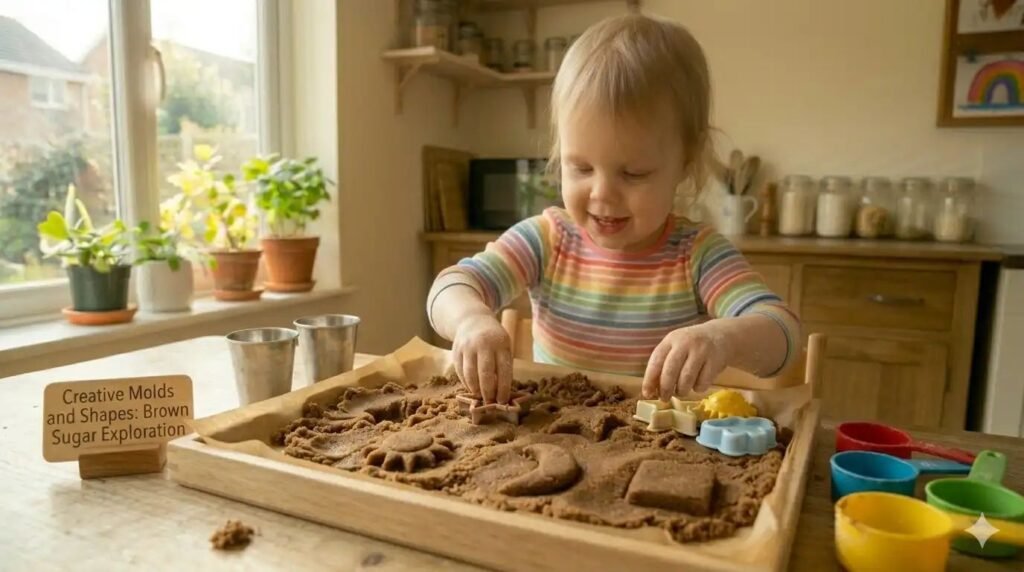
Materials Needed:
- Brown sugar
- Tray
- Small cups and molds
Step-by-Step Instructions:
- Spread brown sugar across a tray.
- Let children scoop and mold it.
- Create shapes, roads, or pretend desserts.
- Practice drawing letters and numbers.
What They Are Learning:
- Sensory discrimination
- Imaginative thinking
- Fine motor control
- Early literacy skills
Real-Life Note: The soft texture often keeps children engaged longer than traditional sand.
11. Lentil Sensory Bottles
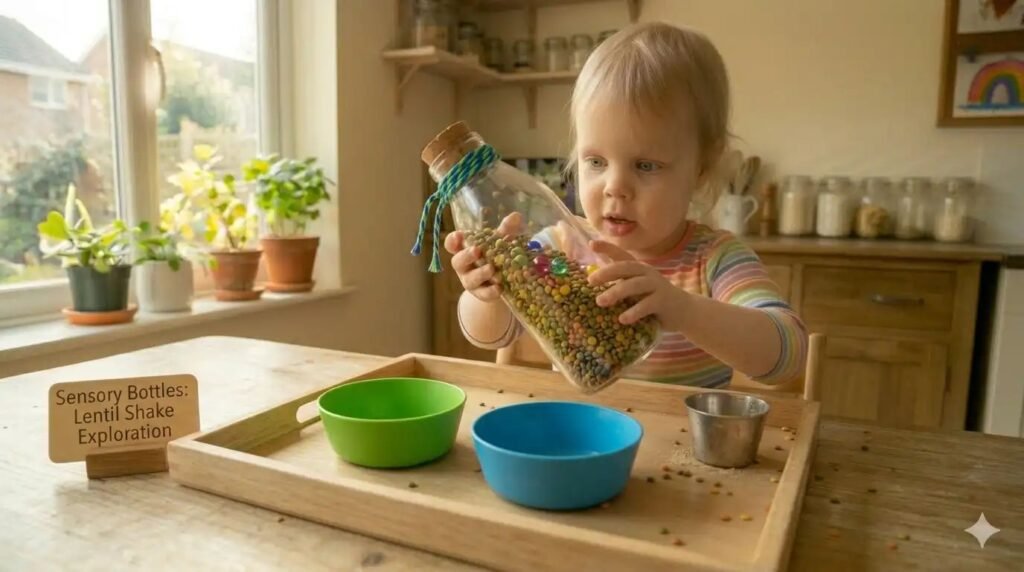
Materials Needed:
- Dried lentils
- Clear plastic bottle
- Funnel
- Tape or glue
Step-by-Step Instructions:
- Use a funnel to fill a bottle with lentils.
- Secure the lid tightly with strong tape or glue.
- Shake, roll, and observe the movement.
- Listen to the sounds the lentils make.
What They Are Learning:
- Auditory processing
- Visual tracking
- Cause-and-effect understanding
- Focus and attention
Safety Tip: Double-check that the lid cannot be opened by curious little hands.
Frequently Asked Questions
What age is sensory play appropriate for?
Sensory play can begin in infancy with safe, supervised exploration and continue throughout childhood. Always choose materials that match your child’s developmental stage.
How often should kids do sensory activities?
Even 10–20 minutes of sensory play a few times each week can support learning, attention, language development, and motor skills.
What are the benefits of sensory play?
Sensory activities help develop fine motor skills, problem-solving abilities, creativity, language, emotional regulation, and cognitive growth.
How can I make sensory play less messy?
Use trays, shower curtains, or washable tablecloths underneath activities. Keeping play in a designated area makes cleanup much easier while still allowing children to explore freely.
Small Moments, Big Learning
Sensory play doesn’t need fancy equipment or a large budget. Some of the most memorable activities happen with everyday ingredients already sitting in your pantry. These experiences help children explore textures, sounds, temperatures, and movement while strengthening important developmental skills.
If an activity gets a little messy, that’s often a sign that meaningful learning is happening. Keep supervision close, follow age-appropriate safety guidelines, and enjoy watching your child discover the magic hidden in ordinary household items.