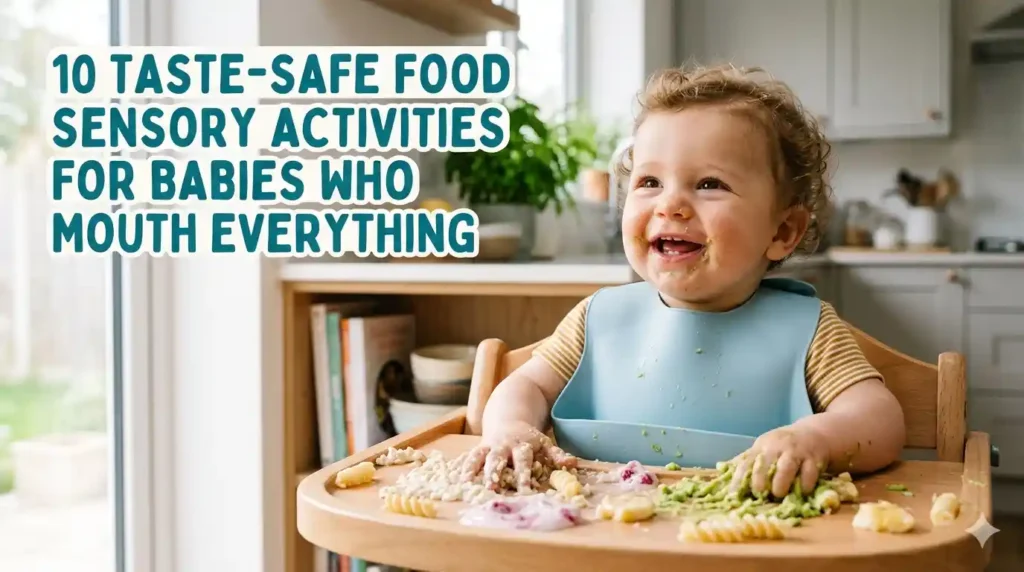
Babies have an incredible way of turning every object into a taste test. One minute they’re happily exploring a toy, and the next it’s headed straight into their mouth. While this stage can keep parents on their toes, it’s actually an important part of early development. Babies learn about texture, temperature, shape, and even cause and effect through hands-on exploration.
The good news is that sensory play doesn’t have to stop just because your little one mouths everything. With a few simple, taste-safe ingredients, you can create engaging activities that satisfy curiosity while supporting healthy development. These activities are designed to encourage exploration, movement, and learning in a way that feels safe and manageable for both babies and caregivers.
10 Taste-Safe Food Sensory Activities for Babies Who Mouth Everything
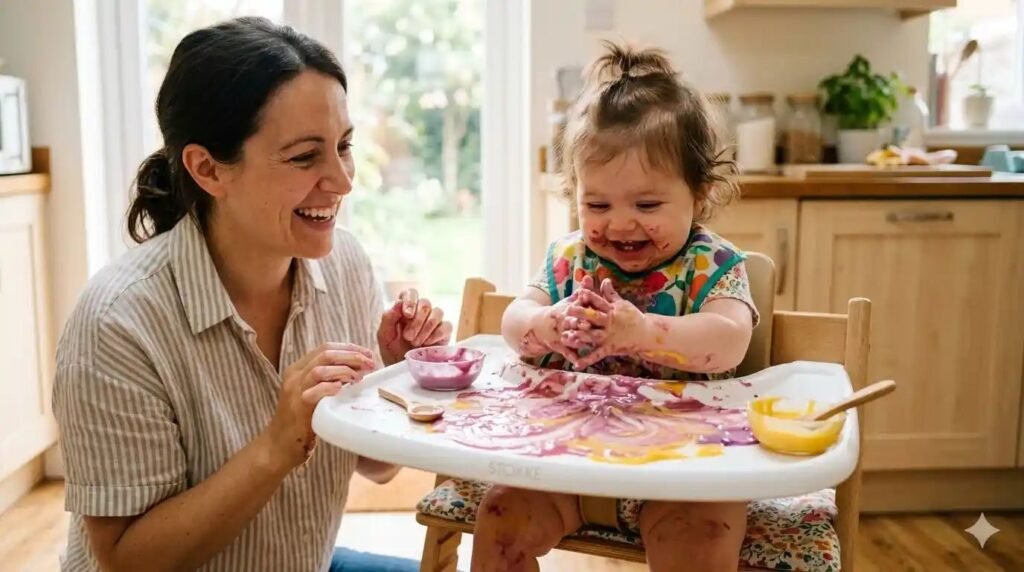
1. Yogurt Finger Painting
Materials Needed
- Plain full-fat yogurt
- Food-based colorings (such as beet, spinach, or blueberry puree)
- Highchair tray or washable surface
Step-by-Step Instructions
- Divide yogurt into small bowls.
- Add tiny amounts of natural food purees to create different colors.
- Secure your baby in a highchair.
- Spread small dollops across the tray.
- Encourage your baby to touch, smear, and pat the yogurt.
- Name colors and describe textures while playing.
- Add new colors gradually to extend the activity.
What They Are Learning
Babies are developing:
- Fine motor skills
- Hand-eye coordination
- Sensory processing
- Early language skills
- Cause-and-effect understanding
Health & Development Benefits
Yogurt finger painting combines sensory exploration with safe self-expression. Babies learn that their movements create visible changes on a surface, which supports early cognitive development. The slippery texture provides valuable tactile input that helps the brain organize sensory information.
As babies spread, tap, and swipe the yogurt, they strengthen the small muscles in their hands and fingers. These muscles later support skills such as self-feeding, drawing, and writing.
The activity also encourages sustained attention. Many babies become deeply focused on the sensations they experience, helping build concentration in a screen-free environment.
Safety Tips
- Always supervise closely.
- Use plain yogurt without added sugar.
- Check for dairy allergies before offering.
- Clean surfaces promptly after play.
Parent-to-Parent Note
Expect yogurt in places you never imagined. Sleeves, eyebrows, and hair often become part of the artwork.
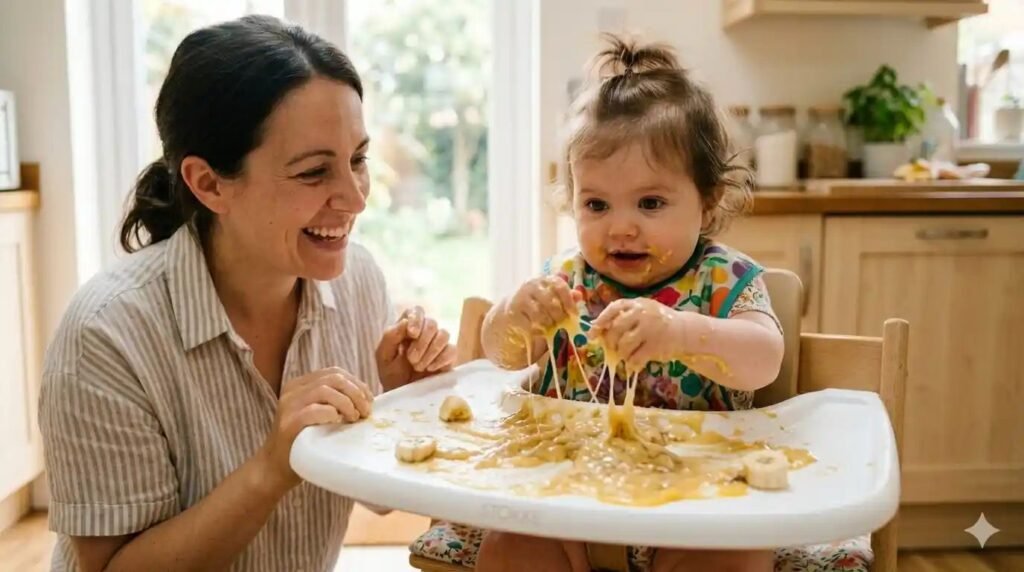
2. Mashed Banana Sensory Play
Materials Needed
- Ripe banana
- Shallow tray
- Spoon
Step-by-Step Instructions
- Mash the banana thoroughly.
- Spread it onto a tray.
- Let your baby touch and squish the mixture.
- Model squeezing and patting.
- Introduce words like “soft” and “sticky.”
- Add silicone utensils for scooping practice.
What They Are Learning
- Sensory awareness
- Fine motor development
- Language development
- Early exploration skills
Health & Development Benefits
Banana sensory play offers a safe introduction to messy textures. Babies naturally investigate with both hands and mouths, making this a comfortable activity for young explorers.
The thick consistency encourages grasping, releasing, and squeezing. These movements support hand strength and coordination.
Repeated sensory experiences help babies become more comfortable with different food textures, which may support future feeding experiences and reduce hesitation around new foods.
Safety Tips
- Use ripe bananas only.
- Watch for signs of food sensitivity.
- Supervise constantly.
Parent-to-Parent Note
Many babies spend more time squishing than eating, and that’s perfectly fine.
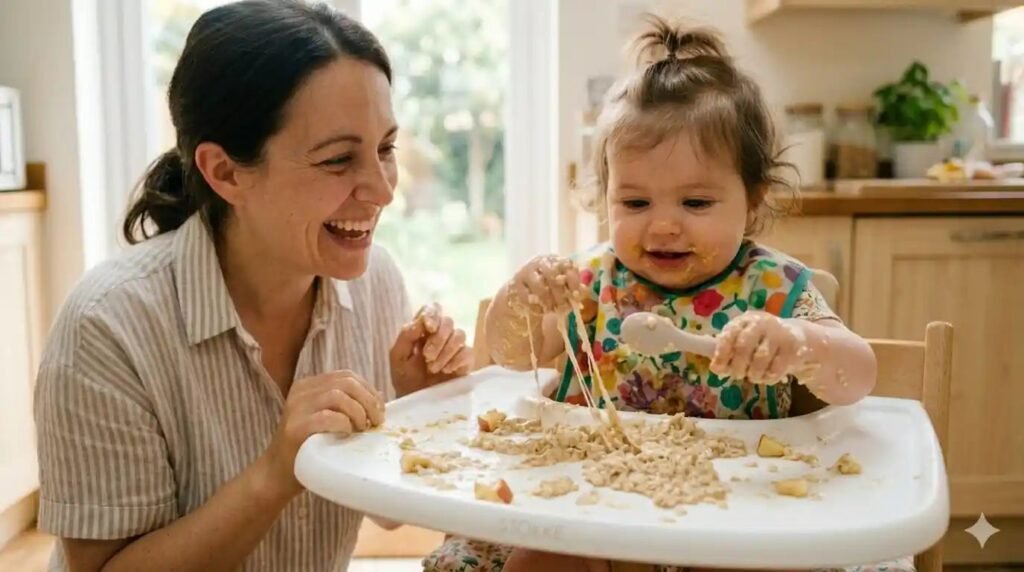
3. Cooked Oatmeal Exploration
Materials Needed
- Plain cooked oatmeal
- Tray or bowl
- Baby spoon
Step-by-Step Instructions
- Prepare oatmeal and allow it to cool.
- Place a small amount on a tray.
- Encourage touching and scooping.
- Demonstrate stirring motions.
- Offer extra spoons for experimentation.
What They Are Learning
- Hand-eye coordination
- Bilateral hand use
- Sensory processing
- Problem-solving
Health & Development Benefits
Oatmeal provides a unique texture that changes under pressure. Babies learn how different movements create different outcomes.
Scooping and transferring support motor planning. These actions require the brain and muscles to work together effectively.
The activity also introduces opportunities for early independence as babies practice self-feeding skills in a low-pressure environment.
Safety Tips
- Ensure oatmeal is completely cool.
- Avoid large clumps.
- Supervise closely.
Parent-to-Parent Note
The cleanup is usually easier than expected because oatmeal tends to stay put.
4. Avocado Smash Station
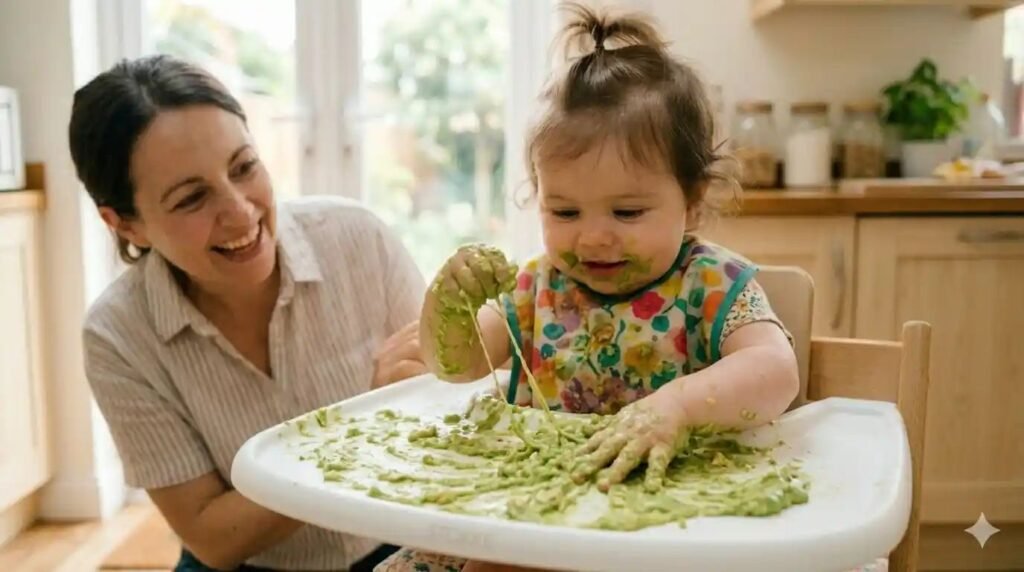
Materials Needed
- Ripe avocado
- Tray
- Soft spoon
Step-by-Step Instructions
- Mash avocado lightly.
- Spread onto a tray.
- Invite your baby to poke and smear.
- Demonstrate scooping and pressing.
- Continue talking about textures throughout play.
What They Are Learning
- Fine motor control
- Sensory exploration
- Vocabulary building
- Cognitive development
Health & Development Benefits
Avocado offers a creamy texture that encourages experimentation. Babies receive rich sensory feedback while strengthening hand movements.
The smooth consistency allows little fingers to move easily through the food, helping develop coordination and body awareness.
Exploring food through touch supports positive food relationships and encourages curiosity around eating.
Safety Tips
- Use ripe avocado only.
- Remove all peel and pit remnants.
- Monitor continuously.
Parent-to-Parent Note
This activity often holds a baby’s attention longer than parents expect.
5. Soft Cooked Pasta Sensory Bin
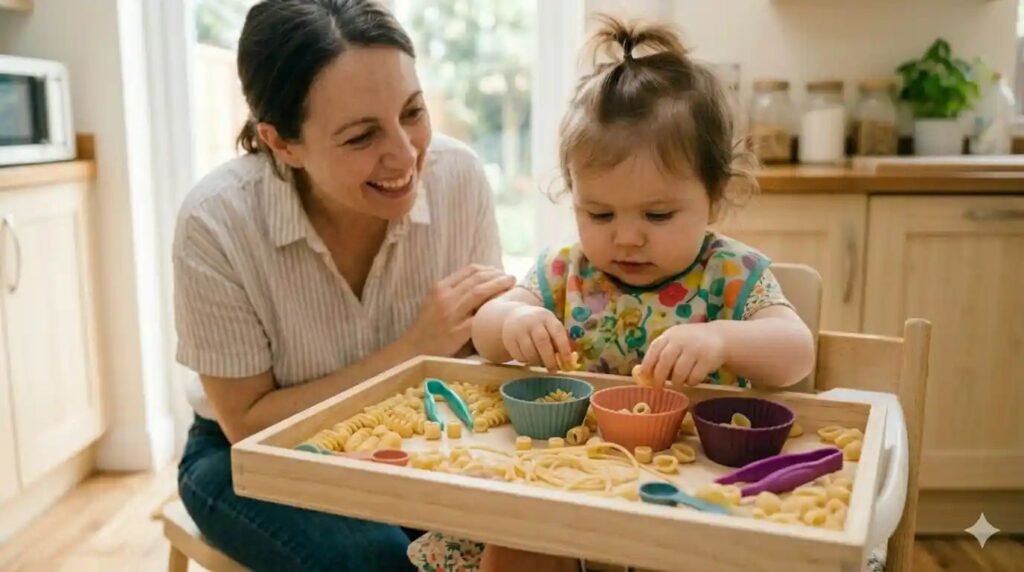
Materials Needed
- Overcooked pasta
- Large tray
- Silicone cups
Step-by-Step Instructions
- Cook pasta until very soft.
- Cool completely.
- Place on a tray.
- Add cups for filling and dumping.
- Encourage grasping and transferring.
What They Are Learning
- Fine motor skills
- Sensory processing
- Early problem-solving
- Cause and effect
Health & Development Benefits
Soft pasta offers a different tactile experience than purees. Babies learn to manipulate individual pieces, strengthening finger control.
Picking up slippery pasta promotes developing grasp patterns and hand coordination.
The repetitive actions involved support concentration and persistence.
Safety Tips
- Use larger pasta shapes.
- Avoid choking hazards.
- Supervise at all times.
Parent-to-Parent Note
You’ll likely find a noodle tucked under the highchair hours later.
6. Watermelon Texture Exploration
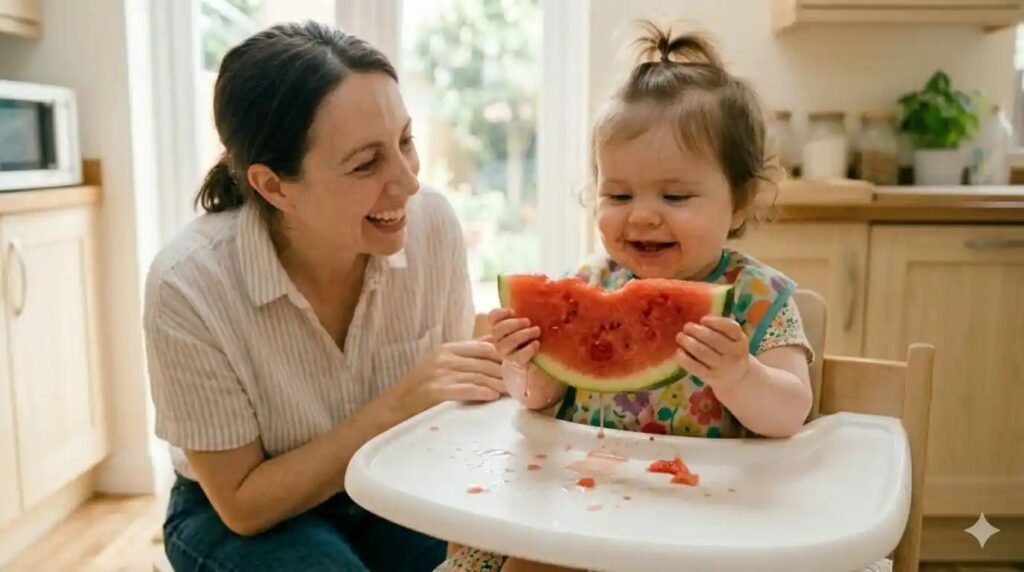
Materials Needed
- Seedless watermelon slices
- Tray
- Bib
Step-by-Step Instructions
- Cut watermelon into large safe pieces.
- Remove seeds thoroughly.
- Place pieces on a tray.
- Encourage squeezing and tasting.
- Talk about wet and juicy textures.
What They Are Learning
- Sensory exploration
- Hand strength
- Oral-motor development
- Language skills
Health & Development Benefits
The juicy texture creates a rich sensory experience that stimulates multiple senses at once.
Babies practice gripping slippery foods, helping improve coordination and motor control.
This activity supports confidence with self-feeding and food exploration.
Safety Tips
- Remove all seeds.
- Offer age-appropriate sizes.
- Stay within arm’s reach.
Parent-to-Parent Note
A waterproof mat underneath can save a lot of laundry.
7. Chia Pudding Sensory Play
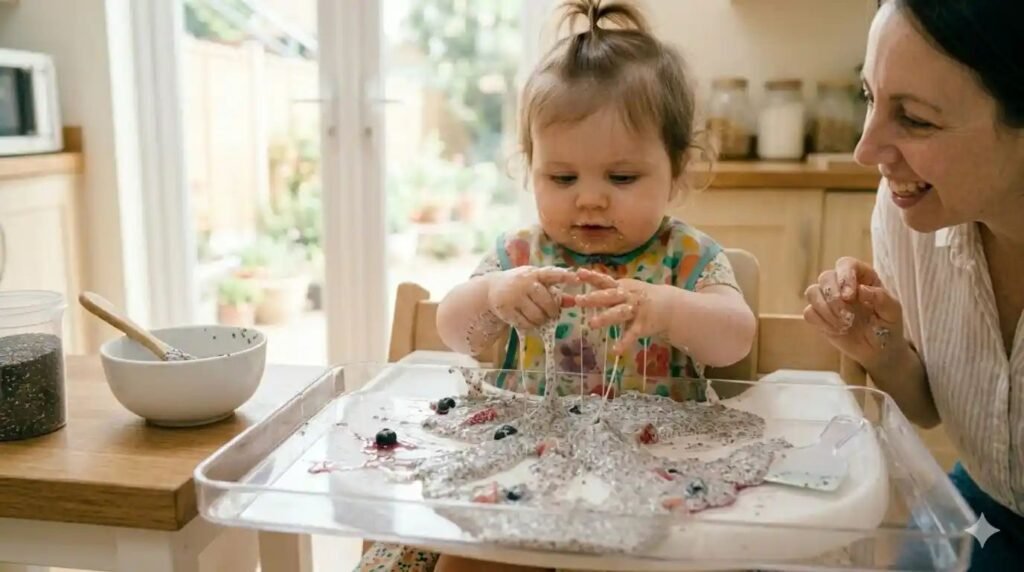
Materials Needed
- Prepared chia pudding
- Tray
- Spoon
Step-by-Step Instructions
- Prepare chia pudding according to directions.
- Chill and soften.
- Place a small amount on a tray.
- Let your baby explore freely.
- Encourage scooping and spreading.
What They Are Learning
- Tactile discrimination
- Fine motor skills
- Focus and attention
- Early scientific observation
Health & Development Benefits
The unusual texture offers valuable sensory input. Babies learn to adapt their movements based on what they feel.
Repeated exposure to varied textures supports healthy sensory development and flexibility.
The activity also promotes curiosity and experimentation.
Safety Tips
- Introduce chia only after it has fully expanded.
- Watch for allergies.
- Supervise continuously.
Parent-to-Parent Note
Some babies love the texture immediately, while others need several exposures.
8. Applesauce Swirl Play
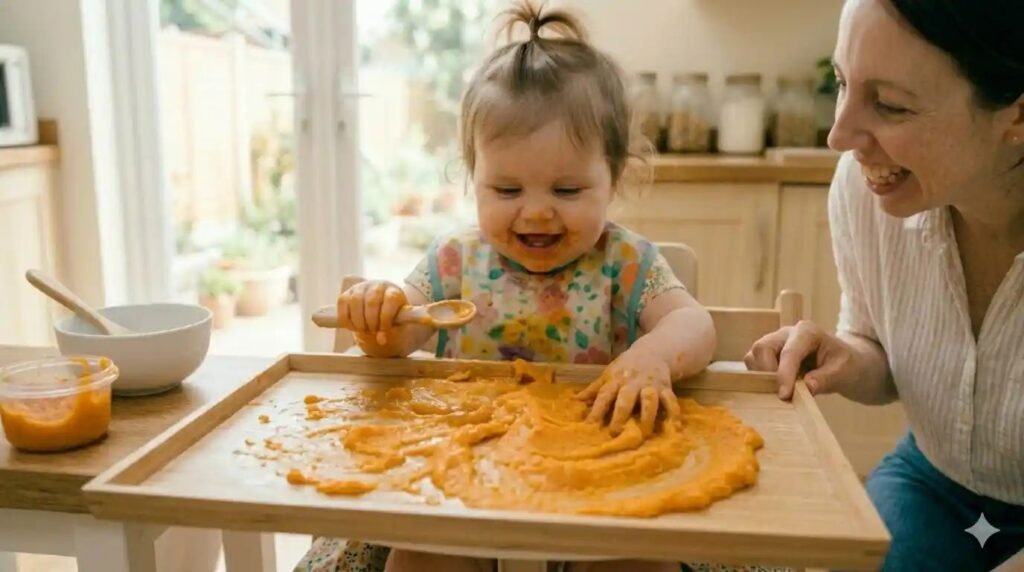
Materials Needed
- Unsweetened applesauce
- Tray
- Silicone spatula
Step-by-Step Instructions
- Spread applesauce thinly on a tray.
- Show swirling motions.
- Encourage copying.
- Add simple patterns.
- Continue describing movements.
What They Are Learning
- Motor planning
- Hand-eye coordination
- Language development
- Visual tracking
Health & Development Benefits
Swirling and tracing movements build coordination between the eyes and hands. These foundational skills support many future tasks.
The smooth texture encourages controlled arm movements while providing sensory feedback.
Babies also practice imitation, an important social and learning skill.
Safety Tips
- Use unsweetened applesauce.
- Supervise carefully.
- Clean surfaces after use.
Parent-to-Parent Note
Many babies enjoy making circles long before they can intentionally draw them.
9. Sweet Potato Smash Play
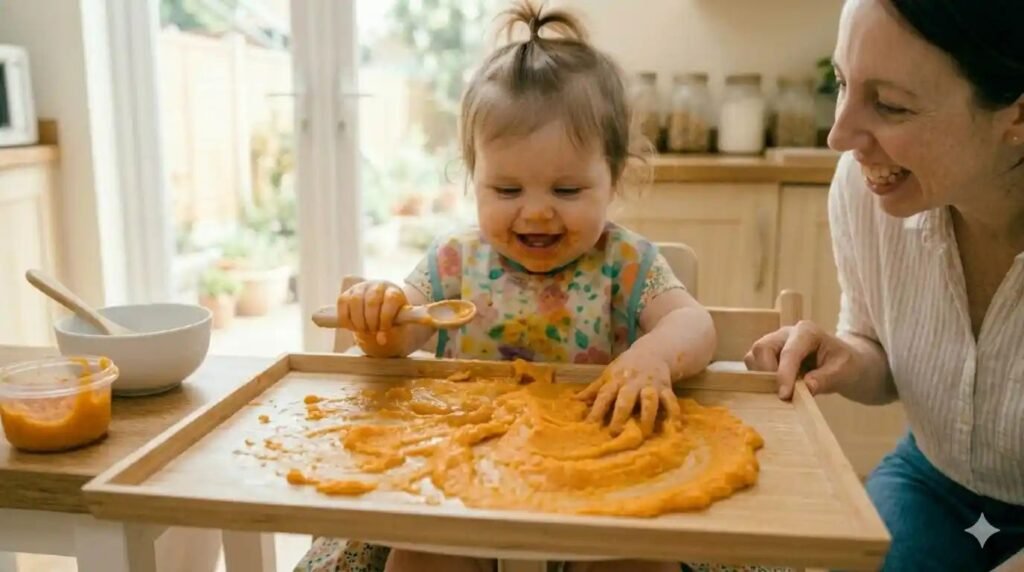
Materials Needed
- Cooked sweet potato
- Tray
- Baby-safe spoon
Step-by-Step Instructions
- Steam sweet potato until very soft.
- Mash lightly.
- Spread on a tray.
- Encourage poking and scooping.
- Let your baby experiment freely.
What They Are Learning
- Fine motor development
- Sensory exploration
- Cognitive learning
- Self-feeding practice
Health & Development Benefits
Sweet potato provides resistance that strengthens little hands during squeezing and pressing.
The texture helps babies understand how materials change shape under pressure, supporting early problem-solving skills.
Exploration through play builds confidence and curiosity.
Safety Tips
- Cool completely before serving.
- Check consistency.
- Supervise closely.
Parent-to-Parent Note
Sweet potato stains can happen, so dress for mess.
10. Frozen Fruit Puree Painting
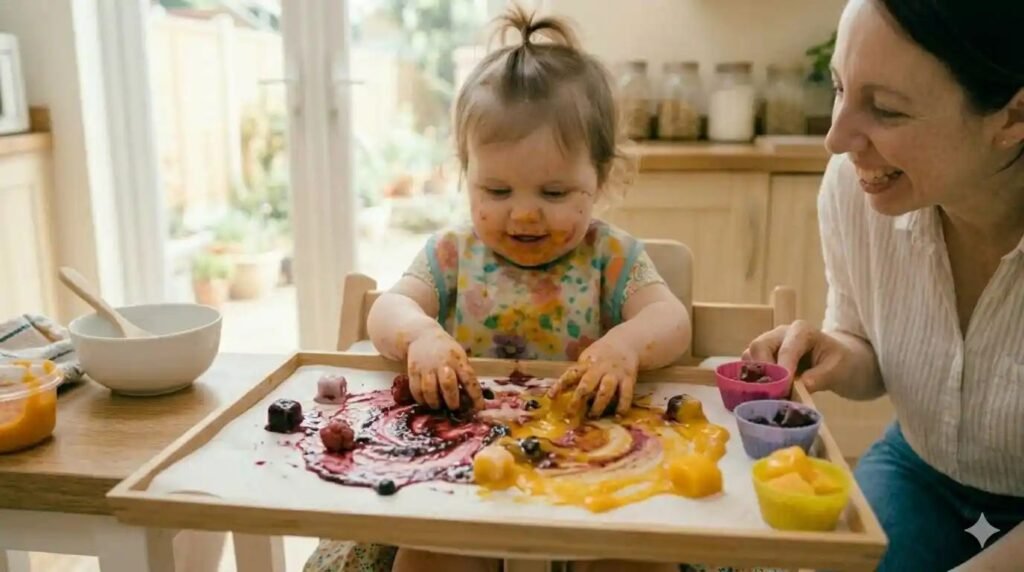
Materials Needed
- Fruit puree
- Ice cube tray
- Tray or highchair surface
Step-by-Step Instructions
- Freeze fruit puree into cubes.
- Allow slight thawing.
- Place cubes on a tray.
- Let your baby move and smear them.
- Observe changing temperatures and textures.
What They Are Learning
- Sensory processing
- Temperature awareness
- Fine motor control
- Cognitive flexibility
Health & Development Benefits
Experiencing cool temperatures in a safe way broadens sensory experiences. Babies learn to process new sensations while remaining comfortable.
As the puree melts, babies observe changes in texture and consistency. This supports early scientific thinking and curiosity.
The activity encourages active exploration without screens while strengthening developing hand muscles.
Safety Tips
- Use partially thawed cubes.
- Avoid large frozen chunks.
- Supervise throughout.
Parent-to-Parent Note
This activity can be especially soothing during teething phases.
Take a deep breath and remember that messy play is often meaningful play. Babies learn best when they can safely touch, squish, taste, and experiment. A little extra cleanup today often supports important developmental growth that lasts for years.
Frequently Asked Questions
At what age can babies start taste-safe sensory activities?
Most babies can begin simple taste-safe sensory play around 6 months, once they are showing readiness for solids and can sit with support. Always choose age-appropriate materials and supervise closely.
Why do babies put everything in their mouths?
Mouthing is a normal developmental stage. Babies use their mouths to gather information about texture, shape, temperature, and taste. It’s one of their earliest learning tools.
Are food-based sensory activities safe for babies?
Yes, when activities use age-appropriate foods, account for allergies, avoid choking hazards, and include active adult supervision. Taste-safe sensory play is often ideal for babies who mouth everything.
How often should I do sensory activities with my baby?
Even 10–15 minutes a few times each week can provide meaningful learning opportunities. Consistency matters more than duration, and following your baby’s cues is always best.
Final Conclusion
The baby stage is filled with curiosity, exploration, and plenty of moments that leave parents wondering how tiny humans can create such impressive messes. When your baby mouths everything in sight, it can feel challenging to find activities that are both engaging and safe. Taste-safe sensory play offers a practical solution by meeting your baby’s developmental needs while giving you greater peace of mind.
These simple activities support much more than entertainment. Through touching, squeezing, scooping, tasting, and experimenting, babies strengthen muscles, build coordination, develop problem-solving skills, and learn about the world around them. Each sensory experience helps create connections in the developing brain while encouraging confidence and independence.
Remember that sensory play doesn’t need expensive supplies or elaborate setups. Some of the most valuable learning experiences come from everyday foods already sitting in your kitchen. Focus on connection rather than perfection, embrace a little mess, and celebrate your baby’s natural curiosity. Those tiny hands exploring yogurt, oatmeal, or mashed banana today are building skills that support learning, movement, and development for years to come.