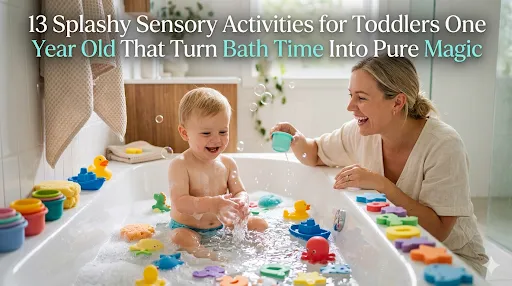
Keeping a one-year-old happily occupied can feel like a full-time job. One minute they’re giggling at bubbles, and the next they’re trying to splash half the bathwater onto the floor. The good news? Bath time can become one of the easiest opportunities for sensory play, learning, and connection all at once.
As a pediatrician and child development specialist, I’ve seen how simple water-based activities can hold a toddler’s attention far longer than many expensive toys. These playful ideas encourage exploration, build important developmental skills, and create joyful moments you’ll both remember. Just keep close supervision at all times, since water play always requires an attentive adult nearby.
13 Splashy Sensory Activities for Toddlers One Year Old
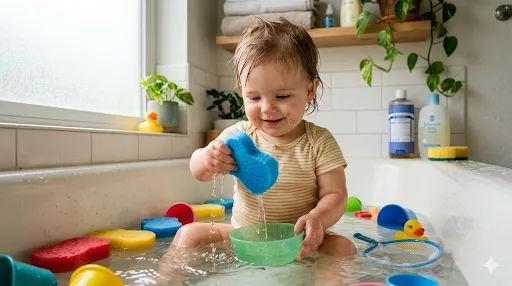
1. Floating Sponge Squeeze Station
Materials Needed:
- Clean kitchen sponges
- Warm bath water
- Small plastic bowl
Step-by-Step Instructions:
- Place several clean sponges in the tub.
- Fill a small bowl with water.
- Show your toddler how to squeeze water out of the sponge.
- Encourage them to refill and squeeze again.
- Let them experiment with different amounts of pressure.
What They Are Learning:
- Fine motor strength
- Hand-eye coordination
- Cause-and-effect understanding
- Early problem-solving skills
Safety Note: Use large sponges that cannot break into small pieces.
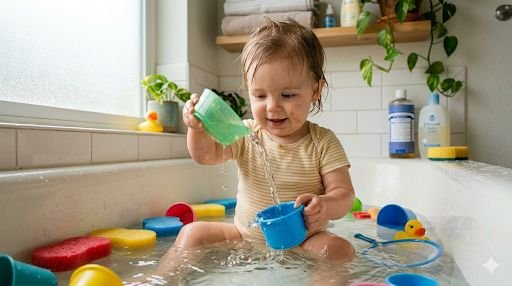
2. Rainbow Cup Pouring Fun
Materials Needed:
- Plastic cups in different colors
- Bath water
- Small container
Step-by-Step Instructions:
- Place cups around the tub.
- Fill one cup and demonstrate pouring into another.
- Encourage your toddler to copy you.
- Count cups as they fill and empty.
- Celebrate every successful pour.
What They Are Learning:
- Bilateral coordination
- Spatial awareness
- Early math concepts
- Concentration
Expect a few spills. Those little accidents are often where the best learning happens.
3. Bubble Mountain Adventure
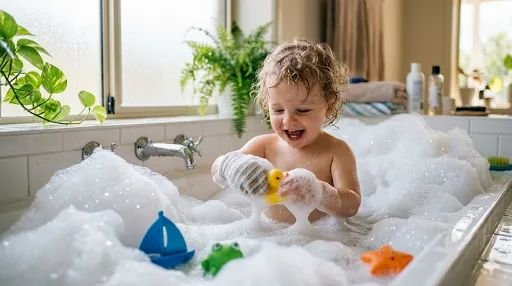
Materials Needed:
- Tear-free baby bubble bath
- Warm water
- Plastic scoop
Step-by-Step Instructions:
- Create plenty of bubbles during bath time.
- Scoop bubbles into little piles.
- Let your toddler pat, grab, and squish them.
- Hide a bath toy under a bubble pile.
- Encourage them to find the surprise.
What They Are Learning:
- Tactile sensory exploration
- Object permanence
- Curiosity and discovery
- Hand control
Safety Note: Avoid getting soap bubbles into your toddler’s eyes.
4. Floating Animal Rescue
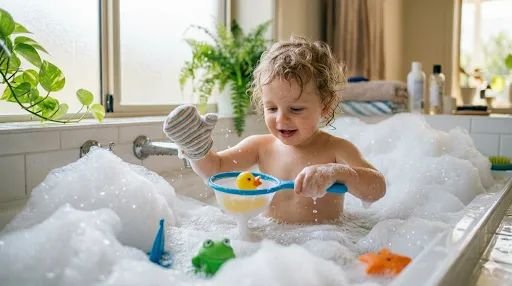
Materials Needed:
- Plastic bath animals
- Small net or scoop
- Bath tub
Step-by-Step Instructions:
- Place floating animals around the tub.
- Pretend they need rescuing.
- Show your toddler how to scoop them up.
- Move animals into a floating container.
- Repeat the rescue mission.
What They Are Learning:
- Hand-eye coordination
- Visual tracking
- Imaginative play
- Motor planning
5. Ice Cube Treasure Hunt
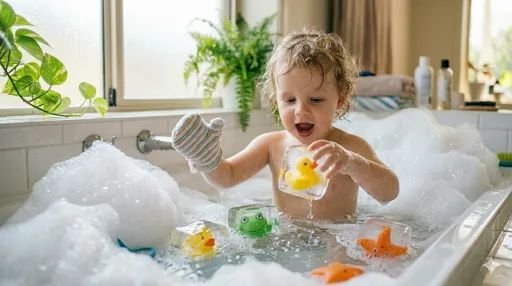
Materials Needed:
- Large ice cubes
- Small bath-safe toys frozen inside
- Warm bath water
Step-by-Step Instructions:
- Freeze toys inside large ice cubes beforehand.
- Place cubes into the bath.
- Let your toddler touch and explore the temperature difference.
- Watch the ice slowly melt.
- Celebrate when the toy is freed.
What They Are Learning:
- Sensory awareness
- Scientific observation
- Patience
- Cause and effect
Safety Note: Use large cubes that cannot fit into a toddler’s mouth.
6. Washcloth Peekaboo Play
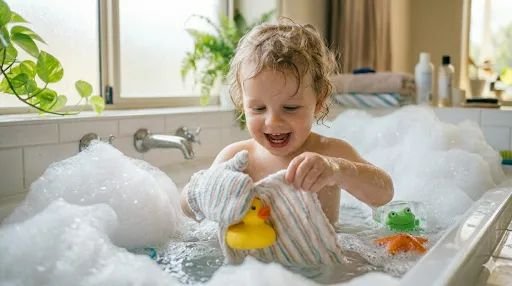
Materials Needed:
- Soft washcloths
- Bath toys
Step-by-Step Instructions:
- Place a toy in the tub.
- Cover it with a washcloth.
- Ask, “Where did it go?”
- Let your toddler uncover the toy.
- Repeat with different toys.
What They Are Learning:
- Memory skills
- Object permanence
- Attention span
- Cognitive development
7. Water Wheel Splash Lab
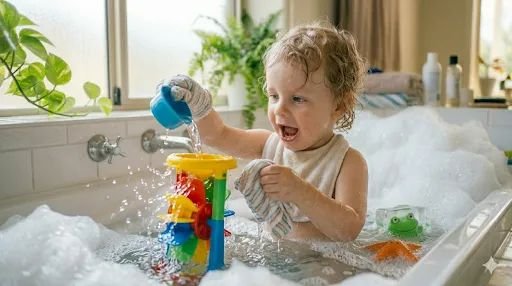
Materials Needed:
- Bath water wheel toy
- Plastic cup
Step-by-Step Instructions:
- Attach the wheel securely to the tub.
- Fill a cup with water.
- Pour water over the wheel.
- Encourage your toddler to try.
- Watch the spinning action together.
What They Are Learning:
- Cause-and-effect learning
- Coordination
- Visual tracking
- Problem-solving
Many toddlers become completely focused on repeating this activity. Expect some drool on this one—that’s often a sign of deep concentration.
8. Colorful Bath Toy Sorting
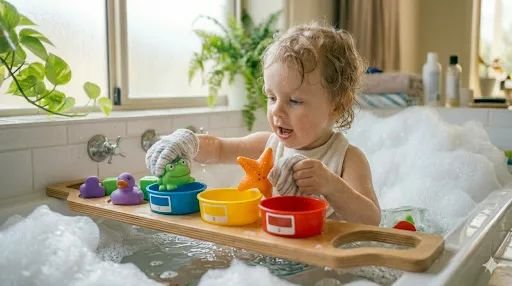
Materials Needed:
- Colored bath toys
- Plastic containers
Step-by-Step Instructions:
- Group toys by color.
- Place containers nearby.
- Demonstrate sorting one color at a time.
- Encourage your toddler to join in.
- Praise effort rather than perfection.
What They Are Learning:
- Color recognition
- Categorization skills
- Early reasoning
- Focus and attention
9. Sink or Float Discovery Time
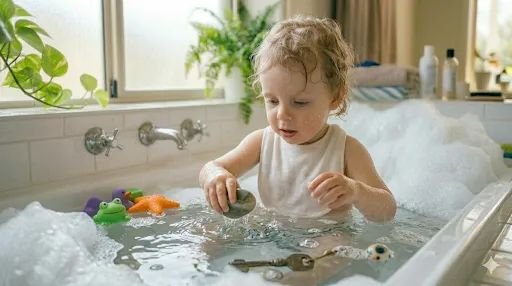
Materials Needed:
- Safe household objects
- Bath water
Step-by-Step Instructions:
- Gather a few waterproof objects.
- Show each item to your toddler.
- Place one object in the water.
- Observe whether it sinks or floats.
- Repeat with additional objects.
What They Are Learning:
- Scientific thinking
- Observation skills
- Prediction abilities
- Vocabulary growth
Safety Note: Avoid small objects that could create choking hazards.
10. Bath Book Story Splash
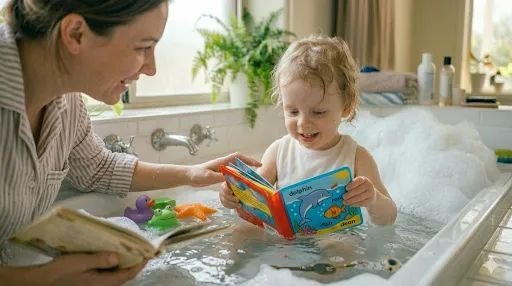
Materials Needed:
- Waterproof bath books
- Warm bath water
Step-by-Step Instructions:
- Introduce a waterproof book during bath time.
- Turn pages slowly together.
- Name pictures and animals.
- Encourage pointing and touching.
- Read simple words repeatedly.
What They Are Learning:
- Language development
- Listening skills
- Visual recognition
- Early literacy foundations
11. Floating Ball Chase
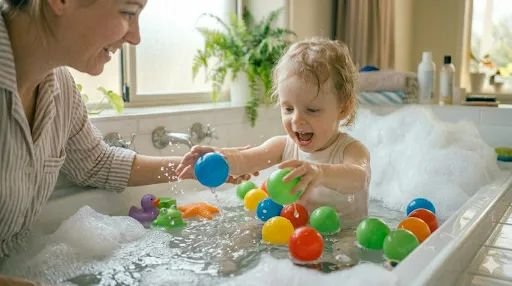
Materials Needed:
- Lightweight plastic balls
- Bath tub
Step-by-Step Instructions:
- Place floating balls in the water.
- Gently push them across the tub.
- Encourage your toddler to reach and catch them.
- Roll them back and forth.
- Turn it into a simple game.
What They Are Learning:
- Gross motor coordination
- Reaching skills
- Tracking moving objects
- Reaction time
12. Gentle Waterfall Play
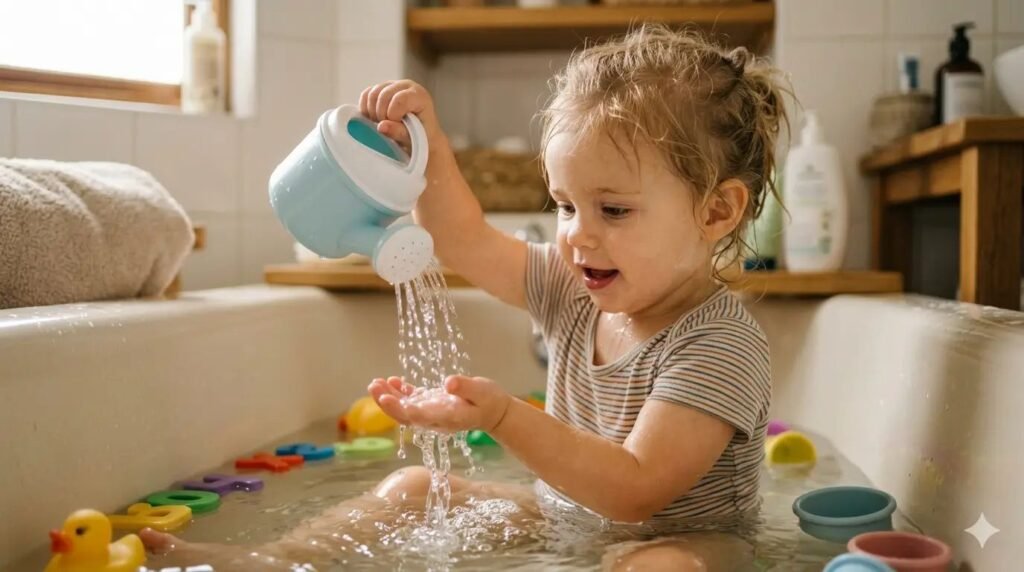
Materials Needed:
- Plastic watering can
- Warm water
Step-by-Step Instructions:
- Fill the watering can partially.
- Slowly pour water over your toddler’s hands.
- Let them explore the sensation.
- Encourage them to pour water themselves.
- Experiment with different pouring speeds.
What They Are Learning:
- Sensory processing
- Motor planning
- Body awareness
- Cause-and-effect learning
13. Floating Foam Shape Exploration
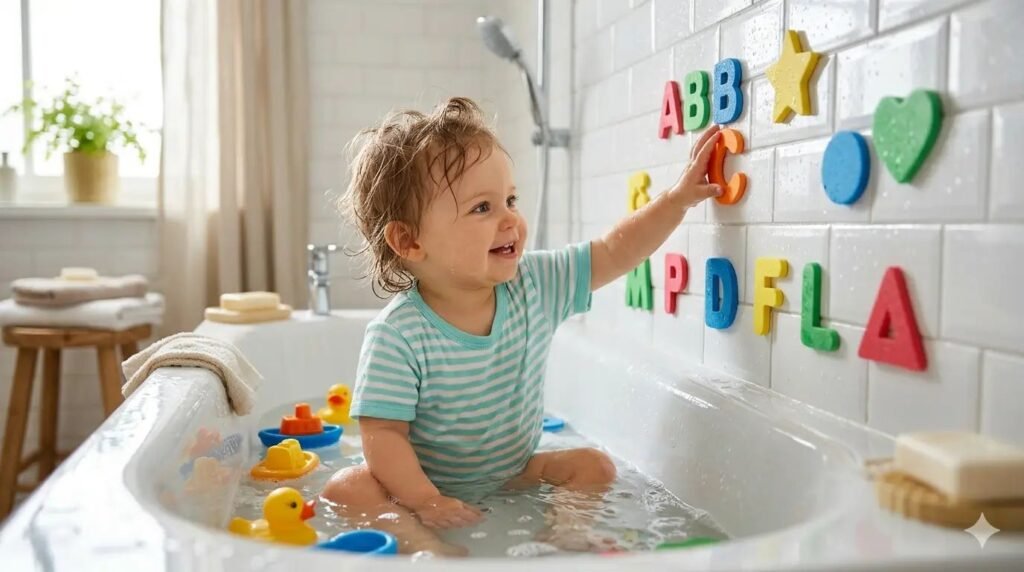
Materials Needed:
- Large bath foam shapes
- Bath tub wall
Step-by-Step Instructions:
- Wet the foam pieces.
- Stick them to the tub wall.
- Name shapes as you place them.
- Let your toddler remove and reposition them.
- Create simple shape patterns together.
What They Are Learning:
- Shape recognition
- Fine motor control
- Creativity
- Spatial awareness
Safety Note: Choose foam pieces large enough to prevent choking risks.
Frequently Asked Questions
What sensory activities are best for a one-year-old?
Water play, bubble exploration, sponge squeezing, pouring activities, and simple floating toy games are among the safest and most engaging sensory experiences for most one-year-olds.
How long should sensory play last for toddlers?
Most one-year-olds stay engaged for about 5–15 minutes per activity. Follow your child’s cues and end the activity when they begin losing interest.
Is bath-time sensory play safe for toddlers?
Yes, when supervised closely by an adult. Never leave a toddler unattended near water, even for a few seconds.
What developmental skills do bath sensory activities support?
Bath sensory play helps build fine motor skills, hand-eye coordination, language development, problem-solving abilities, sensory processing, and early cognitive skills.
Making Bath Time a Happy Learning Experience
The best sensory activities are often the simplest ones. Your toddler doesn’t care whether a toy is expensive or trendy. They care about splashing, exploring, and sharing a few fun moments with you. Even five minutes of playful bath-time learning can support healthy development while making daily routines feel a little easier and a lot more magical.